

Shop Viral Tech & Accessories
Buy New
To see product details, add this item to your cart.
Ships from: Jennifer's Playground
Sold by: Jennifer's Playground
To see product details, add this item to your cart. You can always remove it later.
Returns
30-day refund/replacement
This item can be returned in its original condition for a full refund or replacement within 30 days of receipt. You may receive a partial or no refund on used, damaged or materially different returns.
Read full return policy
Payment
Secure transaction
Your transaction is secure
We work hard to protect your security and privacy. Our payment security system encrypts your information during transmission. We don’t share your credit card details with third-party sellers, and we don’t sell your information to others. Learn more
To see product details, add this item to your cart. You can always remove it later.
Book is in very good condition and may include minimal underlining highlighting. The book can also include "From the library of" labels. May not contain miscellaneous items toys, dvds, etc. . We offer 100% money back guarantee and 24 7 customer service. Book is in very good condition and may include minimal underlining highlighting. The book can also include "From the library of" labels. May not contain miscellaneous items toys, dvds, etc. . We offer 100% money back guarantee and 24 7 customer service. See less
Access codes and supplements are not guaranteed with used items.
Ships from and sold by Zoom Books Company.
Added to

Sorry, there was a problem.

There was an error retrieving your Wish Lists. Please try again.

Sorry, there was a problem.

List unavailable.
Kindle app logo image

Download the free Kindle app and start reading Kindle books instantly on your smartphone, tablet, or computer - no Kindle device required.

Read instantly on your browser with Kindle for Web.

Using your mobile phone camera - scan the code below and download the Kindle app.
QR code to download the Kindle App

  • The Paradox of Choice: Why More Is Less

Follow the author

Get new release updates & improved recommendations
Something went wrong. Please try your request again later.

The Paradox of Choice: Why More Is Less Paperback – January 18, 2005

4.3 out of 5 stars (2,462)

Purchase options and add-ons

In the spirit of Alvin Toffler’s Future Shock, a social critique of our obsession with choice, and how it contributes to anxiety, dissatisfaction and regret. This paperback includes a new P.S. section with author interviews, insights, features, suggested readings, and more.

Whether we’re buying a pair of jeans, ordering a cup of coffee, selecting a long-distance carrier, applying to college, choosing a doctor, or setting up a 401(k), everyday decisions-both big and small-have become increasingly complex due to the overwhelming abundance of choice with which we are presented.

We assume that more choice means better options and greater satisfaction. But beware of excessive choice: choice overload can make you question the decisions you make before you even make them, it can set you up for unrealistically high expectations, and it can make you blame yourself for any and all failures. In the long run, this can lead to decision-making paralysis, anxiety, and perpetual stress. And, in a culture that tells us that there is no excuse for falling short of perfection when your options are limitless, too much choice can lead to clinical depression.

In
The Paradox of Choice, Barry Schwartz explains at what point choice-the hallmark of individual freedom and self-determination that we so cherish-becomes detrimental to our psychological and emotional well-being. In accessible,

The%20Amazon%20Book%20Review
The Amazon Book Review
Book recommendations, author interviews, editors' picks, and more. Read it now

Frequently bought together
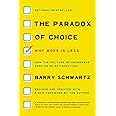
This item: The Paradox of Choice: Why More Is Less
$7.50
Get it Jun 8 - 11
Only 1 left in stock - order soon.
Ships from and sold by Shakespeare Book House.
+
$11.83
Get it as soon as Wednesday, Jun 3
In Stock
Ships from and sold by Amazon.com.
+
$20.00
Get it as soon as Wednesday, Jun 3
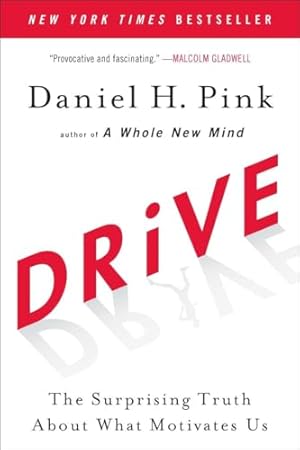
In Stock
Ships from and sold by Amazon.com.
Total price: $00
To see our price, add these items to your cart.
Details
Added to Cart
Some of these items ship sooner than the others.
Choose items to buy together.

Customers also bought or read

Loading...

Editorial Reviews

Review

“Brilliant.... The case Schwartz makes... is compelling, the implications disturbing.... An insightful book.” (Christian Science Monitor)

“An insightful study that winningly argues its subtitle.” (Philadelphia Inquirer)

“Schwartz lays out a convincing argument.... [He] is a crisp, engaging writer with an excellent sense of pace.” (Austin American-Statesman)

“Schwartz offers helpful suggestions of how we can manage our world of overwhelming choices.” (St. Petersburg Times)

“Wonderfully readable.” (Washington Post)

“Schwartz has plenty of insightful things to say about the perils of everyday life.” (Booklist)

“With its clever analysis, buttressed by sage New Yorker cartoons, The Paradox of Choice is persuasive.” (BusinessWeek)

From the Back Cover

Whether we're buying a pair of jeans, ordering a cup of coffee, selecting a long-distance carrier, applying to college, choosing a doctor, or setting up a 401(k), everyday decisions—both big and small—have become increasingly complex due to the overwhelming abundance of choice with which we are presented.

As Americans, we assume that more choice means better options and greater satisfaction. But beware of excessive choice: choice overload can make you question the decisions you make before you even make them, it can set you up for unrealistically high expectations, and it can make you blame yourself for any and all failures. In the long run, this can lead to decision-making paralysis, anxiety, and perpetual stress. And, in a culture that tells us that there is no excuse for falling short of perfection when your options are limitless, too much choice can lead to clinical depression.

In The Paradox of Choice, Barry Schwartz explains at what point choice—the hallmark of individual freedom and self-determination that we so cherish—becomes detrimental to our psychological and emotional well-being. In accessible, engaging, and anecdotal prose, Schwartz shows how the dramatic explosion in choice—from the mundane to the profound challenges of balancing career, family, and individual needs—has paradoxically become a problem instead of a solution. Schwartz also shows how our obsession with choice encourages us to seek that which makes us feel worse.

By synthesizing current research in the social sciences, Schwartz makes the counter intuitive case that eliminating choices can greatly reduce the stress, anxiety, and busyness of our lives. He offers eleven practical steps on how to limit choices to a manageable number, have the discipline to focus on those that are important and ignore the rest, and ultimately derive greater satisfaction from the choices you have to make.

Product details

  • Publisher ‏ : ‎ Harper Perennial
  • Publication date ‏ : ‎ January 18, 2005
  • Edition ‏ : ‎ Reprint
  • Language ‏ : ‎ English
  • Print length ‏ : ‎ 306 pages
  • ISBN-10 ‏ : ‎ 0060005696
  • ISBN-13 ‏ : ‎ 978-0060005696
  • Item Weight ‏ : ‎ 8.3 ounces
  • Dimensions ‏ : ‎ 5.01 x 0.77 x 7.99 inches
  • Best Sellers Rank: #666,496 in Books (See Top 100 in Books)
  • Customer Reviews:
    4.3 out of 5 stars (2,462)

About the author

Follow authors to get new release updates, plus improved recommendations.
Barry Schwartz
Brief content visible, double tap to read full content.
Full content visible, double tap to read brief content.

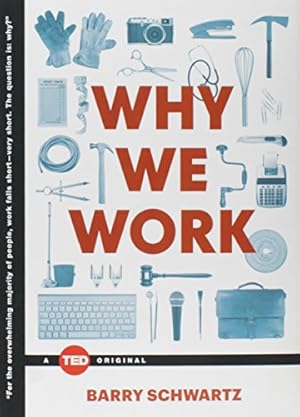
Barry Schwartz is Emeritus Professor of Psychology at Swarthmore College, and Visiting Professor of Management at Haas School of Business, U.C. Berkeley. He is the author of The Battle for Human Nature, The Costs of Living, The Paradox of Choice, Practical Wisdom (with Kenneth Sharpe), and Why We Work. His latest book, with Richard Schuldenfrei, is Choose Wisely.

Photo by Nico Lee

Customer reviews

4.3 out of 5 stars
2,462 global ratings

Customers say

Customers find the book thought-provoking, providing great insight into decision-making and making better choices. Moreover, the writing style is well-crafted, and customers appreciate its readability, noting it can be read multiple times. However, customers disagree on the book's entertainment value, with some finding it engaging while others find it slightly boring. Additionally, the concept receives mixed reactions, with some praising the amazing concepts while others find them pointless. The book is repetitive, with customers noting it repeats certain things several times.
AI Generated from the text of customer reviews

Select to learn more

185 customers mention content, 162 positive, 23 negative
Customers find the book's content engaging and insightful, describing it as one of the best self-help books they've read.
Great book! It has stimulating ideas and inspiring suggestions to apply in your life. You may chnage the way you think after t=reading this book.Read more
Good read and good experience for those who are interested in psychology. Highly recommended for marketers and teachers. Good luckRead more
...Overall though, a great read. Highly recommended to understand the convoluted world we presently live in.Read more
in average it's a good book, but I found a lack of 'pure' definitions, there are some good examples thought.Read more
34 customers mention thought-provoking, 34 positive, 0 negative
Customers find the book thought-provoking, shedding light on various aspects of decision-making and the psychology behind choices.
Very informative and thought provoking. It's amazing how simplicity may in fact lead to greater satisfactionRead more
Great thoughts on the Age of too many choices.Read more
A very interesting and thought provoking book. Especially in this day and age of income disparity and disconnection, a book like this is well needed.Read more
...This is the book with the answer to that question! Thought provoking reading.Read more
26 customers mention choice, 22 positive, 4 negative
Customers appreciate the book's insights on decision-making, noting that it helps them make better choices, with one customer highlighting how limiting options can be liberating rather than constraining.
A must read for anyone who is driven to make the best choice on EVERYTHING!!!Read more
...The final chapter offers ideas to improve and they are excellent suggestions. Highly recommendedRead more
...Good read. Gives a good perspective on how to streamline and make better choices.Read more
...you look at our world in a new way, be able to make better and smarter choices, and live a simpler, less-stressful life....Read more
23 customers mention writing style, 21 positive, 2 negative
Customers appreciate the writing style of the book, describing it as well written, with one customer noting it is accessible and another mentioning its concise nature.
...- with plenty of reason to give it 5 stars because it is smart and well written - or to give it 3 because I lost interest halfway through - or to...Read more
Well written book that explains a lot about me and the people in my life and our/their decision-making process. Recommend.Read more
Solid. good stats and good writing.Read more
Fantastically writtenRead more
16 customers mention readability, 13 positive, 3 negative
Customers find the book easy to read and appreciate that they can revisit it multiple times, with one customer noting it never talks down to the reader.
This is one book that I can read over and over and have recommended it to more people than any other book....Read more
...The book is easy to read but I found it took a little while to get me really hooked....Read more
...It is a quick read and very interesting. Perfect fodder for a cocktail party and you will learn something new....Read more
Super easy read. Well laid out.Read more
33 customers mention engaging, 22 positive, 11 negative
Customers have mixed opinions about the book's engaging nature, with some finding it great fun to read about and interesting, while others describe it as boring and dull.
Deep and informative while interesting and funny. Glad I read it. Feels like necessary information.Read more
...This book is tedious and repetitive....Read more
...it paints and the content it uses is applicable to the real-world and engaging, but the examples could have been more interesting or...Read more
This book was not only insightful and eloquent, it was fun to read....Read more
12 customers mention concept, 7 positive, 5 negative
Customers have mixed opinions about the book's concepts, with some finding them amazing while others consider them pointless.
The concepts of the book are good but the examples in the book are becoming outdated....Read more
...Most of this is common sense stuff. If anyone wants this boom for cheap let me know I’ll sell it to you.Read more
The concept is very interesting. However as commented by other people the book could have been shorter as it repeats certain things several times....Read more
Seriously dumb book. It has no point and just goes through the random choices we face everyday in situations....Read more
22 customers mention repetitive, 1 positive, 21 negative
Customers find the book repetitive.
Boring and repetitive. Also, I didn't notice how long ago it was written,and much of it is outdated. I didn't finish it.Read more
...good observations in here, but I found the book a little dry and often repetitive. Some noteworthy quotes and ideas to follow up on.Read more
I had a hard time getting into the book, the first dozen or so pages are example after example of how we have a zillion choices for everything at...Read more
...valid and points made make for interesting discussions, but it is too drawn out. I suggest speed reading or just read a synopsis....Read more
Missing letters.
3 out of 5 stars
Missing letters.
Printing is not too great. I'm not returning since I started underlining, and I can guess the word anyway... But it's missing letters here and there.
Thank you for your feedback
Sorry, there was an error
Sorry we couldn't load the review

Top reviews from the United States

  • 5 out of 5 stars
    We Buy More, But We Enjoy Less. Find Out Why.
    Reviewed in the United States on April 20, 2004
    Brief content visible, double tap to read full content.
    Full content visible, double tap to read brief content.

    In his new book The Paradox of Choice - Why More Is Less, Barry Choices. We're surrounded by them. Whether we're trying to pick out a new pair of jeans, shopping for car insurance, getting groceries, selecting a long-distance phone carrier, ordering a cup of coffee, or even deciding which spiritual path to follow, we're faced with a staggering amount of options. Just this weekend, my husband and I were shopping for a new dryer to replace the one that gave up the ghost. The amount of dryers was dizzying; they even had digital dryers! Like I jokingly told the salesman, when I do laundry, I don't want to have to do mathematical equations to figure out what numbers to key in...I just want to dry my freakin' clothes!

    The author contends that it's crucial for us to feel like we're in control, but in the face of so many options, is the process of selection back-firing on us?

    Schwartz contends that it is. In accessible, engaging, and anecdotal prose, the author shows how the dramatic explosion of choice--from the mundane to the profound--has paradoxically become a problem instead of a solution. He tells the story of how he used to be able to go into a store and just get a pair of jeans. Being one to wear his jeans until they fall apart, he finally went to the store to get a new pair. A salesperson walked up to him and asked him if she could help. "I want a pair of jeans--32-38", he said. She proceeds to ask him if he wants them slim fit, easy fit, relaxed fit, baggy, or extra baggy? Stonewashed, acid-washed, or distressed? Buttton-fly or zipper fly? Faded or regular?

    He was stunned. He sputtered that he just wanted regular jeans...you know, the kind that used to be the only kind? Schwartz then begins a mission to find out the range of choice for Americans. He goes on to list some pretty eye-opening statistics. For example, in his local supermarket, he found 285 varieties of cookies. Just the chocolate-chip cookies alone had 21 options! At his local electronics store, he counted 85 different telephones, not including cell phones. Even shopping for colleges has become an intellectual shopping mall.

    And speaking of malls, did you know that Americans go to shopping centers about once a week, more often than they go to houses of worship? American now has more shopping centers than high schools. However, when asked to rank the pleasure they get from various activities, grocery shopping ranks next to last, and other shopping fifth from the bottom.

    People are shopping more, but enjoying it less. But why? If they do enjoy it less, why do they keep doing it? This is the crux of the book, where Schwartz cites fascinating studies including Why Choice Is Demotivating. He also examines why it is that the excitement of purchasing new items seems to wear off so fast, and why we sometimes actually feel badly about our choices. For one, humans are adaptive. "Familiarity breeds contempt", as the old adage goes. But it's also the fact that we second guess ourselves after a purchase, mulling what we could have chosen, as well as asking ourselves if we really chose "the best".

    Choosing "the best" is a trait of maximizers. Schwartz says that maximizers tend to be less happy than satisficers. Satisficers are those who choose with the mindset of "good enough". But because America is a culture where many seek "the best" and compare their choices and lifestyle with their neighbors and media standards, most of us are maximizers.

    What are some of the qualities of a maximizer?

    1. Maximizers engage in more product comparisons than satisficers, both before and after they make purchasing decisions.

    2. Maximizers take longer than satisficers to decide on a purchase.

    3. Maximizers spend more time than satisficers comparing their purchasing decisions to the decisions of others.

    4. Maximizers are more likely to experience regret after a purchase.

    5. Maximizers are more likely to spend time thinking about hypothetical alternatives to the purchases they've made.

    6. Maximizers generally feel less positive about their purchasing decisions.

    7. Maximizers savor positive events less than satisficers and do not cope as well (by their own admission) with negative events.

    8. After something bad happens to them, maximizers' sense of well-being takes longer to recover.

    9. Maximizers tend to brood or ruminate more than satisficers.

    Is it any wonder that we buy more, but enjoy less? What drew me to this book was because I knew that I was the type of person that obsessed over purchases, taking forever to select an item. I used to be so indecisive at a restaurant, taking 20 minutes to figure out what I wanted! What am I in the mood for? How will I feel when I eat it? What's the tastiest thing I could order? I'm much better than I was, but still... I also noticed the trend to second guess many of my purchasing decisions and wondering if I could "do better".

    So when I read about this book in Parade magazine, I ordered it from Amazon.com. The great thing about this book is that Schwartz synthesizes current research, and shows how eliminating choices can greatly reduce the stress, anxiety, and busyness of our lives. He even offers eleven practical steps on how to limit choices to a manageable number, have the discipline to focus on those that are important and ignore the rest, and ultimately derive greater satisfaction from the choices we have to make.

    Oh, and I picked my new dryer rather easily. I knew I wanted an interior light, a manual dial, large capacity, and a signal to let me know when the clothes were done. However, my husband kept standing there with a "deer in the headlights" look. (And finally agreed with my choice.)

    Do you think locking him in our bathroom with this book might help? Not a lotta choices in there, after all...

    52 people found this helpful
    Sending feedback...
    Thank you for your feedback.
    Sending feedback...
    Thanks, we'll investigate in the next few days.
  • 4 out of 5 stars
    Why Less is More - Increase satisfaction with this great guide to decision making
    Reviewed in the United States on March 25, 2015
    Brief content visible, double tap to read full content.
    Full content visible, double tap to read brief content.

    THE PARADOX OF CHOICE by Barry Schwartz

    Four and Half Stars- Must Read for anyone interested in "decision making"

    A fantastic book on why more is less (or less is more). It is a fantastic essay on how the culture of abundance robs us of satisfaction in life, and more importantly bring in depression. It shares enough case studies and examples of why more is less, and how to increase satisfaction life.

    Key Idea: Giving people too many choices tends to lessen their satisfaction.

    “Maximizers” are people who, given a choice, will exhaustively search all the options, seeking all possible information, in order to make the best possible choice. This behavior generally consumes a lot of time, and often leads to nagging doubts, perhaps where no one clear winner emerged.

    “Satisficers” are those who settle for a choice that is “good enough” for them These people are generally happier with their choice, and spend less time choosing, leaving them free to enjoy other things.

    Counterintuitive wisdom

    1. We are better of if we embraced voluntary constrains of choice on our freedom of choice, instead of rebelling against in thme

    2. We are better off when we choose good enough instead of seeking the best

    3. Lower your expectations about the results of your decisions

    4. We are better off if our decisions are irreverseable

    5. We are better off if we paid less attention to what others do around us

    Summary of the book by Chapter:

    Lets go shopping: Every area of our life from the super market to the education market offers way too much choice.

    New Choice: Filtering our extraneous information is the key function of consciousnesses.

    Deciding and Choosing: Figure your goals out, rank them, evaluate options and their likelyhood to meet goals, pick winning option .

    Growth of options and opportunities means decisions require more effort, mistakes are more likely and psychological ocnsequence of mistakes is more severe.

    When Only The Best Will Do: When you seek and only the best will do you are a MAXIMIZER. When you seek the good enough and not worry about consequences you are a SATISFIER.

    Maximizers tend to: make more product comparisons, take longer to decide, compare their decisions to others, experience more regret that others, feel less positive about their decisions.

    Choice & happiness: Every choice we make is a testament to our autonomy. The choice of when to be a chooser may be the most important choice we have to make. The more control people have, the less helpless they feel, the less depressed they will be.

    Time spent with dealing with choice is time spent away from being in life.

    Some constrain can afford liberty, while freedom will bring enslavement, it is wise to choose the the constrains.

    Missed opportunities: Examine opportunity costs - more the choices, we diminish our subjective experience of benefits, thus we are worse off.

    When people have too many options and trade offs, they avoid making decisions options we consider usually suffer from companions with other options

    One reason why maximizers are less happy, less satisfied with their lives, and more depressed than satisfiers is precisely because the taint of tradeoffs and opportunity costs washes out much that hshould be satisfying about the decisions they make.

    The Problem of Regret: Two factors affect regret a) personal responsibility for the result b) how easily we can imagine the counter factual better alternative.

    Regret looms more for the maximizer than the satisfier.

    Everything suffers from Comparisons: Curse fof high expectations, curse of social comparisons due to race for status,

    Maximizers are more concerned with social comparisons than satisfiers. Increasing available options seems to usually reduce satisfaction.

    Whose Fault is it?:Helplessness induced by failure or lack of control causes depression. Depression more common when only the best will do.

    What to do about Choice?:

    1)Choose when to choose.- think of cost associated with decisions.

    2) Be a chooser not a picker -

    3)Satisfy more, maximize less

    4)Think about opportunity costs of opportunity costs - dont be swayed by new and improved

    5) Make decisions non reversible

    6) Practice an attitude of gratitude

    7)Regret less

    8) Anticipate adaptation - focus on how things are as opposed to as they were

    9) Control expectations

    10) Avoid social comparisons

    11)Learn to love constrains

    This book is worth the read, to hammer home the point of embracing a satisfaction based life, and how to learn to love constrains. BUY THIS BOOK, which was voted as a TOP 10 book for the year by Business Week to understand why" less is more, and how to increase the satisfaction in your life."

    Mahipal Lunia

    www.TheRenaissancePath.com

    42 people found this helpful
    Sending feedback...
    Thank you for your feedback.
    Sending feedback...
    Thanks, we'll investigate in the next few days.
  • 5 out of 5 stars
    For people obsessed with maximizing
    Reviewed in the United States on March 28, 2026
    Brief content visible, double tap to read full content.
    Full content visible, double tap to read brief content.

    I needed this book, I didn’t realize ( or didn’t want to) how bad I had gotten when it came to maximizing. Specifically buying things looking at endless reviews (ironic I know as I’m writing one) how bad this can be for your well being. This is truly a self help book combine with really fun research cases that give a lot of insight into this topic. I think he hit the sweet spot on this. Research with actual practical help. If you fall into any of the following categories you need to get this book 1. If you have fomo 2. If you obsess and waste so much time finding the “perfect “ product , diet, doctor, job, spouse, book 3. If you are comparing yourself to crazy expectations. Just to name a few.

    I think we all need this book more now than ever. To be honest when I bought this book I was being a “picker” not a chooser as he mentions in the book. I saw the title read and I was ohh that looks good without giving it much thought I just picked it and put it on my cart. After reading it I felt a little ashamed that I am one of those people that compulsively buys things to get another fresh feeling that doesn’t last. Two things that really stuck with me that I am going to try to apply for my problem (borderline shopping addiction with clothes and makeup etc) is to just always buy the same brand or narrow it to two choices, he mentions if you were not disappointed by a product then that means you actually enjoyed it or liked so why waste so much time and energy finding the perfect product/ thing. This is so true. The second thing I loved is when he mentions that limiting your choices is not constraining but instead gives you freedom. For example you set rules of thumb that instead of leaving it up how you are feeling your going drink maybe 2- however much glasses of wine you want, instead always limit yourself to just cups. It’s crazy to see how much we let our obsession to

    Maximize and choices clutter our brains and affect our life. Find what you overwhelms you with choices and see if they’re actually worth your time and energy.

    Sending feedback...
    Thank you for your feedback.
    Sending feedback...
    Thanks, we'll investigate in the next few days.
  • 3 out of 5 stars
    An interesting read, but...
    Reviewed in the United States on January 6, 2009
    Brief content visible, double tap to read full content.
    Full content visible, double tap to read brief content.

    ...but I came away thinking the author did not prove his subtitle. He did prove "Why More is Less" but I don't think he showed "How the Culture of Abundance Robs Us of Satisfaction". I believe a more accurate (although less appealing) subtitle may have been "How the Culture of Abundance Allows Unrepentant Maximizers to Drive Themselves Crazy".

    Full disclosure - I am a Satisficer. I scored very low on his test on page 80. Consequently I don't see how fewer choices in the culture at large would make me more satisfied. I have already found a way to filter out most of the unnecessary (for me) choices in life and an quite content to stick with the same brand of jeans, shirts, and crackers. But at the same time, I would not want to be denied the opportunity to possibly change my mind in the future - and I would not want others who may make different choices than I to be denied either.

    That being said - I fully understand certain people may become unhappy with the abundance of choices in our culture. But isn't that a reflection of the individual's reaction to the culture - and not the fault of the culture itself? Are Maximizers victims of the culture as the subtitle implies? Or are they simply people who haven't adequately learned to cope with abundance? If one were to argue that our culture is also a culture of alcohol (you may or may not agree - but I'll play the devil's advocate for now) - does that mean that the culture is responsible for alcoholism within individuals? Does a culture of alcohol "rob" us of our sobriety? I think not. In both cases - it is the individual reaction to the culture (either through choice or predisposition) - not the culture itself - which causes the underlying problem.

    Fortunately - the author does not spend too much time prescribing involuntary changes to the culture at large. Instead - he focuses on what individuals can do themselves to deal with the myriad of choices available to them - and how they can create a mindset to lead to higher satisfaction. So my review is mainly critical of the subtitle. In the end the book is worth a read - especially if you are a Maximizer who finds themselves overwhelmed.

    PS. One thing I cannot leave out - on page 53 the author states that the average American sees 3000 advertisements per day. I'd really like to know where this statistic came from. It seems so dubious to me that I nearly put the book down at that point.

    40 people found this helpful
    Sending feedback...
    Thank you for your feedback.
    Sending feedback...
    Thanks, we'll investigate in the next few days.
  • 5 out of 5 stars
    Good and bad choices in financial trading
    Reviewed in the United States on September 26, 2006
    Brief content visible, double tap to read full content.
    Full content visible, double tap to read brief content.

    Having a choice in life is a good thing; a person without choices is often miserable. As the number of choices grows, our happiness grows with them, but then it begins to decline. Having too many choices creates stress. Schwartz describes his visit to a local supermarket: "...next to the crackers were 285 varieties of cookies. Among chocolate chip cookies there were 21 options. ... Across the isle were juices - 13 `sports drinks,' 65 `box drinks' for kids, 85 other flavors and brands of juices, and 75 iced teas and adult drinks. I could get these tea drinks sweetened (sugar or artificial sweetener), lemoned, and flavored. ... I found 61 varieties of suntan oil and sunblock, and 80 different pain relievers - aspirin, acetaminophen, ibuprofen; 350 milligrams or 500 milligrams; caplets, capsules, and tablets; coated or uncoated. There were 40 options for toothpaste, 150 lipsticks, 75 eyeliners, and 90 colors of nail polish from one brand alone."

    Those wide choices may seem appealing, but Schwartz brings our attention to what he calls `the darker side of freedom' - the stress of choice. This paradox is the most pronounced in the financial markets. Even though his book is about the paradox of choice in general, I read it with an eye towards the financial markets, my own trading, and what I see in other traders.

    Shall we trade stocks, futures, or options? If stocks, shall we trade the more seasoned issues on the NYSE or look for riskier high-growth candidates on the NASDAQ? Should we track agricultural, tropical, or financial futures? And what about the forex? Should we buy or write options, or look into more complex strategies, such as spreads? And worst of all - what if another market makes a spectacular move while our attention is focused elsewhere? No wonder the majority of traders feel so stressed. Schwartz says "Choosing almost always involves giving up something else of value. ... The overload of choice contributes to dissatisfaction."

    "Losses hurt more than gains satisfy. ... The cost of any option involves passing up the opportunities that a different option would have afforded. ... Conflict induces people to avoid decisions. ...Emotional unpleasantness makes for bad decisions. ... The desire to avoid regret leads to inaction inertia. ... An overload of choice contributes to dissatisfaction."

    Every trader who kicked himself after a profitable trade for having `left more money on the table' will chuckle at a cartoon of a kid in a t-shirt that says "Brown ... but my first choice was Yale." Schwartz shows how people are divided into `maximizers' who always strive for the best and `satisficers' those who settle for some reasonable level of success. "Almost everyone who scores high on maximization scale also scores high on regret." You can decide to be a maximizer in a very small number of situations that truly matter to you and be a more mellow satisficer in the rest of your life. "We would be better off seeking what was good enough instead of seeking the best."

    Connections with trading kept running through my mind while reading this book. How many successful people kick themselves, feeling that their performance was not good enough. How many stay way too long in a bad trade because of `sunk costs.' Schwartz exposes the endless flow of coulda-shoulda-woulda as `counterfactual thinking.' He shows how keeping records of decisions impacts people's attitudes towards those decisions. I have been saying over and again that keeping good records is the single most important step towards becoming a successful trader.

    The tone of Professor Schwartz's book is that of a friendly, intelligent neighbor, dealing with the same human dilemmas as you and I. He shares his thinking about our problems by talking with us, not at us. His compact and smoothly written book sheds light on many aspects of decision-making, the stress of `roads not taken,' the curse of high expectations, etc.

    The mere fact of outlining a problem is a big step towards clarity, but after 10 chapters, I felt ready to hear about his proposed solutions. They were delivered in Chapter 11 (which I hope had nothing to do with the eponymous chapter of the bankruptcy code :-)). Professor Schwartz's advice was lucid, logical, and sensible - but you will have to read it yourself (I do not describe it here because reciting solutions without having worked through the problems is likely not to be useful.)

    I highly recommend this book to all traders. My only quibble is the paper quality of the paperback - it is grayish, and should have been much whiter! But the publisher offers you no choice!

    www elder com

    48 people found this helpful
    Sending feedback...
    Thank you for your feedback.
    Sending feedback...
    Thanks, we'll investigate in the next few days.
  • 4 out of 5 stars
    Thoughtful, Informative and Fun
    Reviewed in the United States on August 23, 2016
    Brief content visible, double tap to read full content.
    Full content visible, double tap to read brief content.

    I'm came upon this book, as I'm sure many did, after hearing Schwartz's Ted Talk, which in 10 minutes really does give you the general gist of this book. That said, there is enough here to justify reading from start to finish if you want to delve a little deeper, find out more specifics about the research he (and others) did. A number of recurring terms are used throughout the book, as if it's like a mini-textbook, only infinitely more enjoyable and arguably more interesting. For me personally, much of what Schwartz talks about in The Paradox of Choice is stuff I've consciously and unconsciously thought and considered, but he manages to spell it out, put it into words in a way that helped open my mind up a little more. As I gradually worked my way through the book, I felt myself become more self-aware, and it got me thinking about what decisions I should think or "fret" over, and which ones I should more or less automate. I love it when a book achieves that type of sensation, the kind made from giving you great, important information in a way that feels a cut above the norm, but not so complex and sprawling that it becomes a chore. In fact, one of the only shortcomings I can muster to hold against the book (and ultimately why I gave it 4/5 stars) is because I felt there were parts that could've used more elaboration, specifically the fourth and final part, which feels too much like a rushed conclusion when all is said and done. Not to say the book ends poorly, I just think a little more substance for the conclusion would've left an even greater lasting impression.

    Now I can easily see some people misreading what Schwartz brings to light in this book, or at least certain parts and aspects. For instance, a common suggestion made throughout is to be okay with "good enough." Schwartz does bring up the fact that higher expectations can (and often do) objectively lead to superior products and experiences, but it's easy to lose sight of that every time he mentions how "satisficers" are happier and that a "good enough" mentality and approach to life can make us feel better. There are even parts that one could interpret as him advocating for lifestyles where a lack of choice, regardless of whether we want the freedom of choice or not, may actually be better. This is sure to leave quite an impression on some readers, and I obviously can't speak for Schwartz himself, but my own takeaway isn't that we should regress back into having more choice. Rather, I feel the ultimate message we should take is that living lives with just enough restraint, keeping things concise and not fretting over little things that have little to no impact in the long run, is better than having to look into and analyze every little detail about every little decision. Another way of looking at it is the "less is more" expression. Knowing when to limit ourselves and knowing when to take full advantage of whatever we can is the line I feel Schwartz wants us all to walk. Having more to choose from is great, just don't let the abundance consume you.

    7 people found this helpful
    Sending feedback...
    Thank you for your feedback.
    Sending feedback...
    Thanks, we'll investigate in the next few days.
  • 5 out of 5 stars
    Maximize less, satisfice more
    Reviewed in the United States on August 27, 2005
    Brief content visible, double tap to read full content.
    Full content visible, double tap to read brief content.

    You don't have to do anything but die and pay taxes. Really, you don't even have to pay taxes; you choose to because not paying them would lead to problems.

    Barry Schwartz, in this little gem of a book, reminds us that life can be defined as a series of choices. You choose to get up in the morning. You choose to shower, get dressed and go to work. You choose where (or whether) to go to college, what car to buy, what job offer to accept, what flavor of ice cream to eat.

    Twenty-first-century Americans have a wider array of choices to make than any other society in history. More schools, more cars, more occupations, more styles of blue jeans. That should be a good thing, right? Well, yes... and no. Schwartz shows us how an overabundance of choices can lead to us to squander our time and our emotional energy, endlessly agonizing over every single choice, breathlessly analyzing every possible option, angle and outcome. As if that weren't enough, Schwartz explains, the more options there are, the more likely we are to regret the one we chose, no matter how well it might suit our needs.

    The "simple life" of our ancestors was one of limited choices. People tended to spend their lives in the city where they grew up, stay married to one person, and keep the same job until they retired. As limiting as that sounds, research shows that people were happier 40 years ago than we are now.

    So will it take a return to the 1960s to make us all happy? Certainly not. Abundant options are a good thing, as long as we approach them rationally. For every decision we face, there's another decision we have to make first: whether to maximize or satisfice. To maximize is to meticulously analyze and compare every possible option. To satisfice is to limit the number of options considered and to accept the first one that will satisfy us. Whereas you should be a maximizer in choosing a mate, you can probably afford to be a satisficer when you pick which car to buy. Even if you find later on that the car you bought is inferior to one of the others you considered, you must weigh that disappointment against the emotional cost of agonizing over a decision whose implications are relatively temporary.

    The Paradox of Choice is the best kind of self-help book. It's unemotional and never preachy. It makes its case with hard scientific data, never talking down to the reader. And, in the last quarter of the book, it suggests practical solutions for simplifying life.

    17 people found this helpful
    Sending feedback...
    Thank you for your feedback.
    Sending feedback...
    Thanks, we'll investigate in the next few days.
  • 5 out of 5 stars
    The Real Deal
    Reviewed in the United States on June 8, 2007
    Brief content visible, double tap to read full content.
    Full content visible, double tap to read brief content.

    The book may look on the outside like a social, economic, or political critique. But it's actually addressed mostly to individuals, and probably belongs mostly in the self-help category.

    Most books of this kind - even some good ones - have only enough interesting ideas to justify a sizeable magazine article. The authors of such books also usually overstate their case drastically by claiming that everything in the world that they don't like can be explained by the one insight that forms the premise of their book.

    This book is an exception. It's not long, but that's largely because there's no padding. Schwartz uses several examples to illustrate his point that our modern, economically productive society has provided us with an unprecedented range of choices in areas of our lives where formerly we didn't have to even think hard to make a decision.

    For me, one of the most thought-provoking and enjoyable things in the book was the inclusion of many creative and revealing psychological experiments which produced unexpected insights concerning how we make decisions, and what the consequences of the decision-making process are.

    Schwartz makes a good case for his thesis that "choice overload" can have a wide range of negative results. And instead of delivering a political diatribe or social critique, blaming politicians or greedy corporations for all of these problems, he addresses himself primarily to his readers, and tells us what he thinks WE as individuals can do to ease the undesirable consequences of having to make too many choices.

    The only part of the book I found unconvincing was when Schwartz argues that (1) when people have to make individual choices in too many areas of life, they then have to take responsibility for the results of those choices, and (2) people who take responsibility for most of the things that happen in their lives tend to be unhappier. I'm condensing his argument here, but he definitely does give the impression that he believes that. And I'm here to say that even if people who take responsibility for the results of their actions **are** unhappier, that's just tough. The last thing we need in our society is fewer people who take responsibility for the results of their choices. Just about every failure and every criminal that I have ever met, or known anything about, has REFUSED to accept responsibility for his or her choices - and that's why they're failures and criminals. If taking responsibility increases your stress level, well isn't that just too bad.

    But that one disagreement doesn't prevent me from giving the book 5 stars. The book makes so many important points, and explains them so lucidly, persuasively, and non-ideologically, that I think everyone should read it.

    7 people found this helpful
    Sending feedback...
    Thank you for your feedback.
    Sending feedback...
    Thanks, we'll investigate in the next few days.

Top reviews from other countries

    Translated by Amazon
    See original
  • 5 out of 5 stars
    Great book to make you think...
    Reviewed in the United Kingdom on July 23, 2013
    Brief content visible, double tap to read full content.
    Full content visible, double tap to read brief content.

    Great book to make you think more, of choices you've made and why—and sometimes, why you didn't. Opposing the opinions of 1star ratings, I didn't stay with impression that author would suggest dictatorship with no choice possible, rather he advocates the existence of limits in amount of choice one is obliged to make, since there are limits to everything else. It's a great book to think after reading it all and processing your own choices in past. One should not take a sentence of the book out of context and make conclusions without making the links. In the end author suggests fair amount of choices and knowing ones own limits to choose, gives one a freedom to live and enjoy the choices made. Nevertheless, even if it is good to reevaluate choice after it has been made to know if it was good or bad more to prevent bad choices in future, living without excessive amount "what if(s)" after choice is made is essential for being happy with what one have chosen. It would be like acknowledging the choice you've made and more forwards to do it better if it was bad before, or be happy with it if it was good and let new experiences to happen instead of reprocessing the previous. In the end there is always something better, something newer as the time goes on (new and/or better models of products), what is important, is to live the moment (at the moment choice was made it was the best choice for you, so you should enjoy it, and if it was a bad choice, move forwards, don't stick to process of decision, when the choice have been already done), don't stick to the past and look in future. Author gives very good explicit examples of his ideas from numerous investigations conducted by various researchers.

    Sending feedback...
    Thanks, we'll investigate in the next few days.
  • 4 out of 5 stars
    The Paradox Of Choice: Why More Is Less, Revised Edition
    Reviewed in Australia on September 11, 2023
    Brief content visible, double tap to read full content.
    Full content visible, double tap to read brief content.

    Good book and great arguments. Lots of gem from the book.

    Sending feedback...
    Thanks, we'll investigate in the next few days.
  • 2 out of 5 stars
    Condescending and unhelpful, but informative
    Reviewed in Japan on March 24, 2020
    Brief content visible, double tap to read full content.
    Full content visible, double tap to read brief content.

    Decision making. I started this book in order to learn more about the decision

    making process, especially about decision making in mundane, or not very

    important things. Difficult choices may take time to make, but there should

    be a useful method to shorten the time of decision making about things without

    a great deal of importance. I hope I will find advice or process method for both

    high / and low gravity decision making.

    At page 50 this book has only made me feel stupid and a tool and a media-

    following sheep. At first it was eye opening and interesting, but even at

    page 100 there were no answers or advice or anything, just the constant and

    very veiled and professional-sounding finger pointing that no matter what we

    think we are all slaves to advertisements and we are too stupid, weak, greedy

    to know better. Even when we know better we are too lazy or greedy on act on it.

    It is starting to piss me off a little, but I am hopeful that the second half of the book

    will have a little more practical advice on how to change it, and less of the blaming

    and making us feel stupid kinda thing.

    Finished. What a mean and unhelpful book! It is very good at explaining what the

    problem is and WHY we are wrong to make choices, but it only makes people feel

    like mindless sheep tools who are too weak and lazy to be responsible.

    The worst part however is that the book offers no help or solution. In the final

    few pages there are some "helpful" tactics, such as "learn to want less" and

    "accept what you have" and "be grateful and write it in a journal" and other

    condescending and cheap advice. Empty words.

    Altogether the book is interesting to learn more about human stupidity

    and an endless finger wagging for being lazy, greedy, lustful idiots.

    Not the help I was hoping for.

    Sending feedback...
    Thanks, we'll investigate in the next few days.
  • 3 out of 5 stars
    مبهدل
    Reviewed in Saudi Arabia on April 14, 2024
    Brief content visible, double tap to read full content.
    Full content visible, double tap to read brief content.

    وصلني الكتاب مبهدل شوية والصفحات مطعوجة

    Sending feedback...
    Thanks, we'll investigate in the next few days.
    Translated from Arabic by Amazon
    See original
  • 5 out of 5 stars
    All great
    Reviewed in Spain on December 10, 2023
    Brief content visible, double tap to read full content.
    Full content visible, double tap to read brief content.
    All great
    5 out of 5 stars
    All great
    Reviewed in Spain on December 10, 2023

    Great book

    Sending feedback...
    Thanks, we'll investigate in the next few days.