


Buy New
-
To see product details, add this item to your cart.
Ships from: Amazon.com Sold by: Amazon.com
Save with Used - Very Good
-
To see product details, add this item to your cart.
Ships from: Zoom Books Company Sold by: Zoom Books Company
Sorry, there was a problem.
There was an error retrieving your Wish Lists. Please try again.Sorry, there was a problem.
List unavailable.
Download the free Kindle app and start reading Kindle books instantly on your smartphone, tablet, or computer - no Kindle device required.
Read instantly on your browser with Kindle for Web.
Using your mobile phone camera - scan the code below and download the Kindle app.

Follow the author
OK
Buffett: The Making of an American Capitalist
Purchase options and add-ons
Starting from scratch, simply by picking stocks and companies for investment, Warren Buffett amassed one of the epochal fortunes of the twentieth century—an astounding net worth of $10 billion, and counting. His awesome investment record has made him a cult figure popularly known for his seeming contradictions: a billionaire who has a modest lifestyle, a phenomenally successful investor who eschews the revolving-door trading of modern Wall Street, a brilliant dealmaker who cultivates a homespun aura.
Journalist Roger Lowenstein draws on three years of unprecedented access to Buffett’s family, friends, and colleagues to provide the first definitive, inside account of the life and career of this American original. Buffett explains Buffett’s investment strategy—a long-term philosophy grounded in buying stock in companies that are undervalued on the market and hanging on until their worth invariably surfaces—and shows how it is a reflection of his inner self.
- Print length512 pages
- LanguageEnglish
- PublisherRandom House Trade Paperbacks
- Publication dateApril 29, 2008
- Dimensions5.5 x 1.14 x 8.23 inches
- ISBN-100812979273
- ISBN-13978-0812979275
Book recommendations, author interviews, editors' picks, and more. Read it now.
Frequently bought together

Customers who viewed this item also viewed
The Intelligent Investor Third Edition: The Timeless Guide to Value Investing and Financial Wisdom for a Volatile MarketPaperbackFREE Shipping on orders over $35 shipped by AmazonGet it as soon as Thursday, Jun 11
A Random Walk Down Wall Street: The Best Investment Guide That Money Can BuyPaperbackFREE Shipping on orders over $35 shipped by AmazonGet it as soon as Thursday, Jun 11
The Snowball: Warren Buffett and the Business of LifePaperbackFREE Shipping on orders over $35 shipped by AmazonGet it as soon as Thursday, Jun 11
The Intelligent Investor: The Classic Text on Value InvestingHardcoverGet it as soon as Monday, Jun 15
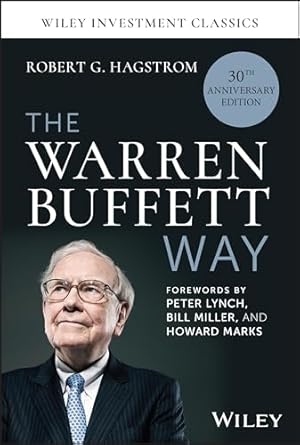
The Warren Buffett Way (Wiley Investment Classics)HardcoverFREE Shipping on orders over $35 shipped by AmazonGet it as soon as Thursday, Jun 11
One Up On Wall Street: How To Use What You Already Know To Make Money In The MarketPaperbackFREE Shipping on orders over $35 shipped by AmazonGet it as soon as Thursday, Jun 11
Customers also bought or read
- A Random Walk Down Wall Street: The Best Investment Guide That Money Can Buy
Paperback$18.40$18.40Delivery Thu, Jun 11 - The Intelligent Investor, 3rd Ed.: The Timeless Guide to Value Investing and Financial Wisdom for a Volatile Market
Hardcover$20.70$20.70Delivery Thu, Jun 11 - Damn Right!: Behind the Scenes with Berkshire Hathaway Billionaire Charlie Munger
Paperback$20.95$20.95Delivery Thu, Jun 11 - The Intelligent Investor: The Classic Text on Value Investing
Hardcover$20.99$20.99Delivery Jun 15 - 18 - The Essays of Warren Buffett: Lessons for Corporate America
Paperback$22.99$22.99Delivery Thu, Jun 11 - The Education of a Value Investor: My Transformative Quest for Wealth, Wisdom, and Enlightenment
Hardcover$17.03$17.03Delivery Thu, Jun 11 - When Genius Failed: The Rise and Fall of Long-Term Capital Management
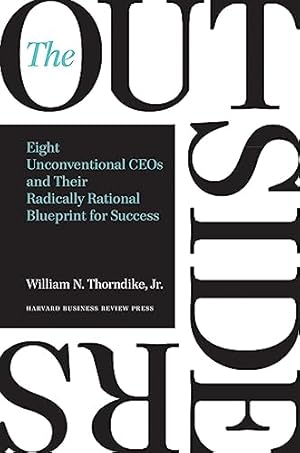
Paperback$12.59$12.59Delivery Jun 13 - 15 - The Outsiders: Eight Unconventional CEOs and Their Radically Rational Blueprint for Success
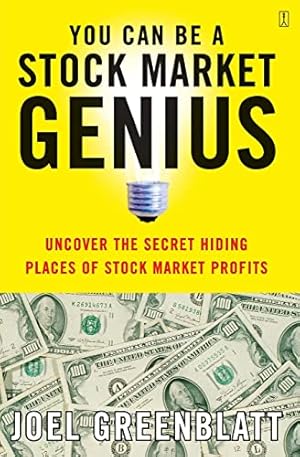
Hardcover$17.81$17.81Delivery Thu, Jun 11 - You Can Be a Stock Market Genius: Uncover the Secret Hiding Places of Stock Market Profits
Paperback$11.36$11.36Delivery Jun 15 - 21 - Tap Dancing to Work: Warren Buffett on Practically Everything, 1966-2012: A Fortune Magazine Book
Hardcover$13.10$13.10Delivery Thu, Jun 11 - Poor Charlie’s Almanack: The Essential Wit and Wisdom of Charles T. Munger
Hardcover$27.49$27.49Delivery Thu, Jun 11 - The Intelligent Investor: The Definitive Book on Value Investing. A Book of Practical Counsel
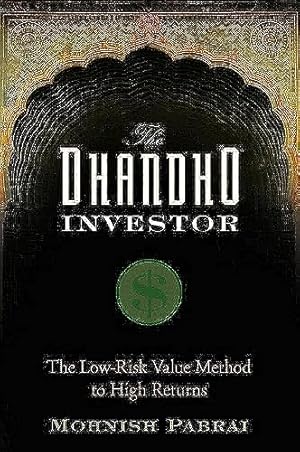
Paperback$27.99$27.99Delivery Jun 12 - 15 - The Dhandho Investor: The Low-Risk Value Method to High Returns
Hardcover$21.84$21.84Delivery Thu, Jun 11 - Buffett and Munger Unscripted: Three Decades of Investment and Business Insights from the Berkshire Hathaway Annual Shareholder Meetings
Hardcover$25.60$25.60Delivery Thu, Jun 11 - The Warren Buffett Portfolio: Mastering the Power of the Focus Investment Strategy
Paperback$13.45$13.45Delivery Thu, Jun 11 - University of Berkshire Hathaway: 30 Years of Lessons Learned from Warren Buffett & Charlie Munger at the Annual Shareholders Meeting
Paperback$10.99$10.99Delivery Thu, Jun 11 - Richer, Wiser, Happier: How the World's Greatest Investors Win in Markets and Life
Hardcover$14.96$14.96Delivery Thu, Jun 11 - One Up On Wall Street: How To Use What You Already Know To Make Money In The Market
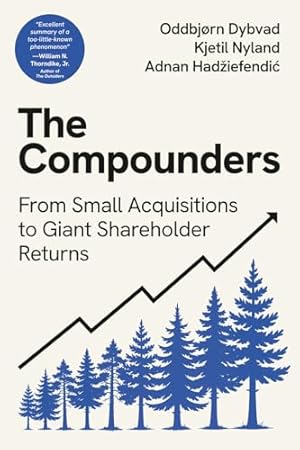
Paperback$9.99$9.99Delivery Thu, Jun 11 - The Compounders: From Small Acquisitions to Giant Shareholder Returns
Paperback$26.19$26.19Delivery Thu, Jun 11 - The Complete Financial History of Berkshire Hathaway: A Chronological Analysis of Warren Buffett and Charlie Munger's Conglomerate Masterpiece
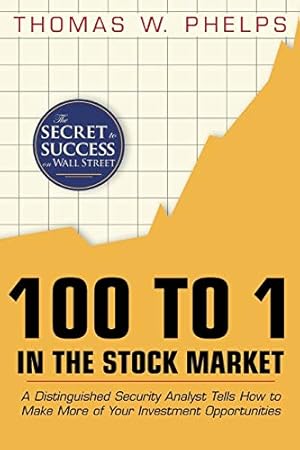
Paperback$21.00$21.00Delivery Thu, Jun 11 - 100 to 1 in the Stock Market: A Distinguished Security Analyst Tells How to Make More of Your Investment Opportunities
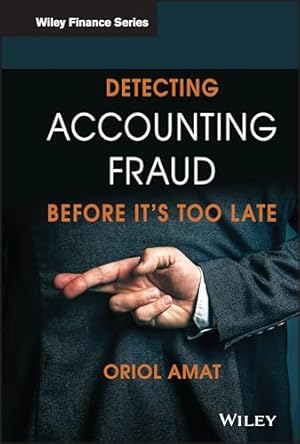
Paperback$39.95$39.95FREE delivery Jun 15 - 17 - Detecting Accounting Fraud Before It's Too Late (The Wiley Finance Series)
Hardcover$52.00$52.00FREE delivery Thu, Jun 11 - Benjamin Graham on Value Investing: Lessons from the Dean of Wall Street
Paperback$17.00$17.00Delivery Thu, Jun 11 - Buffett's Early Investments: A new investigation into the decades when Warren Buffett earned his best returns
Hardcover$36.06$36.06FREE delivery Thu, Jun 11
From the Publisher
Editorial Reviews
Review
"Mr. Lowenstein has done a masterly job."--The New York Times Book Review
About the Author
Excerpt. © Reprinted by permission. All rights reserved.
OMAHA
Like a diamond set in emerald, gracing the west bank of the Missouri River, lies Omaha, the wonder city of the West and marvel of enterprise, ability, and progressiveness.
TELEPHONE COMPANY PROMOTION, 1900
Almost from the day that Dr. Pollard awakened him to the world, six pounds strong and five weeks early, Warren Buffett had a thirst for numbers. As a boy, he and his friend Bob Russell would pass an afternoon on the Russells’ front porch, which overlooked a busy intersection, recording the license-plate numbers of passing cars. When the sky darkened, they would go inside and spread open the Omaha World-Herald, counting how often each letter appeared and filling entire scrapbooks with progressions of numbers, as though they held the key to some Euclidean riddle. Often, Russell would reach for the almanac and read out a list of cities. One by one, Warren would spit back the populations. “I’d say a city, he’d hit it on the nose,” Russell would recall, half a century later. “I might say, ‘Davenport, Iowa; Topeka, Kansas; Akron, Ohio.’ If I gave him ten cities, he’d hit every one.” Baseball scores, horse-racing odds—every numeral was fodder for that precocious memory. Combed, scrubbed, and stuffed into a pew of Dundee Presbyterian Church, Warren would pass the time on Sundays calculating the life spans of ecclesiastical composers. He would stand in the living room with a paddle and ball, counting, counting by the hour. He would play Monopoly for what seemed forever—counting his imagined riches.
Blue-eyed, with a fair complexion and pink cheeks, Warren was intrigued not merely with numbers, but with money. His first possession was a nickel-coated money changer, given to him by his Aunt Alice at Christmas and thereafter proudly strapped to his belt. When he was five, he set up a gum stand on his family’s sidewalk and sold Chiclets to passersby. After that, he sold lemonade—not on the Buffetts’ quiet street, but in front of the Russells’ house, where the traffic was heavier.
At nine, Warren and “Russ” would count the bottle caps from the soda machine at the gas station across from the Russells’ house. This was not idle counting, but a primitive market survey. How many Orange Crush caps? How many Cokes and root beers? The boys would cart the caps in a wagon and store them in Warren’s basement, piles of them. The idea was, which brand had the highest sales? Which was the best business?
At an age when few children knew what a business was, Warren would get rolls of ticker tape from his stockbroker father, set them on the floor, and decipher the ticker symbols from his father’s Standard & Poor’s. He would search the local golf course for used but marketable golf balls. He would go to Ak-Sar-Ben* racetrack and scour the saw-dusted floors, turning over torn and discarded stubs and often finding a winning ticket that had been erroneously thrown away. In the sweltering Nebraska summers, Warren and Russ would carry golf clubs for the rich gentlemen at the Omaha Country Club and earn $3 for the day. And at dusk, as they rocked on the Russells’ front-porch glider in the stillness of the Midwestern twilight, the parade of Nashes and Stude-bakers and the clanging of the trolley car would put a thought in Warren’s mind. All of that traffic with no place to go but right by the Russells’ house, he would say—if only there were a way to make some money off it. Russell’s mom, Evelyn, recalled Warren after fifty years. “All that traffic,” he would say to her. “What a shame you aren’t making money from the people going by.” As if the Russells could set up a toll booth on North 52nd Street. “What a shame, Mrs. Russell.”
What, then, was the source?
Warren was the second of three children, and the only son. His mother was a petite, feisty woman from a small town in Nebraska. She had a lively temperament and, as was said of women relegated to a supporting role, “a good head for numbers.” Warren’s father, a serious but kind man, was surely the dominant influence in his life. Opening to Warren’s eyes the world of stocks and bonds, he must have planted a seed, but insofar as such things are knowable, Howard Buffett’s acumen for numbers was not on a par with his son’s. Nor was his passion for making money. What was it, then, that prompted Warren to turn from that mannered, comfortable household—to crawl along the floor of the racetrack as though it were a bed of pearl oysters? What was it that would enable him, years later, to stun his colleagues in business-time and again—by computing columns of figures in his head, and by recalling encyclopedic volumes of data as easily as he had the population of Akron? Warren’s younger sister, Roberta, said flatly, “I think it was in his genes.”
The Buffetts were said to be gentle and sweet-natured, traits that endured. They were skilled at business and loath to spend a dollar. The earliest known Buffett (pronounced Buffett) in America, John Buffett, was a serge weaver of French Huguenot origin. He married Hannah Titus, in Huntington, on the north shore of Long Island, in 1696.1 The Buffetts remained on Long Island, as farmers, until after the Civil War. But they had a streak of ambition, which clashed with the family’s frugal ways. In 1867, Sidney Homan Buffett was employed at clearing land for Zebulon Buffett, his grandfather. On hearing of his fifty-cent-per-diem wage, Sidney became so disgusted that he put down his ax and headed west. He took a job driving a stage out of Omaha, and in 1869 opened the S. H. Buffett grocery. With Omaha still in its frontier beginnings, the Buffetts were ensconced in the city’s commercial life, a mile and a half from the wooded site of the future office of America’s richest man.
Omaha was a cluster of frame and log buildings, set against the rugged bluffs rising from the Missouri River. Though the plains stood at its door, the town itself was hilly. The area had been wilderness until 1854, when a treaty with the Maha Indians (later the Omahas) opened the Nebraska Territory to settlement. The seminal moment in its growth was in 1859, when an Illinois railroad lawyer named Abraham Lincoln visited the area and took a parcel of land as collateral for a defaulted loan. A few years later, President Lincoln designated the city as the eastern terminal of the Union Pacific Railroad.
Sidney Buffett opened his store, with impeccable timing, three months after the railroads joined the continent. Omaha was already “the great jumping-off place” for engines belching across the plains.3 It soon was teeming with settlers, drifters, speculators, Civil War veterans, railroad men, ex-convicts, and prostitutes, many of whom happened upon the Buffett grocery, where
Sidney sold quail, wild ducks, and prairie chickens over the counter. Zebulon was highly dubious of his prospects. Writing to his twenty-one-year-old grandson, Zebulon stressed that prudence in business was the Buffetts’ watchword.
You can’t expect to make much, but I hope business will get better in the spring. But if you can’t make it, do leave off in time to pay your debts and save your credit, for that is better than money.
But the young city prospered, and Sidney prospered with it. By the 1870s, Omaha had cast-iron architecture and an opera house. By the turn of the century, it had skyscrapers, cable cars, and a swelling population of 140,000. Sidney built a bigger store and brought two sons into the business. The younger of these, Ernest—the future grandfather of Warren—had the family knack for business. He quarreled with his brother over a girl, and married her, whereupon the brothers stopped speaking. In 1915, Ernest left the downtown store and established a new one—Buffett & Son—in the city’s western reaches.
Once again, the Buffett timing was shrewd. Omaha’s population was migrating west from the river. Sensing opportunity in the suburbs, Ernest cultivated a delivery trade and sold on credit. Soon, rich families’ cooks were phoning orders to Buffett & Son. The business grew, and Ernest hewed to the Buffetts’ tightfisted ways. He paid the stock clerks the lordly sum of $2 for an eleven-hour shift, accompanied by a lecture on the evils of the minimum wage and similar “socialistic” mandates. Tall and imposing, Ernest did not merely run the store—he tyrannized it.
Ernest’s son Howard—Warren’s father—had no interest in becoming a third-generation grocer. Howard was independent-minded, like Ernest, but warmer and without the bluster. He worked briefly on an oil pipeline in Wyoming, but his true interests were in the life of the mind. At the University of Nebraska in Lincoln, Howard was editor of the Daily Nebraskan, and aspired to a career in journalism. Though not particularly handsome, he had dark hair and an arresting gaze. As fraternity president, he had his pick of society belles. But in his senior year, Howard met a hardscrabble country girl who was anything but society.
Leila Stahl had grown up in West Point, Nebraska, a bleak, rural town of 2,200 people. Her father, John Ammon Stahl, owned a weekly paper, the Cuming County Democrat. Most of the people in town were Germanic, and the English-speaking Stahls were outsiders. Leila’s mother felt particularly isolated and spent much of the time bedridden and depressed. Leila and her brother and two sisters had to fend for themselves, and Leila had to help her father at the County Democrat. From the fifth grade on, she would sit on a high stool and set type by hand, and later by Linotype. Sometimes when a train stopped in West Point she would rush on board and interview passengers to fill the news columns. On Thursdays, this slight schoolgirl stood beside the fly of the giant press, firmly gripping the sheets of newsprint and taking care to pull each one at just the right moment. In time, Leila developed pounding headaches, synchronized with the press run of the County Democrat.
Product details
- Publisher : Random House Trade Paperbacks
- Publication date : April 29, 2008
- Edition : Reprint
- Language : English
- Print length : 512 pages
- ISBN-10 : 0812979273
- ISBN-13 : 978-0812979275
- Item Weight : 2.31 pounds
- Dimensions : 5.5 x 1.14 x 8.23 inches
- Best Sellers Rank: #53,309 in Books (See Top 100 in Books)
- Customer Reviews:
About the author

Roger Lowenstein (born in 1954) is an American financial journalist and writer. He graduated from Cornell University and reported for the Wall Street Journal for more than a decade, including two years writing its Heard on the Street column, 1989 to 1991. Born in 1954, he is the son of Helen and Louis Lowenstein of Larchmont, N.Y. Lowenstein is married to Judith Slovin.
He is also a director of Sequoia Fund. His father, the late Louis Lowenstein, was an attorney and Columbia University law professor who wrote books and articles critical of the American financial industry.
Roger Lowenstein's latest book, America's Bank: The Epic Struggle to Create the Federal Reserve (The Penguin Press) was released on October 20, 2015.
Bio from Wikipedia, the free encyclopedia.
Customer reviews
Customer Reviews, including Product Star Ratings help customers to learn more about the product and decide whether it is the right product for them.
To calculate the overall star rating and percentage breakdown by star, we don’t use a simple average. Instead, our system considers things like how recent a review is and if the reviewer bought the item on Amazon. It also analyzed reviews to verify trustworthiness.
Learn more how customers reviews work on AmazonCustomers say
Generated from the text of customer reviewsSelect to learn more
Reviews with images
Great insights to trading world.
Top reviews from the United States
- 5 out of 5 stars
The Oracle of Omaha!
Reviewed in the United States on May 7, 2011As the title indicates this book is a biography of the self-made billionaire investor Warren Buffett. It takes us through his family upbringing, his early years, his eduction and the building of his capitalist empire in Berkshire Hathaway. The author focuses on the people that were influential in his life, particularly his mentor in value investing: Benjamin Graham. This theme is central to Warren's investment strategy (with adaptation on intangibles - such as brand, reputation etc.) . Through the years, despite all the macro-economics event, changes to the business landscape and technological advances this strategy has driven unparalleled sustained business returns over a period of over 40 years which the book covers. The book is full of non-investment business advice, relationship building, career management etc.
Below are some excerpts from the book I found particularly insightful:
-"One sees in Buffett a strongly similar suspiscion of public opinion. Buffett viewed a crowd as a potential source of a sort of intellectual contagion. It was the author of acts and feelings which, rather than being a summing-up of the parts, no one individual among the crowd would have subscribed alone."
-"Regardless of price, we have no interest at all in selling any good business that Berkshire owns, and are very reluctant to sell sub-par businesses as long as we expect them to generate at least some cash and as long as we feel good about their managers and labor relations. We hope not to repeat the capital allocation mistakes that led us into such sub-par businesses....Nevertheless, gin rummy managerial behavior (discard your least promising business at each turn) is not our style."
-"A compact organization lets all of us spend our time managing the business rather than managing each other."
-"Buffett's guides to finding such a stock could be summarized quickly:
a) Pay no attention to macroeconmic trends or forecasts, or to people's predictions about the future of stock prices. Focus on long-term business value - on the size of the coupons down the road.
b) Stick to stocks within one's "circle's of competence." For Buffett, that was often a company with a consumer franchise. But the general rule was true for all: if you don't understand the business - be it a newspaper or a software firm - you couldn't value the stock.
c) Look for managers who treated the shareholders' capital with ownerlike care and thoughfulness.
d) Study prospects - and their competitors - in great detail. Look at raw data, not analysts' summaries. Trust your own eyes, Buffet said. But one needn't value a business too precisely. A basketball coach doesn't check to see if a prospect is six foot one or six foot two; he looks for seven-footers.
e) The vast majority of stocks would not be compelling either way - so ignore them. Merrill Lynch had an opinion on every stock; Buffett did not. But when an investor had conviction about a stock, he or she should also show courage - and buy ton of it.
-"I want employees to ask themselves whether they are willing to have any contemplated act appear on the front page of their local paper the next day, to be read by their spouses, children and friends...If they follow this test, they need not fear my other message to them: Lose money for the firm and I will be understanding; lose a shred of reputation for the firm, and I will be ruthless."
-"Among history's great capitalists, Buffett stands out for his sheer skill at evaluating businesses. What John D. Rockefeller, the oil cartelist, Andrew Carnegie, the philanthropic steel baron, Sam Walton, the humble retailer, and Bill Gate, the software nerd, have in common is that each owes his fortune to a single product or innovation. Buffett made his money as a pure investor: picking diverse businesses and stocks."
-"More than most, he reclaimed the rewards that spring not from trading commitments one for the next, but from preserving them."
For anyone interested in the field of investment, it goes without saying that this is a must read book. Given that I had read another book by Roger L. (When Genius Failed - The Rise and Fall of Long Term Capital Management), I had very high expectations from him and he did not dissapoint. Don't let the size of the book discourage you, once you get started you will have a hard time stopping.
10 people found this helpfulSending feedback...Sending feedback...HelpfulThank you for your feedback.Sorry, we failed to record your vote. Please try againThanks, we'll investigate in the next few days.Sorry, We failed to report this review. Please try again - 5 out of 5 stars
Great reading - but only for those interested in business
Reviewed in the United States on December 31, 2001"Investment is most intelligent when it is most businesslike", Warren Buffett's teacher, Benjamin Graham, once wrote.
This book is a fantastic biography of Warren Buffett. I think anyone who wants to learn about Warren Buffett or his investment techniques etc should first read this book before anything else (including his essays).
This book is written time-chronogically, from the time around the early 1930s (Buffett was born in August 1930) to around 1994. Here we can observe how Buffett had a great desire to be rich since he was young, but in his teen years, after being involved in several business ventures, he longed for a method which is more consistent in making money.
Meeting Benjamin Graham when he was 19/20 years old solved this longing for Buffett. He became a devoted investor in businesses since then. After working under Graham for several years, Buffett began a partnership (noticed how confident he was, despite his young age, to be successful) when he was 26 years old (in 1956) and achieved a 29.4% compounded annual return in the fund (he dissolved the partnership in 1969). During these 14 years, Buffett learnt which businesses (like those possessing customer franchise - Buffett called these with "Deep moats around the castles") were better than others. He dissolved his partnership in 1969 as he deemed the market to be very overvalued then.
From then on, he used the lessons he had learnt to purchase great businesses at reasonable (or cheap) prices, such as Nebraska Furniture Mart, Washington Post, Cap Cities, etc.
To fully enjoy this book, the reader should stop at certain chapters, and read other - yes, other - related books. For instance, around after I had finished reading chapter 3, 'Graham', I read Ben Graham's 'Intelligent Investor'. Also, when Phil Fisher was mentioned as one of the strongest influencers in Buffett's life, I read his book 'Common Stocks and Uncommon Profits'. The readers can get more insights from reading it this way.
Mr. Lowenstein also took excursions when discussing Buffett to go through discussions about certain business characteristics, to ensure that the readers can fully appreciate Mr. Lowenstein's perceived motivation behind a certain Buffett action etc. Mr. Lowenstein also helped the reader to be more knowledgable about key points about US stockmarket history through interesting dissertations. I found these excursions extremely enlightening.
Mr. Lowenstein's writing style is also very 'flowing' - he changed from one topic to another in a very smooth way. You've got to read it to understand what I'm saying.
Lastly, I just want to say that the readers should have at least a moderate-to-strong knowledge and interest in business (and investing; but business = investing and investing = business) to fully appreciate this book. Enjoy!
142 people found this helpfulSending feedback...Sending feedback...HelpfulThank you for your feedback.Sorry, we failed to record your vote. Please try againThanks, we'll investigate in the next few days.Sorry, We failed to report this review. Please try again - 4 out of 5 stars
Graham-Dodd for Dummies
Reviewed in the United States on June 13, 2012Hmmm, well, I haven't even opened this book, but man does it look good on my desk at work.
Update upon reading it: It's actually pretty good. Something tells me Lowenstein wanted to avoid delving too deep into some aspects of Buffett's personal life (i.e. his affair, his relationship with his children, etc.). These things are mentioned, but only to the extent that one would expect from an author hoping to maintain a relationship with the subject of his biography.
All the reviews I read of this book said the same thing. Its real value is as a highly readable business book. You come away from this bio much more appreciative of Graham-Dodd value investing than you would if you just read it in a textbook, which would give you no context or color. There's an entire chapter devoted to the philosophical debate between Buffett and the Efficient Market Theorists, which was far more captivating than any B-school lecture could make it.
My suggestion: if you want an overview of value investing and want to soak up a biography of a truly incredible human being at the same time, read this book.
2 people found this helpfulSending feedback...Sending feedback...HelpfulThank you for your feedback.Sorry, we failed to record your vote. Please try againThanks, we'll investigate in the next few days.Sorry, We failed to report this review. Please try again - 5 out of 5 stars
Great Read - Could Use More Updated Materials and a Bit More Investing Philosophy
Reviewed in the United States on September 28, 2008When I first came across this book, I had planned on reading a Buffet biography for quite some time. I hesitated for a while because there were so many options. As I enjoyed reading Roger Lowenstein's, When Genius Failed, I made my decision to read this particular book based solely on my knowledge of the author. Fortunately, Lowenstein did not disappoint. Indeed, this Buffet biography is very well written and will be entertaining to both the lay person and professional investor, alike. If I could suggest one or two improvements, it would be for the author to reduce the overall length and sprinkle in a few more investing ideas. Also, potential readers should be aware that most of the content ends in the 1990s when the first edition was printed. So, much of the color about his friendship with Bill Gates and his first non-US investment, Israeli-based ISCAR, is missing.
Just as he did in When Genius Failed, Lowenstein does a great job describing historical accounts of entertaining or semi-dramatic events in Buffett: The Making of an American Capitalist. Remarkably, the author is able to paint very clear pictures of scenes that occurred 50 years ago. This particular work is especially impressive as the author received no assistance from Buffet himself making the task of collecting details on such events very difficult.
Unfortunately, the book contains very little explanation of Buffet's investment strategy. This book is not an investing textbook, which is understandable. Rather, it is a biography that has some elements of Buffet's investing wisdom explained. It would be nice if it had more details on the investing front.
Some readers might find the book a bit longer than necessary. Of course, the wordiness may be a matter of personal preference. I would argue that most readers will stay thoroughly entertained throughout the book.
5 people found this helpfulSending feedback...Sending feedback...HelpfulThank you for your feedback.Sorry, we failed to record your vote. Please try againThanks, we'll investigate in the next few days.Sorry, We failed to report this review. Please try again - 5 out of 5 stars
Intrinsic value
Reviewed in the United States on January 22, 2008The gain in net of Berkshire Hathaway, the company led by Warren Buffet, worth during 2006 was $16.9 billion, which increased the per-share value of 18.4%. Over the last 42 years value has grown from $19 to $70,281, a rate of 21.4% compounded annually. Consider that $16.9 billion is a record for a one-year gain in net worth - more than has ever been booked by any American business, leaving aside boosts that have occurred because of mergers. Of course, Berkshire did not outperform S&P500 constantly. In 1967, 1975, 1980, 1999, 2003, 2004 the S&P gave better performance, and in 2001 Berkshire even was at a loss of 6.2%.
This book, "Buffett: The making of an American capitalist" covers very deeply the values that led Warren Buffet during his life from his early childhood. The book is not only a biography per se, but a good manual on investing, that uncovers most aspects, with the detailed explanations and samples, of investing.
This book also covers very well personal traits of Warren Buffett, his attitudes toward parents, sister, friends, parents, children and wife. For example, Warren bought a farm and rented it to his son Howie on standard commercial terms. The farm was a joyful refuge to Howie, but he couldn't get Warren to share the experience with him. "I can't get him to come out and see how the crops are going", Howie said plaintively. Warren went only twice in six years. He would laugh off Howies's invitations, saying, "Send me a rent check, and make sure it's big enough". Though he had been thoughtful enough to buy the farm, he couldn't give Howie the fatherly recognition that he craved in other than financial terms.
In his investment strategy, Warren uses the concept that he calls "Intrinsic value" of a company. According to Warren Buffet, intrinsic value is an all-important concept that offers the only logical approach to evaluating the relative attractiveness of investments and businesses. Intrinsic value can be defined simply: It is the discounted value of the cash that can be taken out of a business during its remaining life.
Here is what Kenneth L. Fisher wrote about Buffet's investment strategy: a quality standing out about Mr. Buffett is his ability to morph. If you read his materials from the 1960s, he said very different things than in the 1970s and early-1980s. Early on he was buying dirt-cheap stocks by simple statistical standards and typically smaller stocks--which would today be referred to as smallcap value (although that term didn't exist until the late 1980s). Later he bought what he called "franchises." Then he entered a period of buying great managements of big companies and being a long-term holder--otherwise thought of as big-cap growth today--that many ascribed to the influence of my father coupled with Charlie Munger. When Mr. Buffett was buying Coke and Gillette, you couldn't quite reconcile those activities with the kinds of things he owned two decades earlier. Then, amazingly, seven years ago, at just the right time, he was buying smaller things dirt cheap again just as value came back into play as the twenty-first century began. I have other comments about Mr. Buffett throughout this book but I'd like you to see, while he never lost the core of what he was doing or what he was looking for, he tactically morphed steadily over the decades. Trying to freeze his tactics from any decade and replicate them in the next few would never have led you to his actual actions.
In addition to this book, I also recommend the letters to shareholders written by Warren Buffet, which can be taken from the website of Berkshire Hathaway. If you take an audio record of this title, it will not be as good as the textbook. The audio is more biographical and pays less attention to the investment education of the listener.
10 people found this helpfulSending feedback...Sending feedback...HelpfulThank you for your feedback.Sorry, we failed to record your vote. Please try againThanks, we'll investigate in the next few days.Sorry, We failed to report this review. Please try again - 5 out of 5 stars
Warren Buffett, we need more like him
Reviewed in the United States on November 15, 2025Great book, I’m enjoying reading it, the investment world could use more people like Buffett.
Sending feedback...Sending feedback...HelpfulThank you for your feedback.Sorry, we failed to record your vote. Please try againThanks, we'll investigate in the next few days.Sorry, We failed to report this review. Please try again - 5 out of 5 stars
Buffett
Reviewed in the United States on July 14, 2025A great detailed insight on Warren Buffett. The general public may have heard the name, this book gives the facts, warts and all.
Sending feedback...Sending feedback...HelpfulThank you for your feedback.Sorry, we failed to record your vote. Please try againThanks, we'll investigate in the next few days.Sorry, We failed to report this review. Please try again - 4 out of 5 stars
The biography of the best investor ever.
Reviewed in the United States on March 5, 2024This is the biography of the best investor in the world, Warren Buffett. The author gives details to the personal and professional life of Warren Buffett up to the 1996. This biography is quite interesting, but also too long, which in my opinion is the drawback of this book. All in all, it worth your time.
2 people found this helpfulSending feedback...Sending feedback...HelpfulThank you for your feedback.Sorry, we failed to record your vote. Please try againThanks, we'll investigate in the next few days.Sorry, We failed to report this review. Please try again
Top reviews from other countries
Sushil4 out of 5 stars👌
Reviewed in the United Arab Emirates on August 22, 2020Sending feedback...Thanks, we'll investigate in the next few days.Sorry, We failed to report this review. Please try again
Paul Frew5 out of 5 starsExcellent...couldn't put it down!!
Reviewed in Canada on February 5, 2015This book is probably literally worth it's weight in gold. As an insider's perspective on Buffet's journey, it is filled with rich background, captivating stories, and nowdays unique but none-the-less good old-fashioned investing principles. I'm struck by the simplicity of the investment approach, coupled with diligence, integrity and focus - and its proven ability to yield massive returns. Thank you Mr. Lowenstein for a fantastic book, and thank you Mr. Buffett for demonstrating beyond dispute how well these principles work!
Sending feedback...Thanks, we'll investigate in the next few days.Sorry, We failed to report this review. Please try again
DS5 out of 5 starsUnhyphenated, unputdownable and fast paced read!!
Reviewed in India on May 16, 2022The fact that Buffett is a genius and has similar raw brain power like Shakuntala Devi becomes pretty clear from the start in the book. This book does a good job of succinctly putting WEB's investment philosophy (for details there are many other books) and how he used to frame his opinion on businesses. It is very detailed with respect to his life, personality, his business journey and has many interesting nuggets of information.
Though this book is dated now, but according to many investors (and I agree with their opinion), still presents the best biography on WEB and shows how he built layer upon layer of knowledge in his unprecedented investment journey. This is the one to read!
Sending feedback...Thanks, we'll investigate in the next few days.Sorry, We failed to report this review. Please try again
Mon1 out of 5 starsNo pude acabarlo
Reviewed in Spain on August 5, 2016El libro que todo inversor debe leer...., pero no pude acabarlo. Se me hizo monótono y pesado. Tras sus inicios, y su comienzo de éxito, el libro se vuelve repetitivo y a mí no me deja ninguna enseñanza en el plano moral sobre esta persona. Hará ricos a muchos pero deja mucho que desear sobre su forma de tratar a su familia. No recomiendo su lectura, mejor comprarlo de segunda mano y te ahorras unos cuantos euros
Sending feedback...Thanks, we'll investigate in the next few days.Sorry, We failed to report this review. Please try again
Marc5 out of 5 starsGreat biography
Reviewed in Sweden on October 18, 2024Well written. Great anecdotes.
Sending feedback...Thanks, we'll investigate in the next few days.Sorry, We failed to report this review. Please try again