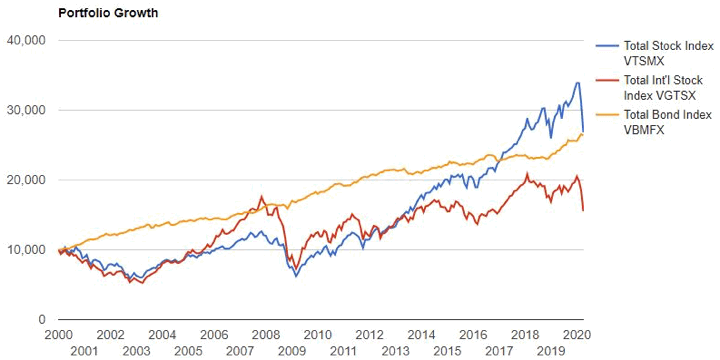
 Scott Burns of the Dallas News is known for his “Couch Potato Portfolios”. These are literally the simplest, laziest, easiest portfolios that you will ever see. The Basic Couch Potato Portfolio is 50% Total US Stock and 50% Total US Bond funds/ETFs. The Margarita version is 1/3rd US Stocks, 1/3 International Stocks, and 1/3 Bonds. Can’t get much easier to remember than that! You may be surprised at how well they have performed despite their simplicity.
Indeed, Burns recently provided another update on his Couch Potato portfolios, this time for theoretical retirees from various periods including those who retired in the year 2000 to the end of March 2020 (emphasis mine):
In this scenario, you’d be:
– Retiring just as the Internet bust was starting.
– Getting run over by the 2008-09 financial crisis.
– And ending with the coronavirus crash through the end of March.In spite of all that, you wouldn’t be broke.
Here is a chart of how a 65-year-old couple would have done if they retired in various years from 1989 to 2015 and went with a 4% withdrawal rate (adjusted annually for inflation).

These retirees may not be shopping for a yacht, but they are still hanging in there. Simple, cheap, and diversified does much of the heavy lifting required. I appreciate that he included the likelihood that one or both of the couple would survive until 2020 as well. You may be surprised by how long your portfolio might have to last, but we also have to balance the risk of running out of time with the risk of running out of money.
 The Federal Reserve further cut their target Fed Funds Rate to zero in March, so we continue to see a steady stream of rate drops on cash savings. I hope that some of you got a nice rate locked-in if you tried to
 It might be a little painful, but it may be worthwhile to check on your pre-tax IRAs during this dip. If you have been thinking of converting your “Traditional” IRAs over to Roth IRAs, your shrunken gains will lead to a smaller tax bill now, while your (hopefully) future gains from this point onward will be tax-free after 5 years and age 59.5.


 While we see the live price of the S&P 500 index everywhere, there is much less talk about its dividends. Dividends are an important component of the total return from stocks. I love seeing my quarterly dividend payments arrive every quarter, and combined with our reduced work income, they are enough to cover our household expenses. How reliable is the income stream from owning an S&P 500 index fund (or similar total market fund)?


 The Federal Reserve just cut their target Fed Funds Rate by 0.50% in response to the market volatility brought on by the coronavirus. This will likely result in many rates drops this month for savings accounts and certificates across the board. (Lower rates may also make it a good time to
  While helping a 92-year-old relative with her estate planning last week, I discovered that she receives dividend checks from ExxonMobil mailed to her every quarter. I also discovered she was an early retiree herself, retiring at age 50 with a government pension and these Exxon shares. What a long retirement! She has the literal
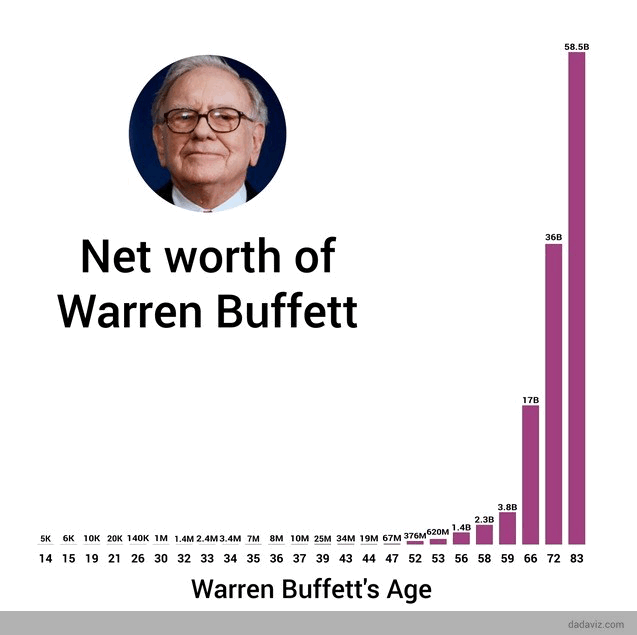
  If you are living paycheck-to-paycheck, by definition you aren’t saving and buying any assets. The folks who do have assets, those assets keep growing and compounding away. Left alone, that gap just widens relentlessly. Meanwhile, building up assets from nothing can feel agonizingly slow in the beginning.
 The Best Credit Card Bonus Offers – 2026
 Big List of Free Stocks from Brokerage Apps
 Best Interest Rates on Cash - 2026
 Free Credit Scores x 3 + Free Credit Monitoring
 Best No Fee 0% APR Balance Transfer Offers
 Little-Known Cellular Data Plans That Can Save Big Money
 How To Haggle Your Cable or Direct TV Bill
 Big List of Free Consumer Data Reports (Credit, Rent, Work)