MMB Portfolio Dividend & Interest Income – 2025 Q2 Update

Here’s my 2025 Q2 income update as a companion post to my 2025 Q2 asset allocation & performance update. Even though I don’t focus on high-dividend stocks or covered-call income strategies – I still track the income from my portfolio as an alternative metric to price performance. The total income goes up much more gradually and consistently than the number shown on brokerage statements, which helps encourage consistent investing. Here’s a related quote from Jack Bogle (source):

The true investor will do better if he forgets about the stock market and pays attention to his dividend returns and to the operating results of his companies. – Jack Bogle

Stock dividends are a portion of profits that businesses have decided to distribute directly to shareholders, as opposed to reinvesting into their business, paying back debt, or buying back shares. They have explicitly decided that they don’t need this money to improve their business, and that it would be better to distribute it to shareholders. The dividends may suffer some short-term drops, but over the long run they have grown faster than inflation.

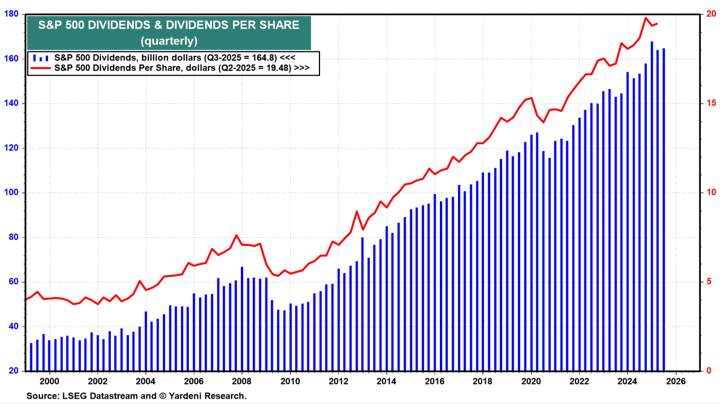
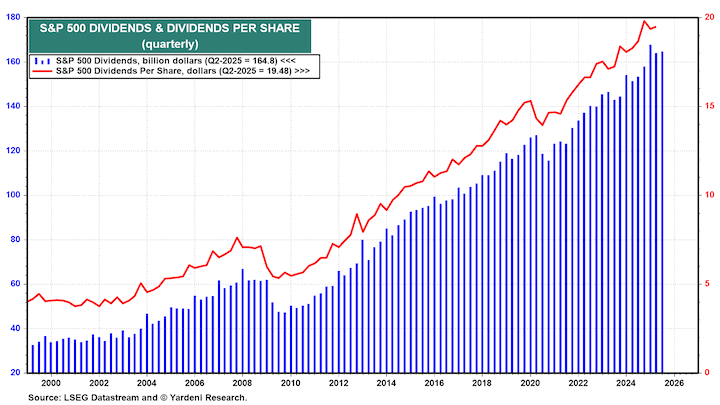
Here is the historical growth of the S&P 500 total dividend, which tracks roughly the largest 500 stocks in the US, updated as of 2025 Q2 (via Yardeni Research):

Tracking the income from my portfolio. Three of the primary income “trees” that distribute income in my portfolio are Vanguard Total US Stock ETF (VTI), Vanguard Total International Stock ETF (VXUS), and Vanguard Real Estate Index ETF (VNQ).

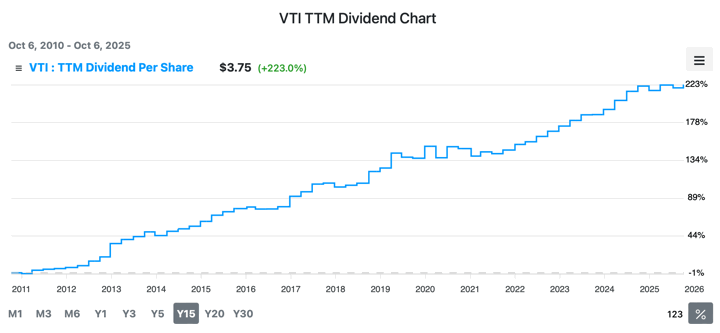
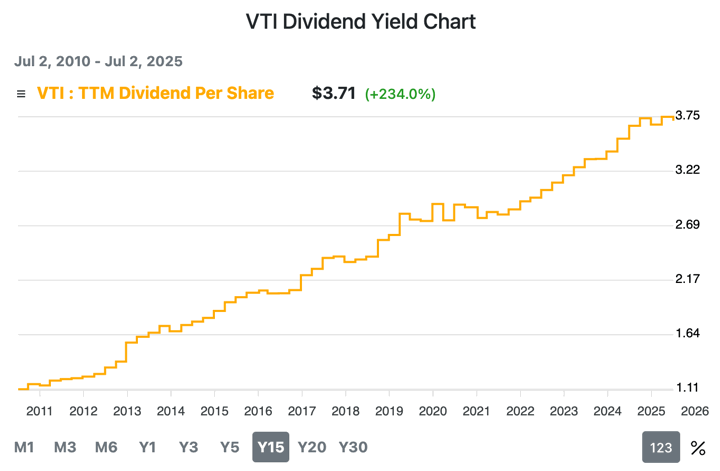
In the US, the dividend culture is somewhat conservative in that shareholders expect dividends to be stable and only go up. Thus the starting yield is lower, but grows more steadily with smaller cuts during hard times. Companies do buybacks as well, often because they are easier to discontinue. Here is the updated 2010-2025 chart of the trailing 12-month (ttm) dividend per share paid by the Vanguard Total US Stock ETF (VTI) via WallStNumbers.com.

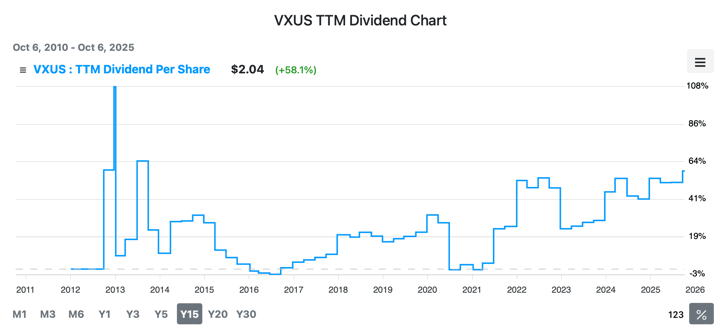
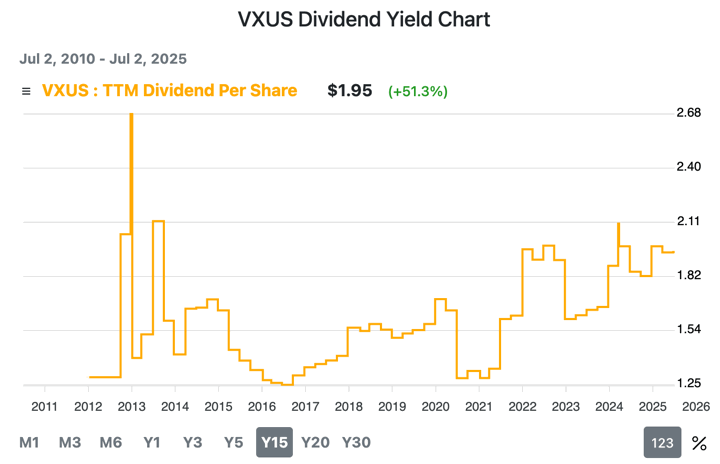
European corporate culture tends to encourage paying out a higher (sometimes even fixed) percentage of earnings as dividends, but that also means the dividends move up and down with earnings. The starting yield is currently higher but may not grow as reliably. Here is the updated 2010-2025 chart of the trailing 12-month (ttm) dividend per share paid by the Vanguard Total International Stock ETF (VXUS).

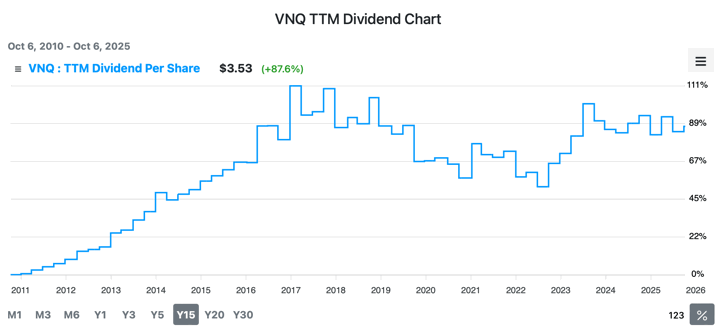
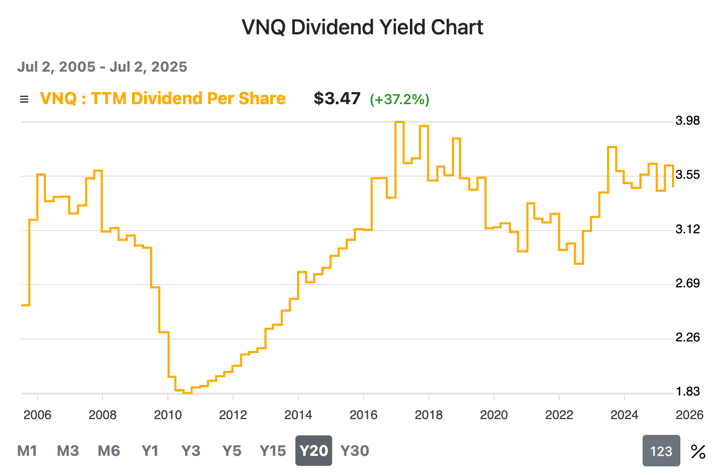
In the case of Real Estate Investment Trusts (REITs), they are legally required to distribute at least 90 percent of their taxable income to shareholders as dividends. Historically, about half of the total return from REITs is from this dividend income. Here is the updated 2005-2025 chart of the trailing 12-month (ttm) dividend per share paid by the Vanguard Real Estate Index ETF (VNQ). I extended this one out because the history was available to go beyond the 2008 Financial Crisis.

The dividend yield (dividends divided by price) also serve as a rough valuation metric. When stock prices drop, this percentage metric usually goes up – which makes me feel better in a bear market. When stock prices go up, this percentage metric usually goes down, which keeps me from getting too euphoric during a bull market.

Finally, the last income component of my portfolio comes from interest from bonds and cash. Vanguard Short-Term Treasury ETF (VGSH) and Schwab US TIPS ETF (SCHP) are example holdings, with the actual amount varying with the prevailing interest rates, the real rates on TIPS, and the current rate of inflation.

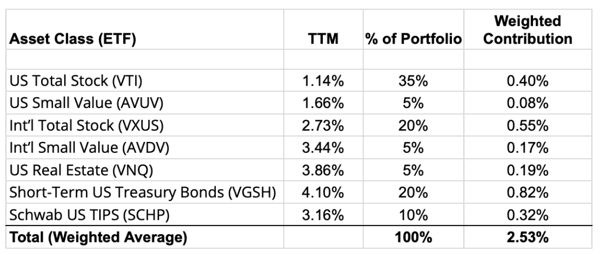
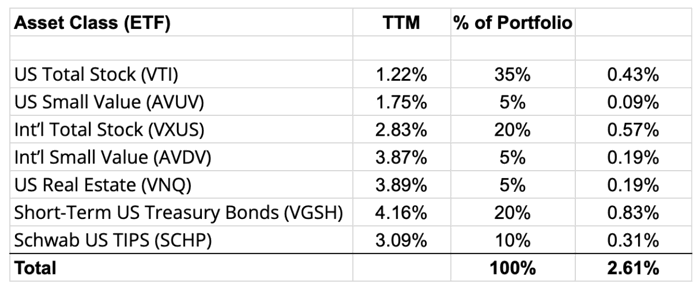
Dividend and interest income yield. To estimate the income from my portfolio, I use the weighted “TTM” or “12-Month Yield” from Morningstar (checked 7/3/24), which is the sum of the trailing 12 months of interest and dividend payments divided by the last month’s ending share price (NAV) plus any capital gains distributed (usually zero for index funds) over the same period. My TTM portfolio yield is now roughly 2.61%.

In dividend investing circles, there is a metric called yield on cost, which is calculated by dividing the current dividend by the original purchase price. In other words, while my portfolio yield today is 2.61%, that is because the current market price is also a lot higher. The yield-on-cost based on say 10 years ago, may be on the order of 5% or so. 2.61% may not seem like a lot today, but as you watch it grow it feels very powerful.

What about the 4% rule? For big-picture purposes, I support the simple 4% or 3% rule of thumb, which equates to a target of accumulating roughly 25 to 33 times your annual expenses. I would lean towards a 3% withdrawal rate if you want to retire young (closer to age 50) and a 4% withdrawal rate if retiring at a more traditional age (closer to 65). I don’t enjoy debating this number. It’s just a quick and dirty target to get you started, not a number sent down from the heavens! You will always have time to adjust later.

During the accumulation stage, your time is better spent focusing on earning potential via better career moves, improving your skillset, networking, and/or looking for asymmetrical (unlimited upside, limited downside) entrepreneurial opportunities where you have an ownership interest.

Our dividends and interest income are not automatically reinvested. They are simply another “paycheck”. As with our other variable paychecks, we can choose to either spend it or invest it again to compound things more quickly. You could use this money to cut back working hours, pursue a different career path, start a new business, take a sabbatical, perform charity or volunteer work, and so on. You don’t have to wait until you hit a magic number. Our life path is very different because of this philosophy. FIRE is Life!

MMB Portfolio Asset Allocation & Performance – 2025 Q2 Update

I try to limit checking my portfolio to once a quarter, and this is my 2025 Q2 update that includes our combined 401k/403b/IRAs and taxable brokerage accounts but excludes our house and side portfolio of self-directed investments. Following the concept of skin in the game, the following is not a recommendation, but a sharing of our actual, imperfect DIY portfolio.

“Never ask anyone for their opinion, forecast, or recommendation. Just ask them what they have in their portfolio.” – Nassim Taleb

How I Track My Portfolio
Here’s how I track my portfolio across multiple brokers and account types:

  • The Empower Personal Dashboard real-time portfolio tracking tools (free) automatically logs into my different accounts, adds up my various balances, tracks my performance, and calculates my overall asset allocation daily. Formerly known as Personal Capital.
  • Once a quarter, I also update my manual Google Spreadsheet (free to copy, instructions) because it helps me calculate how much I need in each asset class to rebalance back towards my target asset allocation. I also create a new sheet each quarter, so I have a personal archive of my net worth dating back many years.

2025 Q2 Asset Allocation and YTD Performance
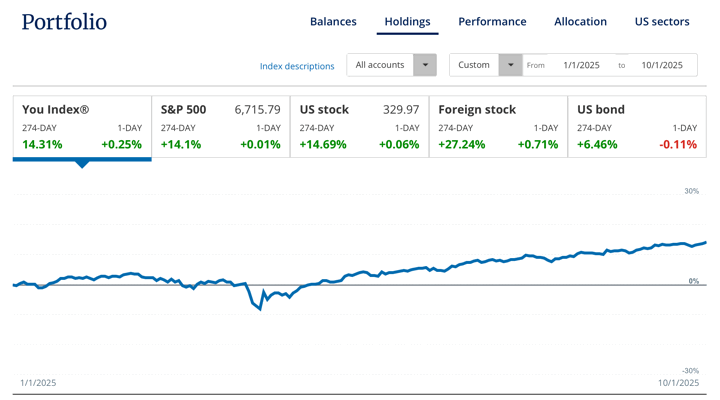
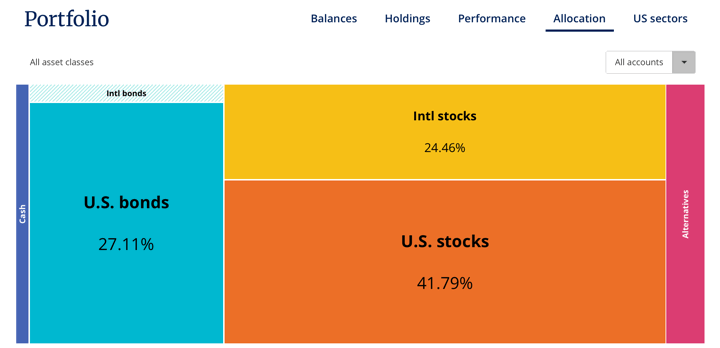
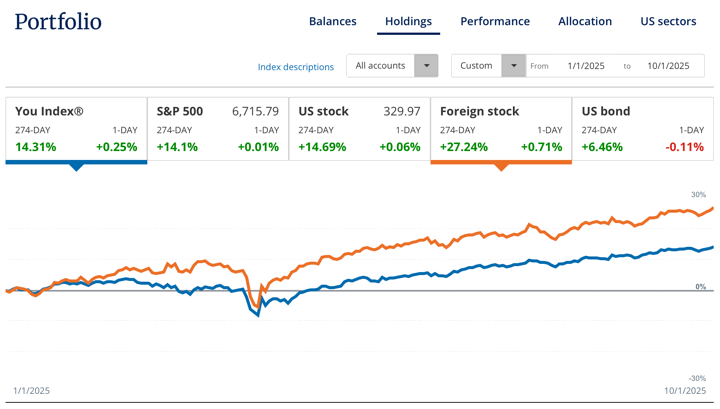
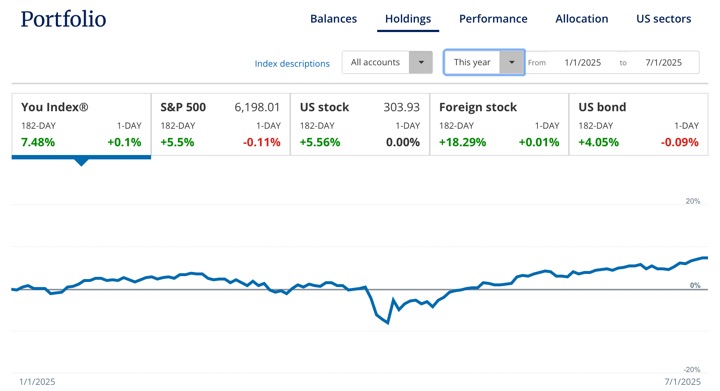
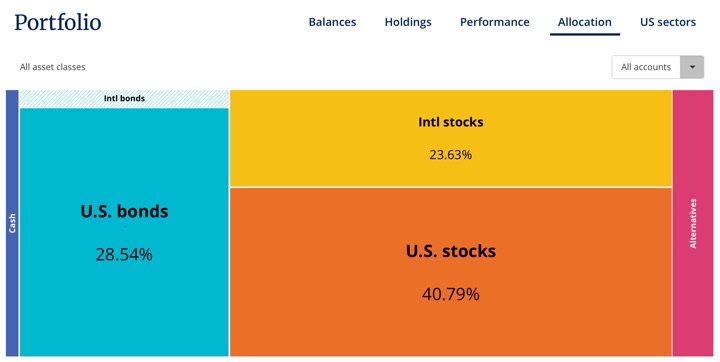
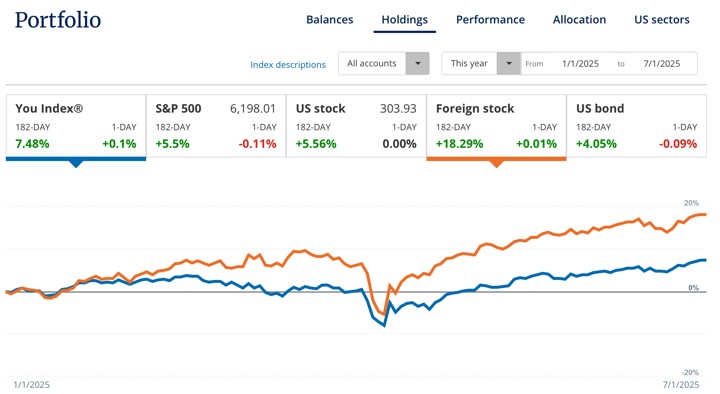
At the top of this post are updated performance and asset allocation charts, per the “Holdings” and “Allocation” tabs of my Empower Personal Dashboard.

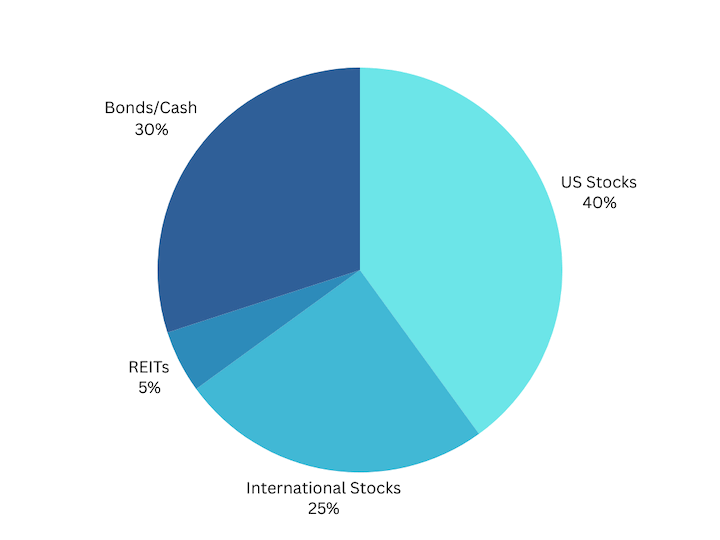
The major components of my portfolio are broad index ETFs. I do mix it up a bit around the edges, but not very much. Here is a model version of my target asset allocation with sample ETF holdings for each asset class.

  • 35% US Total Market (VTI)
  • 5% US Small-Cap Value (AVUV)
  • 20% International Total Market (VXUS)
  • 5% International Small-Cap Value (AVDV)
  • 5% US Real Estate (REIT) (VNQ)
  • 20% US “Regular” Treasury Bonds and/or FDIC-insured deposits (VGSH)
  • 10% US Treasury Inflation-Protected Bonds (SCHP)

Big picture, it is 70% businesses and 30% very safe bonds/cash:

By paying minimal costs including management fees, transaction spreads, and tax drag, I am trying to essentially guarantee myself above-average net performance over time.

I do not spend a lot of time backtesting various model portfolios. You’ll usually find that whatever model portfolio is popular at the moment just happens to hold the asset class that has been the hottest recently.

The portfolio that you can hold onto through the tough times is the best one for you. I’ve been pretty much holding this same portfolio for 20 years. Check out these ancient posts from 2004 and 2005. Every asset class will eventually have a low period, and you must have strong faith during these periods to earn those historically high returns. You have to keep owning and buying more stocks through the stock market crashes. You have to maintain and even buy more rental properties during a housing crunch, etc. A good sign is that if prices drop, you’ll want to buy more of that asset instead of less. I don’t have strong faith in the long-term results of commodities, gold, or bitcoin – so I don’t own them.

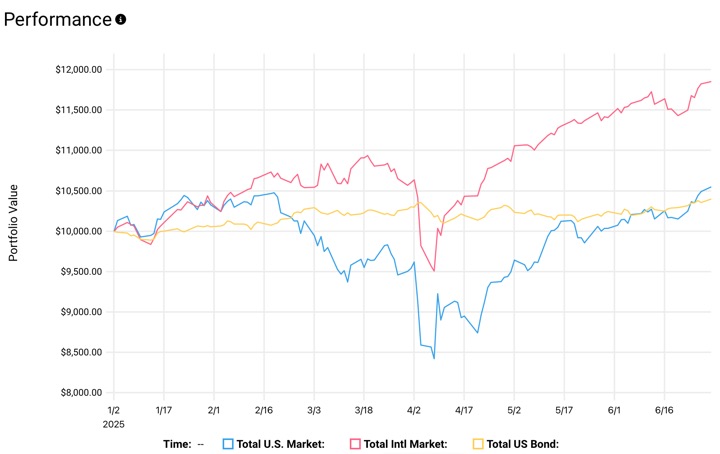
Performance details. According to Empower, the S&P 500 bounced back from it’s earlier drop and foreign stocks continued their excellent performance this year (up over 18% YTD). Rather refreshing that international diversification is boosting my portfolio returns instead of dragging them down! 🌍

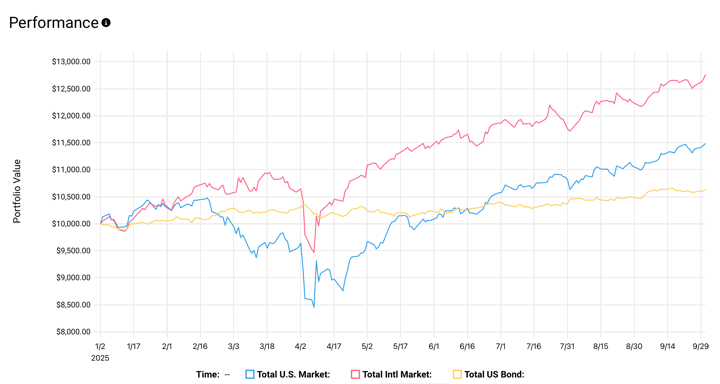
Over the last quarter, here’s a Growth of $10,000 chart courtesy of Testfolio for some of the major ETFs that shows the difference in performance in the broad indexes:

As is usually the case, just a few buy transactions to reinvest excess dividends and interest towards rebalancing the portfolio. No sell transactions at all.

I’ll share about more about the income aspect in a separate post.

UBS Global Investment Returns Yearbook: 125 Years of Market History (1900-2025)

The 2025 edition of the UBS Global Investment Returns Yearbook is available for free download in a 22-page PDF with 10 Key Insights on the UBS website. This annual publication provides an excellent “big picture” overview of the last 125 years of market history, and serves as a partial antidote to all the junk we are bombarded with about what happened in the the last 24 hours.

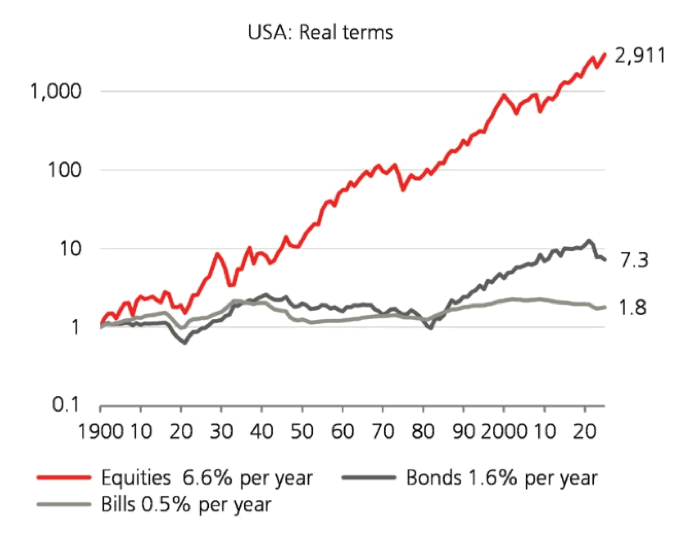
UBS Global Investment Returns Yearbook documents long-run returns on stocks, bonds, bills, currencies and other assets since 1900. Its goal is to inform investors about long-run historical performance, to interpret it, analyze it, learn from it, and help illuminate current concerns.

I definitely recommend downloading the report and at least scrolling through the historical charts and headline insights. The lessons may be familiar, but they are a good reminder of what builds wealth over the long run.

  • The composition of the stock market changes significantly over time.
  • Stock outperformance over bonds and cash over the long run is huge.
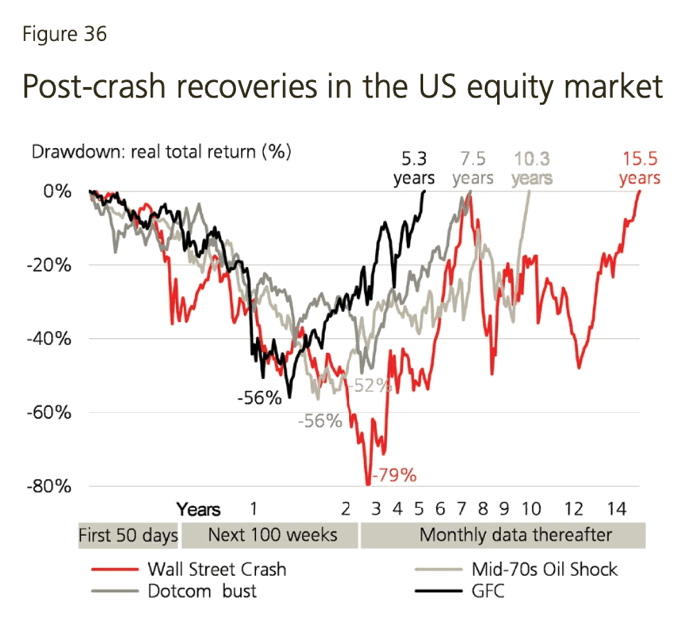
  • Patience is required to capture this outperformance from stocks.
  • Diversification can help, but it’s not guaranteed.

Best Broker for DIY Investors? Customer Satisfaction Survey Results 2025

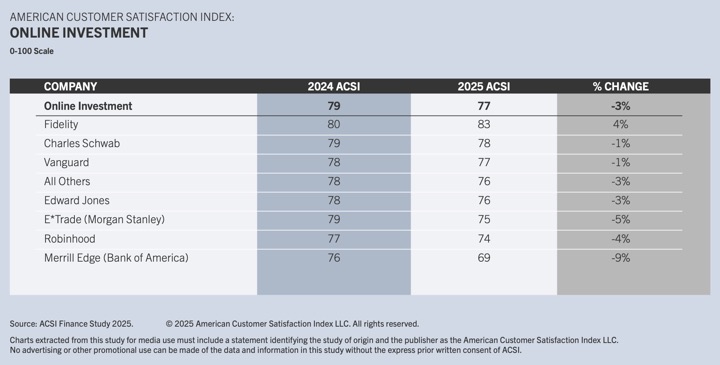
The American Customer Satisfaction Index (ACSI) is a “national cross-industry measure of customer satisfaction” and they recently released their survey results on the finance vertical. Below are their rankings for “online investment”, which covers the major brokers for do-it-yourself investors. Measured categories include mobile app quality, customer service, and research tools.

#1 Fidelity was at the top both this year and last year, but the main difference from the previous years is the significantly increased gap between Fidelity and the rest of the field, notably #2 (Schwab) and #3 (Vanguard). Morgan Stanley/E-Trade and Merrill Edge also had big drops.

The majority of my assets remain split between Fidelity and Vanguard, and over time I actually like having the features of both. See also: AI Pioneer Divides Assets Across Multiple Banks and Brokerages.

Sources: RIABiz, ASCI Press Release.

Portfolio Asset Allocation: Asset Class Risk/Return Charts (2025)

While continuing my CFP course on Investment Planning, their sections on portfolio construction and asset allocation contained several updated 2025 versions of charts (including data through the end of 2024) that I have been posting on this site since the early days. Crazy that I first started looking at this stuff in the 2000s and now the 25-year charts barely go back that far!

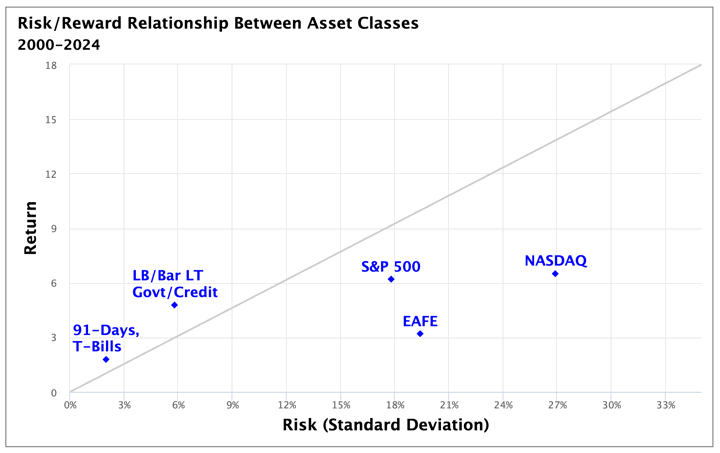
1. Based on the past 25 years of performance (2020-2024), here is a chart of annualized return vs. standard deviation (volatility, a proxy of risk).

Takeaways: International stocks have had a very bad run, performing worse than long-term US bonds. T-Bills/Cash staked out their usual position as low risk/low return. I would also note that the difference between a 7% average annual return and a 3% average annual return over 25 years is huge, and this chart doesn’t really communicate that.

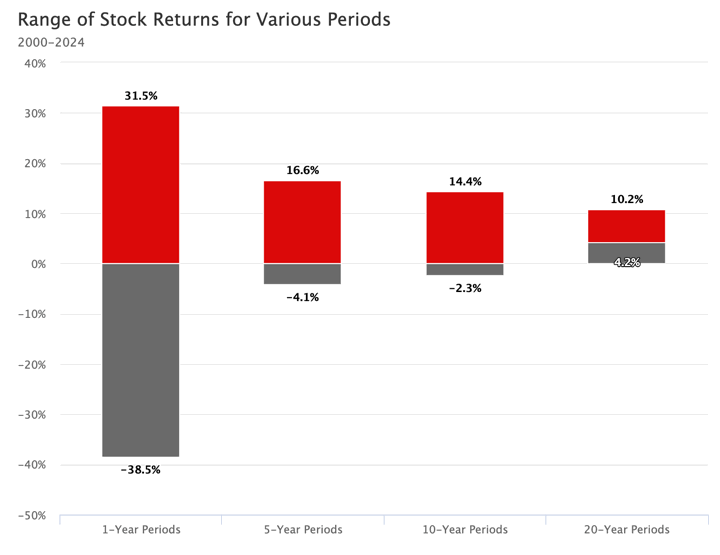
2. Here is the range of S&P 500 stock returns for various holding period lengths from 2020-2024.

Takeaways: Your range of average annual returns narrows as your holding period lengthens. This fits with the feeling that the swings in the past seem to fade away over time. But that doesn’t change the fact that going forward, your (hopefully large) stock portfolio in retirement might still drop by 40% in a single year.

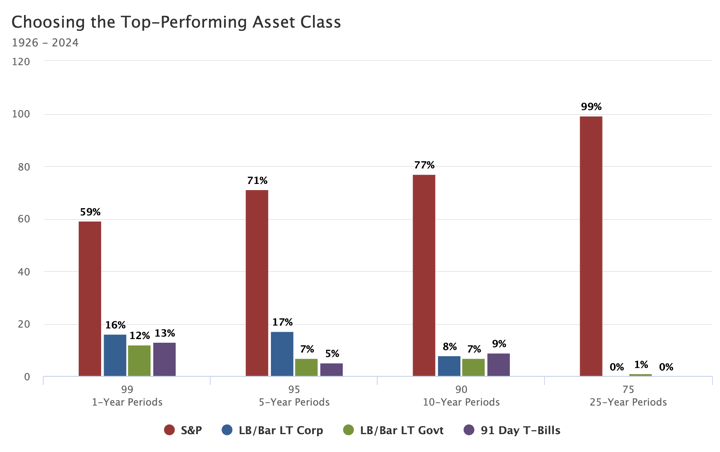
3. Here is a bar chart of the top performing asset classes for various holding period lengths from 1926-2024.

Takeaways: For 25-year periods, 99% of the time stocks win. But a lot of those were overlapping 25-year periods. You have to consider how confident you are using 100 years of looking back to predict 50+ years into the future.

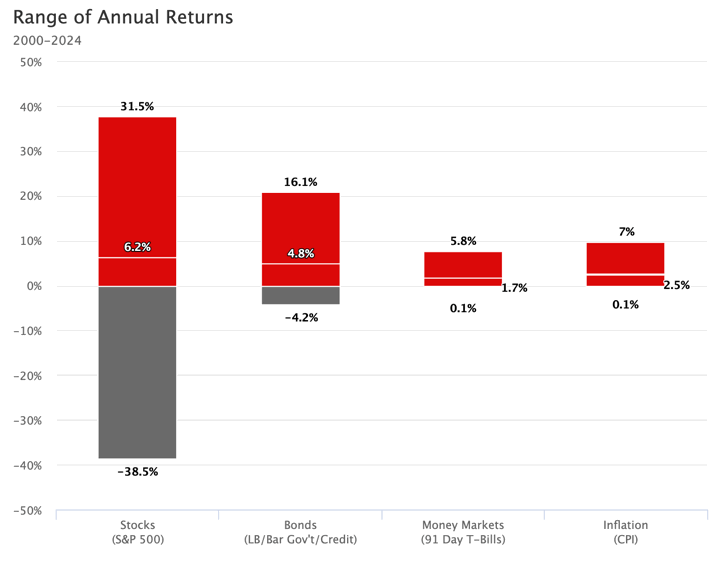
4. Here is the range of annual returns for the major asset classes from 2000-2024.

Takeaways: As you might expect, stocks are the most volatile by far.

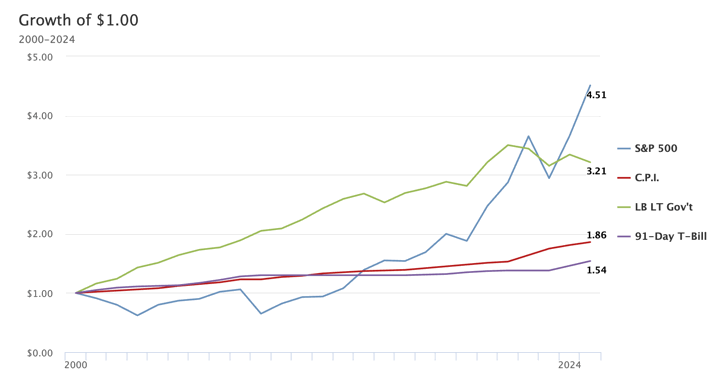
5. Here is the Growth of $1 chart from 2020-2024 for selected major asset classes.

Takeaways: Long-term bonds actually beat stocks for a long time, as this period started right during the Dot-Com crash. But stocks still came back to win by a significant margin. Cash barely keeps with in inflation, so the inability to keep up with inflation is its own risk.

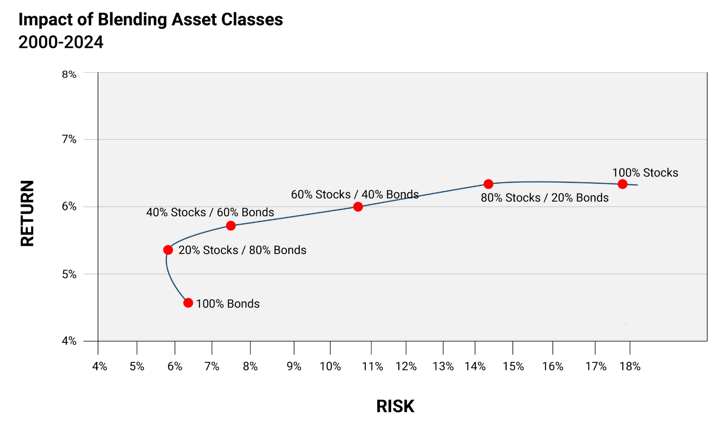
6. Here is the impact of blending different percentages of stocks and bonds on their combined performance and volatility.

Takeaways: These charts do change with the time period, but they usually show that owning around ~20% in stocks can actually give you a better return with the same amount of volatility (risk proxy) rather than owning zero stocks. So even if you are very risk-averse, owning at least some stocks is often advised. On the other end, there is often diminishing returns when you go above ~80% stocks.

TIAA Traditional and Lifetime Income Annuities Now Available to Public via IRA

TIAA-CREF recently announced that they are allowing the public to invest in their fixed and income annuities inside a Traditional or Roth IRA (via Bogleheads). This includes their most well-known TIAA Traditional Annuity, which has traditionally been only available to those working in nonprofit colleges, universities, hospitals (TIAA stands for Teachers Insurance and Annuity Association of America).

This was a Father’s Day coincidence, as what they suggest is very similar to what I helped set up for my father. As a long-time educator, the bulk of his retirement savings was accumulated using the TIAA Traditional annuity through both employer and employee contributions. After considering many factors, I advised him to annuitize a portion of it upon retirement for guaranteed lifetime income. The rest of the portfolio was stock and bond mutual funds.

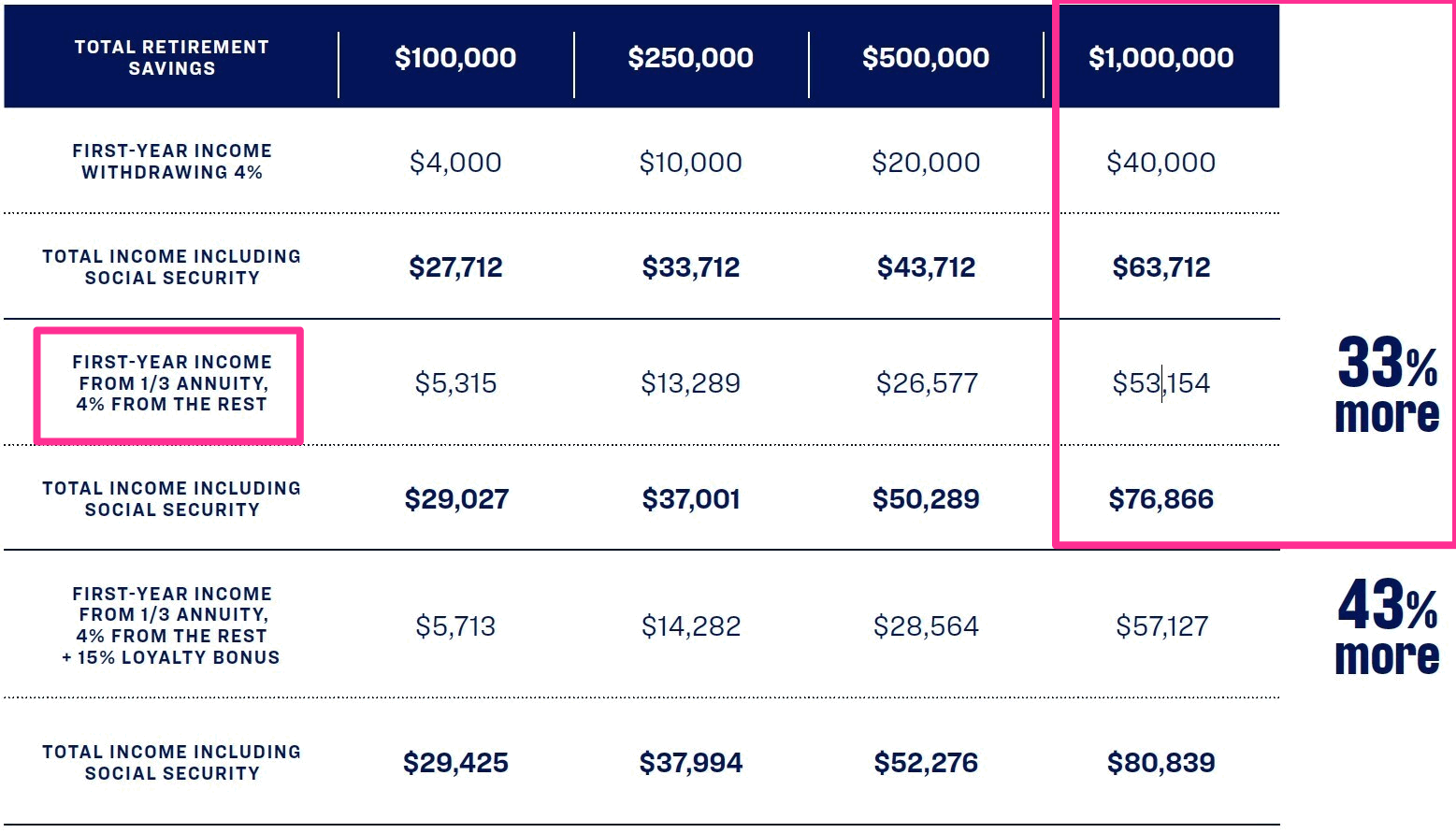
In the example that TIAA provides, they annuitize 1/3rd of the total available portfolio, and the rest is spent down using the popular “4% withdrawal rule”. Their claim is that “annuitizing a portion of your savings with TIAA Traditional offers between 33% and 43% more income than a 4% withdrawal strategy.”

Looking at the fine print, they state:

Calculation uses the TIAA Traditional “new money” income rate for a single life annuity with a 10-year guarantee period at age 67 using TIAA’s standard payment method beginning income on March 1, 2025 (7.9462%).

So a 67yo person taking a single-life income annuity with a 10-year guarantee, which pays out 8% of principal every year. So if you annuitized $1,000,000, you would get roughly $80,000 a year in annual income, guaranteed, every year until death (with minimum 10 years of payments, or $800,000). 8% is double (100% more) what you’d get out from the “4% rule”, so if you annuitize 1/3rd if your portfolio, it would boost the first-year income by 33%. Math works out.

Here are some additional details I would emphasize:

  • With the income annuity used, the 8% withdrawal rate won’t ever go up or adjust with inflation. It’s a fixed payout every year, so the real inflation-adjusted value will decrease over time. After 15 years or 30 years, the payout from $1M would still be $80,000.
  • The “4% rule” taken from perhaps a 60% stock/40% bond portfolio is designed to be raised with inflation each year. After 15 years, the $40,000 a year from $1M would be $62,000 with 3% average inflation and $72,000 a year with 4% average inflation. After 30 years, the $40,000 a year from $1M would be $97,000 with 3% average inflation and $130,000 a year with 4% average inflation.
  • At death, the TIAA annuity would have zero value (assuming past the 10-year guarantee). Your 60/40 portfolio may have a lot (or a little, or nothing) left over.
  • The TIAA annuity is a guaranteed only by the claims-paying ability of TIAA. TIAA is usually one of the absolute top-rated insurance companies in terms of safety, but it doesn’t print its own money.

Overall, I felt that the trade-offs were worth it for my parents. They are financially conservative folks. Their annuitized income was lower because they took a joint-life annuity with my mother, but when added on top of their combined Social Security, their guaranteed monthly paycheck in retirement was large enough to cover all of their basic monthly expenses. Unless there was a big one-time expense, they would not have to take a single penny out of the rest of their investment portfolio.

I knew the value of the TIAA income would decrease over time due to inflation, but some studies have shown that retiree expenses also tend to trend downward over time. Social Security will still go up with inflation, and so should their investment portfolio over the long run.

TIAA Traditional as an accumulation vehicle. My dad was already with TIAA Traditional for decades before I started helping him with his finances, and while I am thankful for the financial stability of TIAA-CREF, I don’t know that I would pick the TIAA Traditional Annuity if I was starting out today. As a fixed annuity, there is a guaranteed minimum interest rate and then they credit extra if their underlying investments do well. The value thus is always increasing steadily and never goes down, which some people may like. Even a “safe” bond fund can have a negative year, as we saw recently.

Based on the numbers that I have seen, the long-term average return of TIAA Traditional will probably be very close to that of a low-cost Total US Bond Fund like BND. So it’s like a bond fund with smoothed returns. But this also means the long-term average return of TIAA Traditional will likely not be as high as if you held a Target Retirement Fund with stocks/bonds. Thus, I could see TIAA Traditional as a partial substitution for the bond portion of your portfolio, especially if you plan on annuitizing it upon retirement and can thus earn some of that vague “loyalty bonus”. THAT is the main advantage of TIAA – the ability to earn an excellent annuitization income rate from a very solid company.

(You can view the current TIAA Traditional interest rates here. Note that there are multiple different rate classes, and since the IRA class is fully liquid, it tends to offer one of the lower rates.)

For my parents, I am quite happy with the results of annuitizing a portion of your retirement portfolio. It depends on your own goals, but a fixed base monthly paycheck in retirement offers great peace of mind. I personally enjoy the fact that they stress much less about market swings. If TIAA continues to offer competitive income payout rates along with their top-tier safety rating, I will definitely keep this option in mind for myself.

Savings I Bonds May 2025: 1.10% Fixed Rate, 2.88% Inflation Rate (3.98% Total for First 6 Months)

Update: Savings I Bonds bought from May 1, 2025 through October 31, 2025 will have a fixed rate of 1.10% and inflation rate of 2.88%, for a total composite rate of 3.98% for the first 6 months. Compare the total rate with the current short-term Treasury yields (1-year @ ~3.9%), and compare the fixed rate with the short-term TIPS real yields (5-year @ ~1.5%).

Every existing I Bond will earn this inflation rate of ~2.88% eventually for 6 months; you will need to add your own fixed rate that was set based the initial purchase month. See you again in mid-October for the next early prediction for November 2025.

Original post from 4/11/25:

Savings I Bonds are a unique, low-risk investment backed by the US Treasury that pay out a variable interest rate linked to inflation. With a holding period from 12 months to 30 years, you could own them as an alternative to bank certificates of deposit (they are liquid after 12 months) or bonds in your portfolio.

New inflation numbers were just announced at BLS.gov, which allows us to make an early prediction of the May 2025 savings bond rates a couple of weeks before the official announcement on the 1st. This also allows the opportunity to know exactly what an April 2025 savings bond purchase will yield over the next 12 months, instead of just 6 months. You can then compare this against a May 2025 purchase.

New inflation rate prediction. September 2024 CPI-U was 315.301. May 2025 CPI-U was 319.799, for a semi-annual inflation rate of 1.43%. Using the official composite rate formula:

Composite rate formula: [Fixed rate + (2 x semiannual inflation rate) + (fixed rate x semiannual inflation rate)]

This results in the variable component of interest rate for the next 6 month cycle being ~2.86 to 2.88%, depending on the fixed rate.

Tips on purchase and redemption. You can’t redeem until after 12 months of ownership, and any redemptions within 5 years incur an interest penalty of the last 3 months of interest. A simple “trick” with I-Bonds is that if you buy at the end of the month, you’ll still get all the interest for the entire month – same as if you bought it in the beginning of the month. It’s best to give yourself a few business days of buffer time. If you miss the cutoff, your effective purchase date will be bumped into the next month. (You should always sell at the very beginning of the month.)

Buying in April 2025. If you buy before the end of April, the fixed rate portion of I-Bonds will be 1.20%. You will be guaranteed a total interest rate of 1.20 + 1.91 = 3.11% for the next 6 months. For the 6 months after that, the total rate will be 1.20 + 2.88 = 4.08%.

Buying in May 2025. If you buy in May 2025, you will get ~2.88% plus a newly-set fixed rate for the first 6 months. The new fixed rate is officially unknown, but is loosely linked to the real yield of short-term TIPS with some reductions. In the previous 10 days, 5-year TIPS real rates have ranged from 1.25% to 1.72%. That’s a nearly 50 basis point swing! If I had to guess, I’d put a new fixed rate somewhere between 1.0 to 1.3%, for a total rate of about 4%. Every six months after your purchase, your rate will adjust to your fixed rate (set at purchase) plus a variable rate based on inflation.

If you have an existing I-Bond, the rates reset every 6 months depending on your specific purchase month. Everyone will eventually get this variable rate. Your bond rate = your specific fixed rate (based on purchase month, look it up here) + variable rate (total bond rate has a minimum floor of 0%).

Buy now or wait? Between those two options, I’m actually not sure. In the short-term, the rates are no better than T-bills. If you are a long-term holder, you might grab the 1.2% fixed rate “bird in the hand”. But the inflation rate will be higher in May by nearly a whole 1%, and so I’d personally just wait and see what happens in mid-October to buy my limit.

Also consider that 30-year TIPS rates on 4/10/25 were at 2.68%! If you really intend to hold for 30 years, that might be a better deal. I plan to fill out my TIPS ladder a bit more if the rates stay this high.

Unique features and considerations. I have a separate post on reasons to own Series I Savings Bonds, including inflation protection, tax deferral, exemption from state income taxes, and potential tax benefits if used toward qualified educational expenses.

The main drawback is hassle. You can only buy new savings bonds through TreasuryDirect.gov, which is limited in its customer service resources and features. But as there is no option for paper tax forms nor statements, so your heirs may never know they exist! If they do find it, it may take them several months to close out all the estate paperwork. If your password is compromised, they will not replace any lost or stolen savings bonds. The juice may not be worth the squeeze when you can own individual Treasury bonds or TIPS within any full-service brokerage account.

Annual purchase limits. The annual purchase limit is now $10,000 in online I-bonds per Social Security Number. For a couple, that’s $20,000 per year. As of 2024. you can only buy online at TreasuryDirect.gov, after making sure you’re okay with their security protocols and user-friendliness. (No more tax refund savings bonds.) Technically, the purchase limits are per Social Security Number or Employer Identification Number. For those looking for another way to expand their purchasing power, that means you can also buy for a child, grandchild, LLC, or a trust.

Bottom line. Savings I bonds are a unique, low-risk investment that are linked to inflation and only available to individual investors. You can now only purchase them online at TreasuryDirect.gov. For more background, see the rest of my posts on savings bonds.

[Image: 1942 US Savings Bond poster – source]

How to Avoid Comparing Against Your All-Time High Portfolio Value

A common question about of the “4% rule” is, well, 4% of what? People like to anchor themselves to the all-time high value of their portfolio, but we can see from recent events that can be a shaky idea. I believe that you should always be prepared for stocks to fall by 50%, which means you could be taking 4% of two very different values. Folks shouldn’t act like they “lost $XX,XXX” when their stocks drop from an arbitrary all-time high, and they shouldn’t plan out the next 30 years of retirement income based on a single value either.

I’m currently reading the new book Rethinking Investing: A Very Short Guide to Very Long-Term Investing by Charles Ellis. He’s been in the industry a long time, but may be best known for his bestselling book Winning the Loser’s Game, first published in 1985.

In the book, Ellis proposed a potentially better way to set your Spending Rule in retirement. It’s not based on the most recent value of your portfolio, and definitely not the all-time high of your portfolio. Instead, he wants you to use the rolling average over the last 5-7 years. Then, you can add the 4% rule (or whatever).

In designing your own spending rule, first, average the year-end values of your assets over the prior several years (preferably more than five years) to dampen the impact of market fluctuations. Next, calculate what would be a prudent withdrawal of the averaged assets—likely 4–5%—to determine what dollar amount you can prudently withdraw from your current portfolio each year to cover some of your expenses.

This has the effect of smoothing out your annual withdrawals:

Averaging your assets over multiple years makes the funds available for your spending far more consistent and predictable. If, for example, you settle on a 5% rate of withdrawal and a six-year moving average of the year-end value of your assets, a 30% drop in the stock market would lead to only a 5% reduction in your payout that year (and much of that reduction likely would be provided by your consistent dividend income).

(Side note: This supports the idea of me tracking my consistent dividend income…)

Let’s take a look at Vanguard LifeStrategy Growth Fund (VASGX), an all-in-one fund that is diversified similarly to their Target Date Retirement Funds, but a handy benchmark since it is a constant 80% stocks/20% bonds. Here’s a Growth of $10,000 chart for the last 5 years ending 4/4:

Instead of seeing that you are about 11% off your all-time high value of about $18,300, you might appreciate that you are still above January 2024 levels, and that your 5-year rolling average of year-end values is about $15,400. If you based your 4% withdrawal rate on that value, you would be much calmer now.

I like this strategy, and I believe it should be applied even when you are still accumulating for retirement. Don’t anchor yourself the all-time high of your portfolio and make it your new “If it ever goes below this, I’ll be sad!” value. Instead, mentally track a rolling average of your net worth. I’ll look to add this concept to my portfolio updates, hopefully it’ll reduce my stress levels during volatile times.

Finally, Ellis points out another potential benefit:

Importantly, by following such a Spending Rule, you are then free to concentrate on achieving significantly higher long-term returns without the need to be overinvested in bonds. Stabilizing the investor’s income with a responsible Spending Rule frees the investment portfolio to invest more in equities and produces, over time, a higher and more rapidly rising portfolio value and income stream.

MMB Portfolio Dividend & Interest Income – 2025 Q1 Update

Here’s my 2025 Q1 income update as a companion post to my 2025 Q1 asset allocation & performance update. Even though I don’t focus on high-dividend stocks, income-focused ETFs or high-yield bonds – I still track the income from my portfolio as an alternative metric to performance. The total income goes up much more gradually and consistently than the number shown on brokerage statements (market price), which helps encourage consistent investing. Here’s a related quote from Jack Bogle (source):

The true investor will do better if he forgets about the stock market and pays attention to his dividend returns and to the operating results of his companies. – Jack Bogle

Here is the historical growth of the S&P 500 total dividend, which tracks roughly the largest 500 stocks in the US, updated after 2024 Q4 (via Yardeni Research):

Why I like tracking dividends in general. Stock dividends are a portion of profits that businesses have decided to distribute directly to shareholders, as opposed to reinvesting into their business, paying back debt, or buying back shares. They have explicitly decided that they don’t need this money to improve their business, and that it would be better to distribute it to shareholders. The dividends may suffer some short-term drops, but over the long run they have grown faster than inflation.

In the US, the dividend culture is somewhat conservative in that shareholders expect dividends to be stable and only go up. Thus the starting yield is lower, but grows more steadily with smaller cuts during hard times. Companies do buybacks as well, often because they are easier to discontinue. Here is the historical growth of the trailing 12-month (ttm) dividend paid by the Vanguard Total US Stock ETF (VTI) via StockAnalysis.com.

European corporate culture tends to encourage paying out a higher (sometimes even fixed) percentage of earnings as dividends, but that also means the dividends move up and down with earnings. The starting yield is currently higher but may not grow as reliably. Here is the historical growth of the trailing 12-month (ttm) dividend paid by the Vanguard Total International Stock ETF (VXUS).

The dividend yield (dividends divided by price) also serve as a rough valuation metric. When stock prices drop, this percentage metric usually goes up – which makes me feel better in a bear market. When stock prices go up, this percentage metric usually goes down, which keeps me from getting too euphoric during a bull market.

In the case of REITs, they are legally required to distribute at least 90 percent of their taxable income to shareholders as dividends. Historically, about half of the total return from REITs is from this dividend income.

Finally, the last component comes from interest from bonds and cash. This will obviously vary with the prevailing interest rates, the real rates on TIPS, and the current rate of inflation. In 2025, we are finally back to getting paid a certain amount more than inflation on our cash.

Dividend and interest income from my specific asset allocation. To estimate the income from my portfolio, I use the weighted “TTM” or “12-Month Yield” from Morningstar (checked 4/1/24), which is the sum of the trailing 12 months of interest and dividend payments divided by the last month’s ending share price (NAV) plus any capital gains distributed (usually zero for index funds) over the same period. My TTM portfolio yield is now roughly 2.69%.

In dividend investing circles, there is a metric called yield on cost, which is calculated by dividing the current dividend by the original purchase price. In other words, while my portfolio yield today is 2.69%, the yield-on-cost based on say 10 years ago, may be on the order of 5% or so. 2.69% may not seem like a lot percentage-wise, but I expect it to grow and in total terms it’s a lot more than 10 years ago when I started tracking it.

What about the 4% rule? For big-picture purposes, I support the simple 4% or 3% rule of thumb, which equates to a target of accumulating roughly 25 to 33 times your annual expenses. I would lean towards a 3% withdrawal rate if you want to retire young (closer to age 50) and a 4% withdrawal rate if retiring at a more traditional age (closer to 65). Too much time is spent debating this number. It’s just a quick and dirty target to get you started, not a number sent down from the heavens! You will always have time to adjust later.

During the accumulation stage, your time is better spent focusing on earning potential via better career moves, improving your skillset, networking, and/or looking for asymmetrical entrepreneurial opportunities where you have an ownership interest.

Our dividends and interest income are not automatically reinvested. They are simply another “paycheck”. As with our other variable paychecks, we can choose to either spend it or invest it again to compound things more quickly. You could use this money to cut back working hours, pursue a different career path, start a new business, take a sabbatical, perform charity or volunteer work, and so on. You don’t have to wait until you hit a magic number. FIRE is Life!

MMB Portfolio Asset Allocation & Performance – 2025 Q1 Update

I try to limit checking my portfolio to once a quarter, and this is my 2025 Q1 update that includes our combined 401k/403b/IRAs and taxable brokerage accounts but excluding our house and side portfolio of self-directed investments. Following the concept of skin in the game, the following is not a recommendation, but a sharing of our actual, imperfect DIY portfolio.

“Never ask anyone for their opinion, forecast, or recommendation. Just ask them what they have in their portfolio.” – Nassim Taleb

How I Track My Portfolio
Here’s how I track my portfolio across multiple brokers and account types:

  • The Empower Personal Dashboard real-time portfolio tracking tools (free) automatically logs into my different accounts, adds up my various balances, tracks my performance, and calculates my overall asset allocation daily. Formerly known as Personal Capital.
  • Once a quarter, I also update my manual Google Spreadsheet (free to copy, instructions) because it helps me calculate how much I need in each asset class to rebalance back towards my target asset allocation. I also create a new tab each quarter, so I have a personal archive of my net worth dating back many years.

2025 Q1 Asset Allocation and YTD Performance
Here are updated performance and asset allocation charts, per the “Holdings” and “Allocation” tabs of my Empower Personal Dashboard.

The major components of my portfolio are broad index ETFs. I do mix it up a bit around the edges, but not very much. Here is a breakdown of my target asset allocation along with my primary ETF holding for each asset class.

  • 35% US Total Market (VTI)
  • 5% US Small-Cap Value (VBR/AVUV)
  • 20% International Total Market (VXUS)
  • 5% International Small-Cap Value (AVDV)
  • 5% US Real Estate (REIT) (VNQ)
  • 20% US “Regular” Treasury Bonds or FDIC-insured deposits
  • 10% US Treasury Inflation-Protected Bonds

Big picture, it is 70% businesses and 30% very safe bonds/cash:

By paying minimal costs including management fees, transaction spreads, and tax drag, I am trying to essentially guarantee myself above-average net performance over time.

I do not spend a lot of time backtesting various model portfolios, as I don’t think picking through the details of the recent past will necessarily create superior future returns. You’ll usually find that whatever model portfolio is popular at the moment just happens to hold the asset class that has been the hottest recently as well.

The portfolio that you can hold onto through the tough times is the best one for you. Every asset class will eventually have a low period, and you must have strong faith during these periods to earn those historically high returns. You have to keep owning and buying more stocks through the stock market crashes. You have to maintain and even buy more rental properties during a housing crunch, etc. A good sign is that if prices drop, you’ll want to buy more of that asset instead of less. I don’t have strong faith in the long-term results of commodities, gold, or bitcoin – so I don’t own them.

Performance details. According to Empower, the S&P 500 went down about 5% the first quarter of 2025, while foreign stocks went up around 7%. I don’t remember that happening for a while, and apparently it hasn’t happened since 2009 (see below;source). Overall, my portfolio was flat.

Over the last quarter, here’s a Growth of $10,000 chart courtesy of Testfolio for some of the major ETFs that shows the difference in performance in the broad indexes:

I always like to remember the big picture. Here’s an updated Morningstar Growth of $10,000 Chart for the Vanguard LifeStrategy Growth Fund (VASGX) which holds a static 80% stocks and 20% bonds and most closely mimics my portfolio since 2005, which is when I started investing more seriously and started this blog.

I’ll share about more about the income aspect in a separate post.

Best Asset Location for TIPS Ladder: Taxable, Tax-Deferred, or Roth?

If you are a DIY investor (or professional financial planner) that is looking to geek out on the intricacies of the tax treatment for holding Treasury Inflation-Protected Securities (TIPS), check out the new paper Best Asset Location for a TIPS Ladder by Edward F. McQuarrie. I’ve been building a ladder of individual TIPS for many years, and have been extending it and filling in gaps during the recent period when long-term real rates went up to ~2.6%. Here is a chart of historical 30-year real rates (TIPS pay this much above inflation):

The paper focuses specifically on TIPS ladders, where you hold individual TIPS with staggered maturities such that when one matures each year, it creates a level, inflation-adjusted stream of annual income. The primary unique feature of this ladder is that it is guaranteed to adjust for inflation (as measured by CPI), even if it is higher than expected. Regular, nominal bonds don’t provide this protection. Of course, if inflation is lower than expected, then those nominal bonds will outperform TIPS.

The paper itself is very detailed and took a few readings to fully comprehend it all, but I definitely learned some new wrinkles. However, the overall conclusions are still useful to keep in mind if you hold TIPS. The question is, where is the preferred place to locate TIPS? In a regular taxable brokerage account? In a tax-deferred account like a pre-tax IRA or 401(k)? In a Roth IRA or 401k(k)?

Here are my takeaways, in my own words:

Individual, longer-term TIPS should be avoided if possible in a regular taxable brokerage account. This is primary due to the unique taxation of TIPS and the “phantom income” they make you pay upfront if there is inflation. You can look up “TIPS phantom income” for more details elsewhere, but the bottom line is that it’s hurts you upfront and you don’t catch up. Things only get worse at higher income tax rates, and higher inflation rates. It’s also just an extra annoyance at tax filing time.

The overall preferred location for TIPS is a Tax-Deferred Account (TDA). In other words, a pre-tax 401(K) or a Traditional pre-tax IRA where the tax is deferred but you pay taxes at ordinary income rates upon withdrawal.

It’s better to put stocks and REITs in a Roth account, so also not TIPS ideally. Roth accounts are great overall, but it’s best to take advantage of them by putting stocks and REITs inside as there is not as much added benefit for TIPS (or bonds in general).

The paper also discusses the wrinkles from state income tax and RMDs, but they don’t change the overall recommendation.

Here is a direct quote from the paper:

It follows that if the client has a more aggressive asset allocation, perhaps 2:1 stocks versus fixed income, with three accounts of roughly equal size, then stocks should first fill the Roth and then fill taxable. A TDA is always the best location among the three account types for a bond ladder, especially TIPS. Distributions are required from TDAs, and bond ladders produce distributions. Bond income is taxed as ordinary income, and distribution from TDAs are taxed as ordinary income. Characteristics of the bond asset and the TDA account are aligned.

The paper also states “The paper does not consider the best location for TIPS bonds or bond funds during the accumulation phase.” I would then add myself that if you do really want to own TIPS in a taxable account, you should consider a low-cost index ETF which is really sort of a ladder of TIPS than replenishes on its own with a roughly constant average maturity. For short-term TIPS, there is the Vanguard Short-Term Inflation-Protected Securities ETF (VTIP) with an average maturity of ~2.5 years. For a longer-term, there is the Schwab U.S. TIPS ETF (SCHP) with an average maturity of ~7 years. TIPS ETFs don’t expose you to the phantom income effect.

Again, this paper offered some additional insight for those so inclined. I hold all my individual direct TIPS in a pre-tax Solo 401(k), so I am following the advice. I am not building a strict ladder, so if I ran out of room in tax-deferred accounts, I would hold a TIPS ETF in a taxable account.

Photo by Nick Page on Unsplash

BlackRock/iShares Target Allocation 60/40 Model ETF Portfolio (Meant for Advisors)

As a companion to my post on Fidelity Model ETF Portfolios, I also found Blackrock’s version of their 60/40 Model ETF portfolio.

The was prompted by the fact that Blackrock recently announced that it was adding a 1-2% allocation to Bitcoin in their model ETF portfolios.

The world’s biggest asset manager is finally allowing Bitcoin into its $150 billion model-portfolio universe.

BlackRock Inc. is adding a 1% to 2% allocation to the $48 billion iShares Bitcoin Trust ETF (ticker IBIT) in its target allocation portfolios that allow for alternatives, according to an investment outlook viewed by Bloomberg.

Of course, this coincided with the fact that last year they finally launched their own Bitcoin ETF, the iShares Bitcoin Trust ETF (ticker IBIT). That made me wonder, what exactly does Blackrock put into these model portfolio that are meant for advisors? The model portfolio below does not have the Bitcoin ETF added yet:

As with the Fidelity model portfolio, and probably all model portfolios meant for advisors, there is the appearance of technical complexity, with a lot of tiny allocations to ETFs to bump the total number involved to 18 different ETFs and cash (and possibly the new Bitcoin ETF as well). 1% to the iShares US Infrastructure ETF? 1% to iShares J.P. Morgan USD Emerging Markets Bond ETF? 1% to iShares Gold Trust?

However, what surprised me the most was hidden in their performance stats at the bottom. With a relatively low net weighted expense ratio of 0.16%, their gross overall performance (before all fees) was pretty good and hugged the benchmark indexes very closely. However, they had to disclose that their NET historical performance (what clients actually got) was a lot lower… why was it so much lower? Because their managed portfolio apparently comes with a 3% annual fee, charged quarterly!!!

Tucked deep at the bottom:

Net composite returns reflect the deduction of an annual fee of 3.00% typically deducted quarterly. Due to the compounding effect of these fees, annual net composite returns may be lower than stated gross returns less stated annual fee.

So you put your Managed Portfolio clients in a low-cost ETF portfolio, and then add a 3% annual fee on top. Wow, that’s… wow. I have trouble even believing it. I must be reading this wrong.

Another interesting note is that Vanguard’s new CEO, Salim Ramji, was the former global head of iShares and index investments at BlackRock and thus very involved in their push into model ETF portfolios and probably had a big hand in designing them. Will he adjust Vanguard’s suggested portfolios in a similar manner?