 As we stand today in early 2017, the performance of the US stock market since 2009 has been pretty impressive with only a few minor hiccups. I am not calling a market drop, but the best time to prepare is before an emergency or crisis occurs. Humans have a well-documented loss-aversion bias. We react to losing money much more severely than positive returns. Therefore, it is wise to remember that historically, the annual return of the S&P 500 index is negative approximately 1 out of every 3 years.
Here’s a histogram that organizes into “buckets” the historical annual returns of the S&P 500 Index* from 1825-2014. We see that negative returns occurred 29% of the time. Legend: DotCom bubble (grey), Great Depression (yellow), Housing bubble (blue). Source: Margin of Safety.
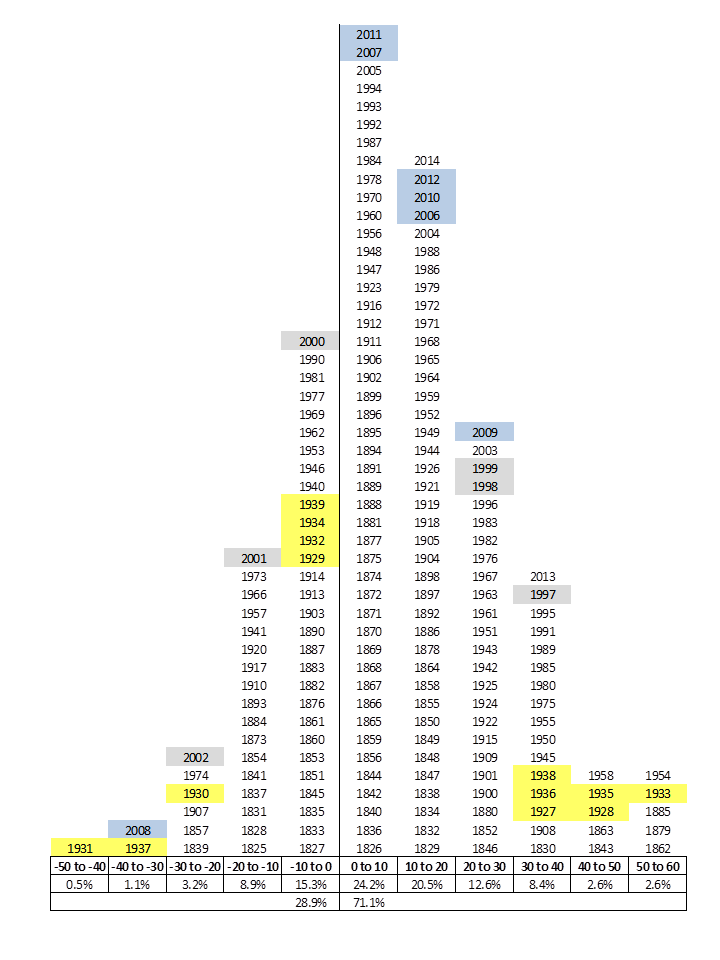
(* For periods before the S&P 500 existed, the S&P Market Index is used. Before that, I have no idea!)
Here’s a similar chart that shows the annual percentage change of the S&P 500 index from 1927-2016. I counted that 28 out of 89 periods were negative (31.4%). Source: Macrotrends.

We should expect and accept that negative returns will come 1/3rd of the time. The drops are part of the package. Just like having a hurricane, tornado, or earthquake preparedness plan, you should have a market drop plan. Do you have a cash cushion so you don’t feel the need to sell temporarily-depressed shares? Do you have a high-quality bond or cash allocation that you can use to rebalance and buy even more stocks when they reach lower valuations?
 Allan Roth has a new ETF.com article called





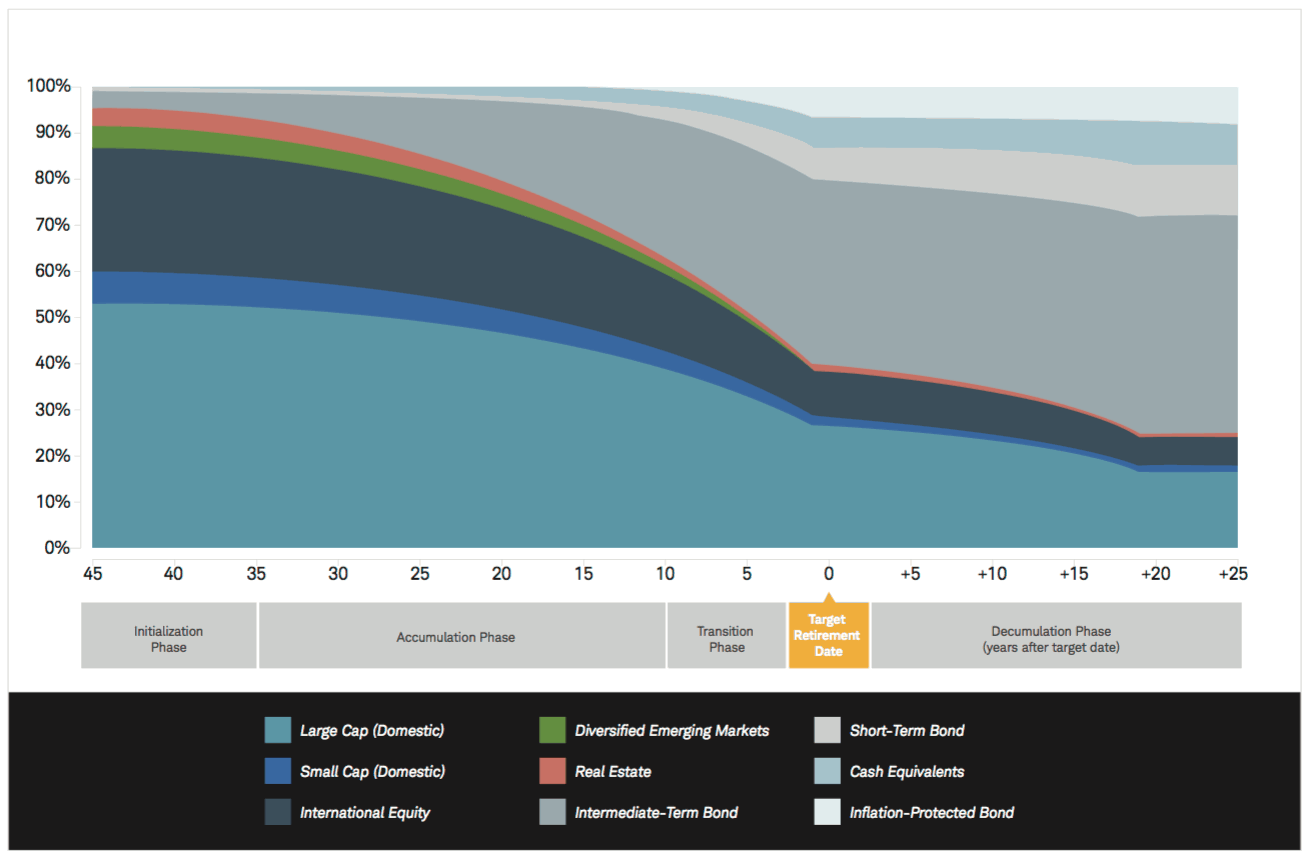
 There is a lot of focus on how to accumulate a big nest egg, but possibly even more complicated is how to spend it down. Vanguard Research has released a new whitepaper called




 We’ve all heard that you should keep an emergency fund in case of unexpected expenses or unemployment. But what if you don’t have the cash? Personal finance author Jonathan Clements presents a mathematical argument for using your 401(k) as an emergency fund in his recent article
  I like the idea of living off dividend and interest income. Who doesn’t? The problem is that you can’t just buy stocks with the absolute highest dividend yields and junk bonds with the highest interest rates without giving up something in return. There are many bad investments lurking out there for desperate retirees looking only at income. My goal is to generate portfolio income that will keep up with inflation.
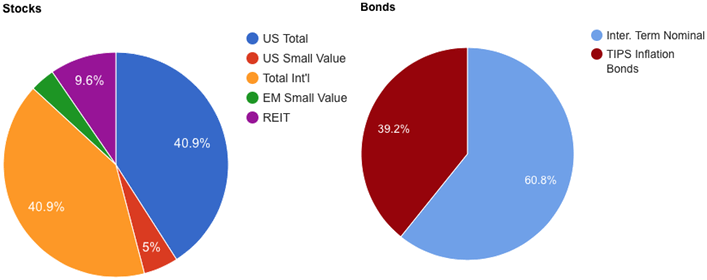
 Here is a roughly mid-year 2016 update on my investment portfolio holdings. This includes tax-deferred accounts like 401ks, IRAs, and taxable brokerage holdings, but excludes things like our primary home and cash reserves (emergency fund). The purpose of this portfolio is to create enough income to cover household expenses.
 The Best Credit Card Bonus Offers – 2026
 Big List of Free Stocks from Brokerage Apps
 Best Interest Rates on Cash - 2026
 Free Credit Scores x 3 + Free Credit Monitoring
 Best No Fee 0% APR Balance Transfer Offers
 Little-Known Cellular Data Plans That Can Save Big Money
 How To Haggle Your Cable or Direct TV Bill
 Big List of Free Consumer Data Reports (Credit, Rent, Work)