 There continues to be a lot of interest rate movement in savings accounts, CDs, and other cash equivalents. I find the most interesting corner right now to be the rise of real yields on TIPS (Treasury Inflation-Protected Securities) and their relationship with traditional Treasury bonds. Roughly 1/3rd of my bond allocation is to TIPS.
TIPS can be a bit complicated, but basically they are priced based on their real yield. As of 9/26/22, the closing real yield on a 5-year TIPS was 1.82%. This is the highest real yield since the 2008 Financial Crisis, and we’ve had negative yields for much of the last decade. (Source: FRED)

(As an inflation-linked bond, a TIPS with a 1.82% real yield means that if the CPI-U inflation is 3%, then your total yield will be 4.82%. “Real” means after adjusting for inflation. TIPS thus “protect” you from unexpectedly high inflation. If inflation ends up being 10%, you’ll get 11.82%. However, if inflation is very low, your yield will also be affected the other way.)
As of 9/26/22, the closing nominal yield on a regular 5-year Treasury was 4.15%. That means the 5-year “breakeven” inflation rate was 2.33%. If you bought equal amounts of both the 5-year Treasury and 5-year TIPS today, the winner after 5 years will depend on whether the future inflation rate ends up being higher or lower than 2.33% over the next 5 years. This creates a market-based estimate of future inflation rates. Here’s the historical 5-year breakeven inflation rate for the last 10 years:

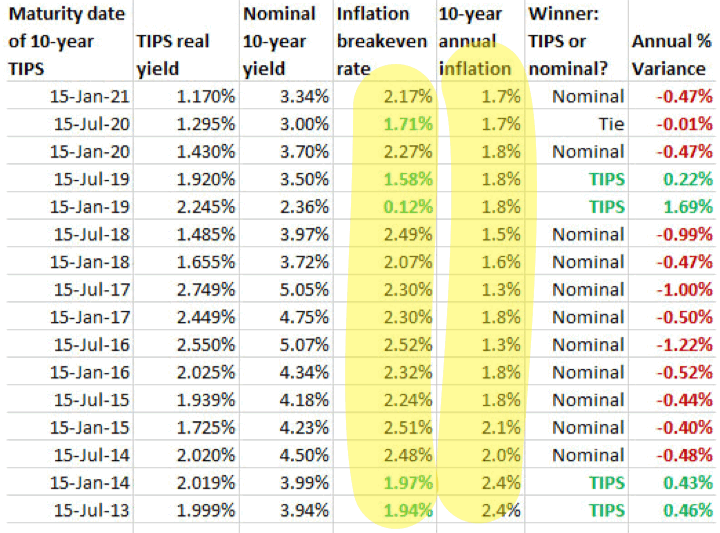
Looking back, TIPS underperformed regular Treasuries for 11 out of the 16 10-year periods ending 2013-2021, as inflation was usually lower than the breakeven rate. Image credit to TIPSWatch.
At this moment, there are 5-year brokered CDs at 4.20% (non-callable) and the 5-year Treasury at 4.15%. Purely my opinion, but I would consider the 5-year TIPS over both of those options as I like the combination of a decent 1.83% real rate and a modest 2.33% breakeven rate. I would take the risk of underperforming regular Treasuries by a little bit in exchange for the insurance against high inflation. This is why I usually hold mix of TIPs and Treasuries for the bond allocation of my portfolio.
Note that current Savings I Bonds only have a 0% real rate and we’ll see how much they raise it in November (my bet: not nearly as high as the 5-year TIPS). So TIPS would even beat savings bonds right now in my book (as a long-term bond holding). However, the situation is changing daily and I don’t know what the rates will look like when I actually have significant cash available to re-invest.


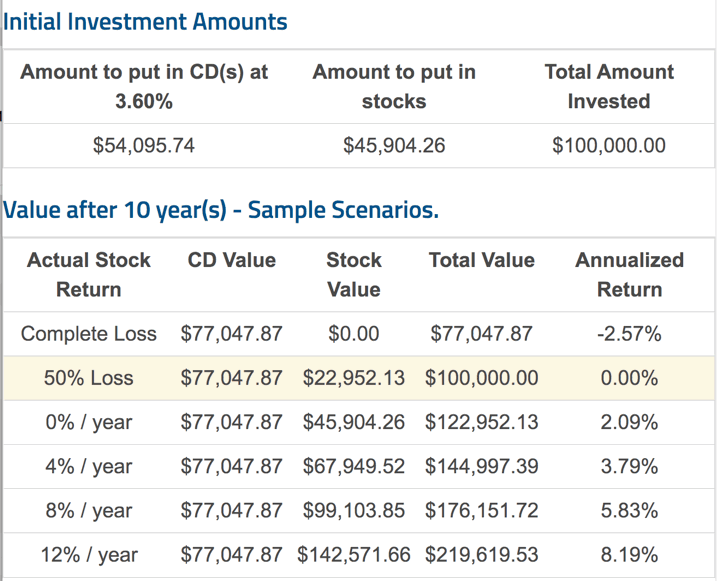
 Everyone loves a 100% money-back guarantee. A popular option on insurance policies is the “Return of Premium” rider. Let’s say you buy a $1,000,000 term life insurance for 30 years at $1,000 a year. At the end of 30 years, if you’re still alive, the insurance policy will no longer pay you the $1,000,000 if you die, but it will return all the premium you paid ($30,000). In your mind, you could think of it as “no risk” because you’ll get your $30,000 back no matter what!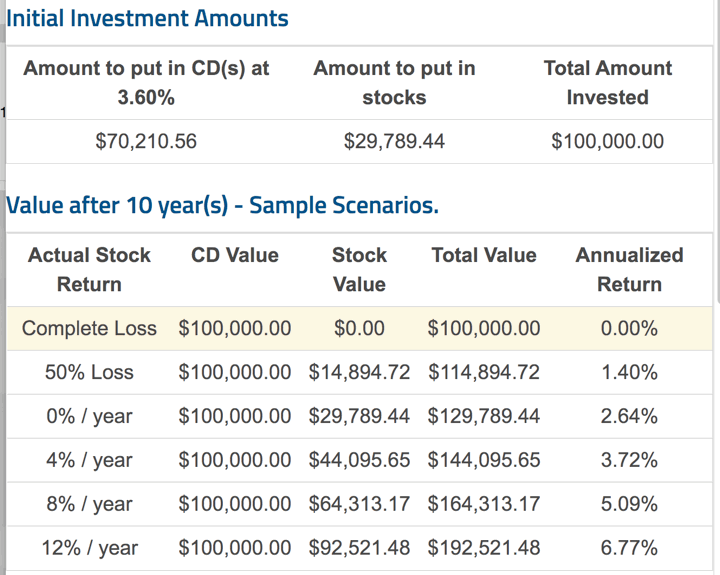
 Here’s my monthly roundup of the best interest rates on cash as of September 2022, roughly sorted from shortest to longest maturities. We all need some safe assets for cash reserves or portfolio stability, and there are often lesser-known opportunities available to individual investors. Check out my

 EFCU Financial Federal Credit Union has some



 The Best Credit Card Bonus Offers – 2026
 Big List of Free Stocks from Brokerage Apps
 Best Interest Rates on Cash - 2026
 Free Credit Scores x 3 + Free Credit Monitoring
 Best No Fee 0% APR Balance Transfer Offers
 Little-Known Cellular Data Plans That Can Save Big Money
 How To Haggle Your Cable or Direct TV Bill
 Big List of Free Consumer Data Reports (Credit, Rent, Work)