After doing a car insurance quote comparison test, I wanted to clear up any confusion regarding applying for car insurance and your credit history. Here’s why you should be able to get quotes from as many insurers as you like without worrying about your credit score.
Will auto insurance companies check my credit?
Probably. According to recent surveys, over 90% of insurance companies (including the top 5 auto insurers) use credit information in their underwriting process. It’s not the only thing, just one of the many things that gets considered like your driving record or accident history. There is a historical correlation between certain behaviors like high credit limit utilization and filing an insurance claim. Insurance scores weigh various factors differently than in standard FICO scores.
However, certain states including California, Hawaii, and Massachusetts do not allow the use of credit information in the underwriting or rating of car insurance. Texas had a similar bill proposed in 2013, but I don’t think it was passed.
When will they check my credit?
Either during the premium quote process, or when you actually pick one and apply for insurance. (Some will also check your credit upon premium renewal.) Out of the four insurance companies that I got quotes from, only Progressive asked for a Social Security number and it was optional (I declined to provide it). However, all of them get permission from you to run a credit check in the fine print when you apply for a quote.
For some companies, the initial quote provided assumes you have acceptable credit, and during the application process they check your credit and may adjust the quote based on any negative information. For example, your report may show a high utilization percentage of available credit.
Will it affect my credit score? Hard vs. soft pulls
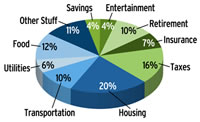 Ever since we started cutting back our work hours in order to share childcare duties, Mrs. MMB and I have kept a closer eye on our monthly spending patterns. One of the headaches for budgeters is dealing with large lump-sum payments like those for home/car repairs, healthcare bills (human repairs), and home/car/life insurance. Our homeowner’s insurance is due annually (we don’t use mortgage escrow anymore), life insurance is due annually, and auto insurance is due semi-annually.
  Much of the discussion around The Patient Protection and Affordable Care Act (PPACA) aka Affordable Care Act aka Obamacare has been about politics. But it’s the law, it’s constitutional, and a lot of things are happening soon. For most full-time workers that wish to keep their employer-provided health insurance, little will change. However, things will be very different for the self-employed, unemployed, uninsured, and those seeking semi-retirement or retirement before age 65 and Medicare. You can use it even if you already have employer-provided insurance, although you may become ineligible for certain tax credits. There’s way too much information to cover everything, but here’s my summary of the developments.
 In a NY Times Op-Ed piece entitled Money Won’t Buy You Health Insurance, Donna Dubinsky shares her troubles with getting
 Loading ...


 The Best Credit Card Bonus Offers – 2026
 Big List of Free Stocks from Brokerage Apps
 Best Interest Rates on Cash - 2026
 Free Credit Scores x 3 + Free Credit Monitoring
 Best No Fee 0% APR Balance Transfer Offers
 Little-Known Cellular Data Plans That Can Save Big Money
 How To Haggle Your Cable or Direct TV Bill
 Big List of Free Consumer Data Reports (Credit, Rent, Work)