 One of my newer interests is better understanding individual businesses and how they work. Accounting is the “language of business” used to write annual reports, 10-Ks, 10-Qs, income statements, and so on. I was afraid a textbook would be too boring, so I am auditing the online Coursera course Financial Accounting Fundamentals by Professor Lynch of the University of Virginia. Here’s a quick summary of what is covered in the course:
Accounting is often called the language of business. It is this language that organizations use to communicate their economic performance to others. In this course, you will acquire the tools that you need to understand the fundamentals of accounting, the language of business.
You will learn to record business transactions in the company’s accounts, understand how they flow into the financial statements, and learn to draw basic conclusions about an organization’s financial health from the three most commonly used financial statements, the balance sheet, the income statement and the statement of cash flow. Are you ready? Then let’s go!
Auditing is completely free and lets you view all the materials and take “practice” quizzes, but you can’t take the “real” quizzes needed to earn the “shareable certificate” (which is fine with me as this is just for personal improvement and not future employment). The course assumes no prior knowledge, requires a commitment of roughly 2-3 hours per week, and lasts for 5 weeks. I finished the first week in about an hour and a half by watching videos at 1.25x speed. So far, I’ve enjoyed filling in the gaps in my knowledge.
This course is the first of a 4-part series by UVA called Entrepreneurship: Growing Your Business:
Welcome to Entrepreneurship: Growing Your Business, a new specialization from the Darden School of Business, University of Virginia. This Specialization was designed to give you the real-world tools and processes you will need to take your business from idea, to action, to growth and revenue. You’ll learn how to create budgets and read financial statements, how to lead with values, how to leverage new business models for growth and how to create new business innovations. Ideal for entrepreneurs, small business owners, and those who have a business plan but aren’t sure what to do next, Entrepreneurship: Growing Your Business will help you on the path to success for you, your business and society.
There are a few similar Coursera courses from UPenn Wharton and the University of Illinois.
I used to feel that I didn’t need to know any of this stuff (just buy a Target Date fund and work on your career, etc), but now I want to compound knowledge in this area as well. I’ll be able to use it for the rest of my life as a private investor living off of my portfolio. This is also related to working for yourself for an hour each day.
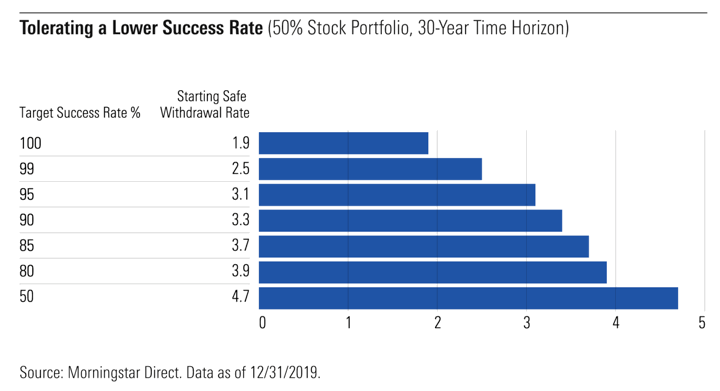
 Financial freedom seekers usually have a Number – the value at which their investments can support their spending indefinitely. This is directly linked to “safe withdrawal rates”. For example a 4% safe withdrawal rate is a 25x multiplier – meaning $30,000 in spending needs not covered by Social Security, annuities, or pensions would require 25 x $30,000 = $750,000. Morningstar recently released a 59-page research paper called


 Some investors like to break down their portfolio into several different asset and sub-asset classes. One long-standing example of the “slice-and-dice” is the “
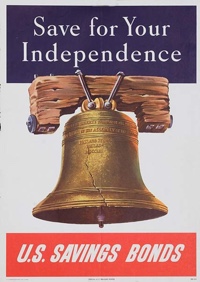 Savings I Bonds are a unique, low-risk investment backed by the US Treasury that pay out a variable interest rate linked to inflation. With a holding period from 12 months to 30 years, you could own them as an alternative to bank certificates of deposit (they are liquid after 12 months) or bonds in your portfolio.
  Investment research firm Morningstar has released their annual 529 College Savings Plans
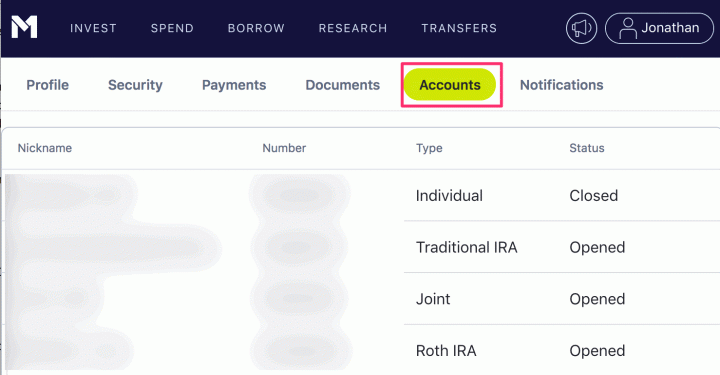
 I recently completed a Backdoor Roth IRA contribution at
 My current commute/workout/kid taxi listening is old Berkshire Hathaway shareholder meetings after finding them in
  While my

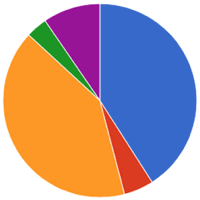 Here’s my quarterly update on my current investment holdings as of October 2021, including our 401k/403b/IRAs and taxable brokerage accounts but excluding our house, “emergency fund” cash reserves, and a side portfolio of self-directed investments. Following the concept of

 The Best Credit Card Bonus Offers – 2026
 Big List of Free Stocks from Brokerage Apps
 Best Interest Rates on Cash - 2026
 Free Credit Scores x 3 + Free Credit Monitoring
 Best No Fee 0% APR Balance Transfer Offers
 Little-Known Cellular Data Plans That Can Save Big Money
 How To Haggle Your Cable or Direct TV Bill
 Big List of Free Consumer Data Reports (Credit, Rent, Work)