Chase You Invest: 100 Free Stock Trades Details and Comparison

Chase just announced a new free stock trade program as part of a new online brokerage arm called You Invest. This means another megabank is moving more heavily into “relationship banking” where they hope you will keep your bank accounts, credit cards, brokerage accounts, and mortgage all at the same place. This is pretty significant as JP Morgan Chase is the largest US bank in terms of both market value and total customers (over 60 million).

According to CNBC, here are the offer details:

  • 100 free trades per year for the first year. Launches next week. Free trades must be done online or via app. Anyone can open a You Invest Trade account with no minimum balance requirement. You can fund with a Chase account or another external bank account.
  • After the first year, 100 free trades per year ongoing for those with $15,000+ in combined balances (Premier level). Assuming this matches up with their Premier banking rules, which I believe it should, the $15,000 includes both bank deposits and investment balances.
  • Unlimited free trades per year ongoing for Private Banking clients. The article says this typically requires at least $100,000 in combined balances. However, their Private Banking page says the requirement is $250,000. I suspect that the $100,000 combined limit means that (upcoming) Chase Sapphire Banking clients will qualify for unlimited trades.
  • In January 2019, Chase plans to launch a You Invest Portfolios service which is more of a robo-advisor that helps manage your portfolio for a fee.
  • If you exceed the free trade allotment, additional trades are $2.95 each.

Combining with other Chase products. In terms of credit cards, Chase has done well with their Chase Sapphire Preferred and Chase Sapphire Reserve cards. However, they currently don’t offer any bonus features if you have a bank or brokerage relationship. In terms of banking, Chase is also expected to launch a Sapphire Banking tier at the $100,000 total asset level. Chase also lets you qualify for their Premier Plus banking product via a Chase first mortgage with automatic payments.

The competition. Bank of America currently offers 30 free trades per month at their Platinum Preferred Rewards tier ($50,000 in total bank/investment assets) and 100 free trades/month at their Platinum Honors tier ($100,000 in total bank/investment assets). Bank of America offers a 50% bonus (Platinum) and 75% bonus (Platinum Honors) on eligible BofA Rewards credit cards. I moved over some assets to Merrill Edge specifically to qualify for the free trades and this bonus. So it worked on me for BofA, and it might work for Chase if they sweeten the pot enough.

Wells Fargo does not currently offer any free trades to banking customers with big balances, closing their program to new sign-ups in 2013. Citibank has been offering more bonuses on both their banking and credit cards, for example with the new Citi ThankYou Premier card.

Vanguard has just rolled out its free ETF trade program covering nearly all ETFs that they don’t think are too risky (leveraged and inverse ETFs). Fidelity also recently cut a lot of fees and minimums as well, some of which apply to their banking products. Vanguard, Fidelity, and Schwab all have commission-free trades on select low-cost index ETFs, on top of which they have been adding more banking features.

The Robinhood app offers unlimited free trades, free options trading, and a web interface now. A Chase executive threw some shade at them with the quote “There are customers out there who may not want to trust their credentials or their money to an app of the month”. Hah!

Reasons To Own TIPS, Treasury Inflation-Protected Securities

When it comes to constructing a portfolio, I used to think it was all about numbers and optimization. When you pick an asset class based on historical data, that assumes you hold through both the good times and the really bad times. It has helped me to keep gathering nuggets of knowledge over time to maintain my faith during those really bad times.
I’d like to start a series of posts to document why I own each specific asset class. Somebody asked me about TIPS the other day, so I’ll start with them. I’m not an investing professional, just a semi-retired DIY investor who wants to keep on learning and would like to share with other like-minded folks. I won’t get into the tiny details, mostly a lot of charts, links, and higher-level ramblings.

Treasury Inflation-Protected Securities (TIPS) are bonds issued by the US government that pay interest which is linked to inflation. Inflation is measured by the Consumer Price Index (CPI). In terms of a useful all-around primer, this Morningstar (M*) article 20 Years In, Have TIPS Delivered? covers a lot of the bases. For more nuts-and-bolts mechanics, see this older Vanguard paper Investing in Treasury Inflation Protected Securities. According to M*, TIPS currently make up about 9% of the overall Treasury market.

Here are my reasons for owning Treasury Inflation-Protected Securities (TIPS):

TIPS are backed by the US Government, just like the more common “vanilla” US Treasury bonds. With bonds, I prefer to stay on the safer end of the spectrum. Bonds are debt, and I don’t want to worry about if I get paid back. Buying US Treasury bonds is the lowest amount of credit risk possible.

TIPS provide a “real” inflation rate at purchase, which means it is guaranteed to provide a set return above inflation (before taxes) until maturity. Very few bonds are structured in this manner. In simplified terms, if the real interest rate is 2% and inflation is 3%, then the total interest paid will be 5%. Working backwards from that, you get the concept of breakeven inflation rate, or the expected inflation by the market (via M*):

The introduction of TIPS brought with it a market-determined observable real rate of interest, which is what the yield on a TIPS is. If you subtract the TIPS yield from the comparable-maturity nominal Treasury yield, you get the market’s inflation expectation over the period until maturity of these two bonds. This is called “breakeven inflation,” because it is the level of inflation at which returns for the nominal and inflation-indexed bonds should break even.

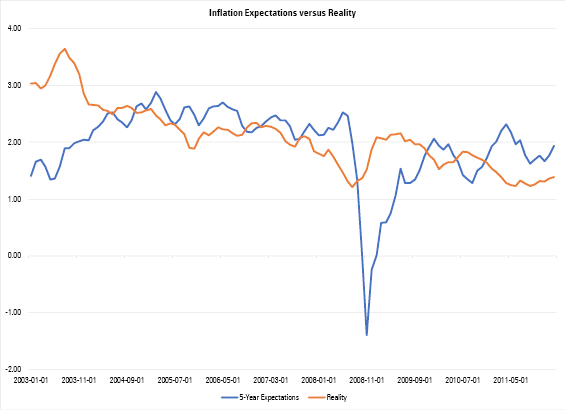
Here’s how the expected inflation and actual inflation compared for 5-year periods since 2003. For the most part, they have been pretty close:

TIPS thus provides insurance against *unexpected* inflation. TIPS are often described as an inflation hedge, but it’s more of a hedge against unexpected inflation. All bonds are already priced with inflation in mind. If everyone thinks inflation will be high, then bonds across the board will be priced to pay out more interest to counter that.

The reason why you don’t hear much about TIPS in the media is that over the last several years, there hasn’t been any unexpected inflation. If you bought fire insurance on your house, and your house hasn’t burned down yet, are you going to stop buying the fire insurance?

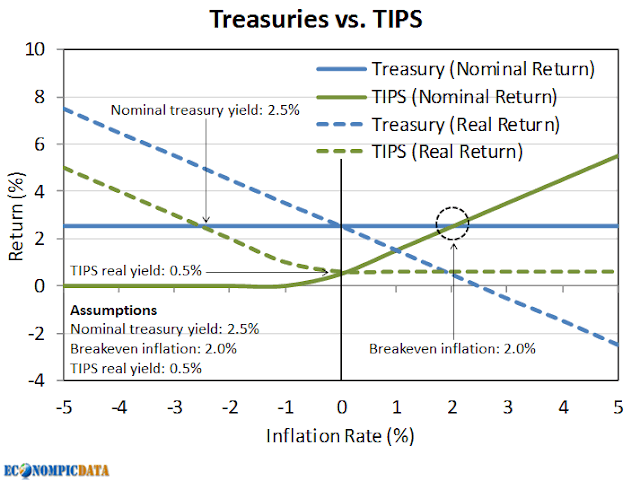
TIPS also provides a certain amount of protection in case of severe deflation. TIPS are guaranteed to return par at maturity, meaning they have floor value even in a case of severe deflation. This asymmetry helps make TIPS attractive relative to Treasuries, as best explained by this EconompicData post:

Thus, assuming a view that an inflationary and deflationary scenario are equally likely, the unlimited potential outperformance of TIPS vs. Treasuries in an inflationary environment and limited upside of Treasuries vs. TIPS in a deflation environment would sway an investor towards TIPS.

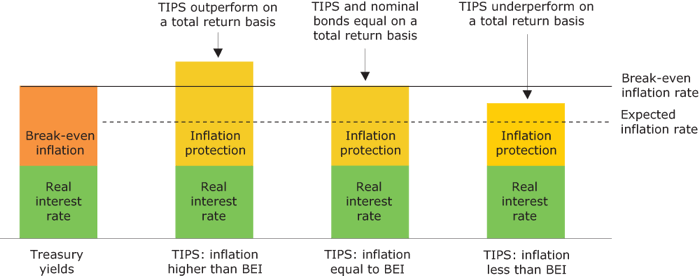
If inflation meets the market expectations, then TIPS and Treasuries will have the same return. If actual inflation is higher than the (expected) breakeven inflation rate, then TIPS will pay more than the regular Treasury bond. If actual inflation is less than the (expected) breakeven inflation rate, then TIPS will pay less than the regular Treasury bond. Here’s a simple graphic from AAII:

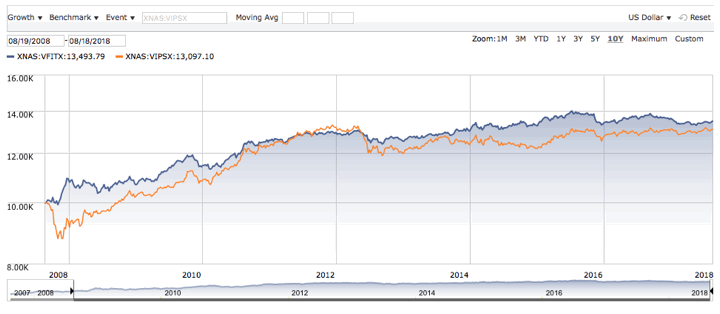
Here’s a 2008-2018 Morningstar chart comparing the growth of $10,000 between the Vanguard Intermediate Treasury Fund (VFITX) and the Vanguard Inflation-Protected Securities Fund (VIPSX). You can see while there is definitely a difference – sometimes one leads, sometimes the other – but over the last 10 years the net return has been very similar. Again, inflation has not been much higher (or a lot lower) than expected.

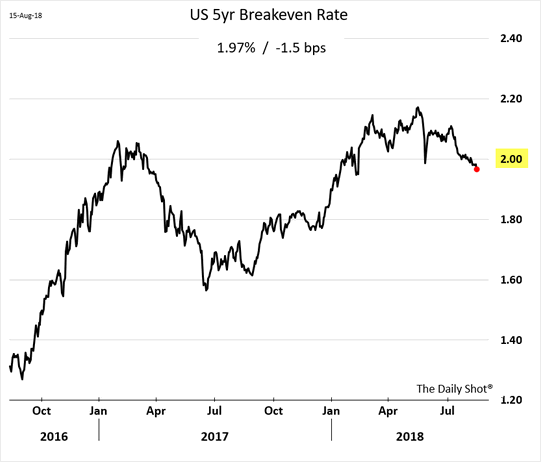
Do you think future inflation will be higher than the current expected number? Here’s the 5-year breakeven inflation rate for the last couple of years. Via WSJ Daily Shot.

If I had to bet, I would bet that the future inflation number will be higher than 2% then less than 2%. However, most likely they will return around the same amount. So this is not a huge risky bet. In terms of the big picture, it’s a relatively wimpy bet. I currently hold about 1/3rd of my portfolio asset allocation in bonds, and about 1/3rd of those bonds are invested in TIPS. That means about 11% of my total portfolio is in TIPS. If the real yields on TIPS were to go back higher to historical levels, I would go back up to 50% of bonds in TIPS.

Here are some reasons for NOT owning Treasury Inflation-Protected Securities (TIPS).

  • TIPS are not part of the efficient frontier. If you run an mean-variance blah-blah-blah optimizer, you won’t find TIPS on the ideal risk/return curve.
  • TIPS have a low historical correlation with stocks, but not as low as regular Treasuries – regular Treasuries are a better bet to go up when the stock markets crash.
  • TIPS have only been around for 20 years. You might argue that they have not been tested in severe high-inflation environment.
  • As with nominal Treasuries, the interest is taxable as ordinary income rates, not the lower dividend or long-term capital gains rates as with stock dividends. You’ll have to pay taxes on this interest every year – it can’t be deferred like if you buy a stock and hold it for a long time. If you buy individual TIPS, you’ll also have to pay income taxes on the inflation adjustment without actually getting the interest until maturity. This is called “phantom income” but can be avoided if you buy TIPS via an ETF or mutual fund. TIPS are thus generally recommended to be kept in tax-sheltered accounts. (TIPS interest is exempt from state and local taxes, however.)
  • Some people worry that the government will fudge the CPI numbers if high unexpected inflation really becomes a problem.

Vanguard 10-Year Expected Asset Class Returns (2018)

I was surprised to read the NY Times article Vanguard Warns of Worsening Odds for the Economy and Markets. Everything is written very carefully using odds so that there is no “prediction” that could be called “wrong” later on, but at the same time if there is a future recession, they will appear to have been “right”. I didn’t know that Vanguard did these sort of economic predictions or that they were deemed so noteworthy.

As the chart below reminds us, all bull markets must eventually come to an end:

risefall_720b

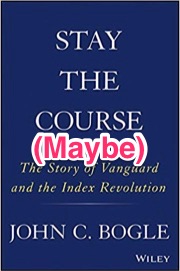
The question is, what is the point? What is actionable about this? You could view this article as encouraging market timing (sell stocks now!), or it could be a prudent reminder to rebalance and assess your risk exposure (sell a little stock now? maybe?). The latter is always a good idea, so let’s be generous and call it that. I wonder what Jack Bogle thinks. I mean, the title of his upcoming book about the history of Vanguard is Stay the Course.

For posterity, I wanted to record their expected 10-year (annualized) returns for the following asset classes (as of mid-2018):

  • US Stocks 3.9%
  • International Stocks 6.5%
  • US Total Bond (Corporate + Government) 3.3%
  • International Bonds 2.9%
  • Commodities 5.9%
  • US Treasury Bonds 3%
  • Cash 2.9%

These are nominal numbers. In another economic outlook article, Vanguard projects inflation to run slightly under 2% annualized.

Are You Quietly Losing Money via Your Brokerage Cash Sweep Account?

A recent WSJ article by Jason Zweig calls attention to one of the hidden ways that brokerage firms make money from you. As interest rates rise, they go out and earn the highest market rates while giving you a lot less on your idle cash. The difference adds up to big profits.

Brokerage accounts used to make you buy a money market fund with a high expense ratio. These days, they use a “bank sweep” account. They advertise the FDIC insurance, but hide the fact that they often own the bank and are skimming millions in interest:

In a bank sweep, your brokerage automatically rakes together and deposits your spare cash in one or more banks. Banks hand the brokerage a hefty fee, and the brokerage hands you some crumbs. For any given investor, a few dollars from dividends or interest income don’t amount to much. Rolled together with idle cash from thousands of other investors, they can add up to millions.

Morgan Stanley. Ameriprise. E-Trade. If you dig through Schwab’s disclosure, you’ll see them state that “In setting interest rates, the affiliated banks may seek to pay as low a rate as possible”. Nice.

Default options often prey on your inattention and laziness. Here are some ways to avoid the low interest rates of the bank sweep accounts.

  • Explore all your sweep options. Some places give you multiple alternatives for your cash sweep. For example, Fidelity has Fidelity Government Money Market Fund (SPAXX), Fidelity Treasury Fund (FZFXX), and FCASH. The two funds have SEC yields over 1.5% right now, while FCASH earns only 0.25% on balances under $100,000.
  • Keep your cash accounts empty automatically. You can set up automatic dividend reinvestment, or perhaps an automatic deposit of dividends into a high yield savings account. That should keep most of your interest and dividends from piling up as cash.
  • Manually reinvest often or transfer to alternative funds. Keep an eye on your cash balance, and invest it as soon as possible into stocks, bonds, or a higher-yielding money market fund alternative. Some accounts offer a text alert if you balance exceeds a certain amount like $1,000.
  • Move your assets to another firm. Vanguard still has a decent sweep option (VMMXX, see below). Fidelity still has two decent money market sweep options as well (SPAXX and FZFXX).

Vanguard isn’t incentivized to play these interest-skimming games. Vanguard’s only sweep account nowadays is the Vanguard Federal Money Market fund due to new regulations (read more here). Vanguard used to have better options as the default account, but at least the Vanguard Federal Money Market fund still earns a decent SEC yield of 1.87% (as of 8/8/18). If you want, you can still move money manually into the Vanguard Prime Money Market fund, Vanguard Municipal Money Market funds, and the Vanguard Treasury Money Market fund which may do better on an after-tax basis.

On the flip side, if you are individual stock investor, this is why higher interest rates are good for brokerage firms like Schwab. If you believe in the future of low-cost index funds, Fidelity and Vanguard are not publicly-traded, but you can become a shareholder in Schwab. Heck, Schwab has even set up their “free” robo-advisor to profit from higher interest rates due to a sizable cash allocation. (I do not hold Schwab stock at the time of this writing, but it is on my watchlist.)

Bottom line. Check the interest rate on your brokerage sweep account – It might be a lot lower than you think. Consider taking action.

How Did Total Bond and Treasury Bond Funds Perform During the Largest Stock Market Drawdowns?

If you own bond mutual funds or ETFs, the most popular benchmark is the Bloomberg Barclays Aggregate Bond Index (AGG), which basically tracks all U.S. taxable investment-grade bonds, including US Treasury government bonds, investment-grade corporates, mortgage-backed bonds, and other asset-backed securities. The largest bond fund in the world is the Vanguard Total Bond Market Index Fund (VBMFX/VBTLX/BND), which tracks a slight variation of this index – the Bloomberg Barclays U.S. Aggregate Float Adjusted Bond Index.

In an Advisor Perspectives article, Eric Hickman compares the “Total US Bond” index (AGG) to a Treasury Bond-only index and finds that the overall returns are very similar for both, but Treasury bonds perform better during a market drop. Thus, he concludes that Treasury Bonds Are the Only Bonds You Need.

I wanted to save this chart that lists the returns of both AGG and Treasury bonds during the 10 largest S&P 500 drawdowns since 1976. He points out that 8 out of 10 times (and during all top 6 drawdowns), Treasury bonds outperformed the AGG index.

My personal takeaway was that both Total US and Treasury-Only did pretty well. Right now, AGG has ~42% in US Treasuries and 22% in US government mortgage-backed bonds. If you were a professional advisor or a really detailed DIY investor, then yes, there is an argument for Treasuries only. (Because they are all equally creditworthy, you could even build your own ladder of Treasury bonds with zero expense ratio.) But if you hold a “Total US Bond” fund inside your 401k or target retirement fund, I would still be satisfied that it has historically served its purpose as the safer “ballast” of your portfolio. Overall, I would definitely focus more on keeping your expense ratios low, as the numbers above don’t account for the deduction of fund expenses.

Fidelity Investments: Zero Expense Ratio Index Funds, Zero Account Fees

Fidelity Investments announced a bunch of “zero”-themed price and fee cuts across nearly all of their products:

  • Zero expense ratio mutual funds (two new Fidelity ZERO Index Funds)
  • Zero account minimums, zero account fees, zero domestic money movement fees
  • Zero investment minimums on Fidelity retail and advisor mutual funds and 529 plans
  • Lower expense ratios on many existing Fidelity index mutual funds

Fidelity ZERO Total Market Index Fund and (FZROX) and Fidelity ZERO International Index Fund (FZILX). These have zero expense ratio. Not nearly zero like 0.03%, but 0.00%. This was made possible partially because Fidelity is “self-indexing” and not paying any licensing fees to a 3rd party provider like the S&P 500.

  • Fidelity ZERO Total Market Index Fund and (FZROX) tracks the total US stock market, and is supposed to be comparable to the Vanguard Total Stock Market Index Fund (VTSMX) and the Schwab Total Stock Market Index Fund (SWTSX).
  • Fidelity ZERO International Index Fund (FZILX) tracks the total international stock market including foreign developed and emerging stocks. It’s supposed to compare with the Vanguard FTSE All- World, Ex-U.S. Index Fund (VFWIX) and Schwab International Index Fund (SWISX). I like that FZILX includes emerging markets. VFWIX does too, but SWISX does not include emerging markets.

More info on Fidelity index funds.

Zero minimums, zero account fees, domestic money movement fees. There is now no minimum amount required to open an account, buy a mutual fund, or maintain any account at Fidelity. Some of the account fees are nice to see gone as I have been dinged by them from other brokerages. For example: account transfer out fee, IRA closure fee, domestic bank wire fee.

Zero investment minimums. If you want to put $5 in a mutual fund, now you can. They want to get rid of all barriers to entry.

Notably, their trade commissions are holding steady at $4.95 a trade. They still have $0 commissions on select iShares and Fidelity ETFs.

Access to lowest-price share class. Although it didn’t fit neatly into their “zero” theme, another big move was that now all investors will get the lowest priced share class available. In the past, if you only put in $5,000 you might pay one price, and if you had $1,000,000 then you’d get a lower price. Vanguard still does this with their Investor and Admiral share classes. Now, everyone will get the lowest price regardless. Fidelity says the average asset-weighted annual expense across Fidelity’s stock and bond index funds will decrease by 35%, with expense ratios as low as 0.015%.

Bottom line. Fidelity just announced a big round of price cuts that basically shout “We’re cheap too!!” They added two new index funds with zero expense ratios, and they got rid of nearly all their account fees and minimum investments. This comes after Vanguard’s “all ETFs trade free with us” announcement and Schwab’s streak of “we have cheap ETFs” TV commercials.

Are You Worried About Investing at an All-Time Market High?

Maybe folks are worried about the yield curve, maybe it’s the political drama, or maybe they just feel it in their bones – I’ve been getting more questions about if I think now is still a good time to invest.

Well, here are some articles that may help you feel better:

What if You Only Invested at Market Peaks? by Ben Carlson. What if you were so unlucky as to invest only at the following market peaks (and suffering the subsequent drops)? As long as you kept on saving your money (putting it in cash when not at a market peak), and not selling at all, you would have actually done fine.

Meet Bob.
Bob is the world’s worst market timer.
What follows is Bob’s tale of terrible timing of his stock purchases.

Should You Invest (Or Wait) When The Stock Market Is At An All-Time-High? at Engaging-Data.com. Here is another interesting interactive tool that lets you pick any subsequent time period and see how the distribution of future returns compared if you invested at an all-time high (ATH) during that period. The market tends to spend a lot of time near all-time highs.

The key takeaway is that in the past several generations of investing, the market has done well and most of the time, the market is within 5% of its ATH. If you waited for a large dip to invest, you could be waiting for a long time and you would have missed out on a large amount of the gains.

Finally, here’s an older post to consider: The Only Two States of Your Portfolio: Happy All-Time High or Sad Drawdown.

Zero to $1 Million in 14 Years: Maxing Out 401k and IRAs from 2004-2017

Like many others, I had a vague goal of $1 million net worth in my 20s. It’s easy to find a theoretical path a million. For example, $750 per month earning 8% returns for 30 years with get you there. Doing the actual earning, saving and investing is the hard part. It gets even harder during a bear market when your money feels like it is burning up in flames.
On the list of “Things I Would Tell My Younger Self”, I would include “Be patient and keep saving. You’ll get there.” Or by changing up the phrase “Always Be Closing” popularized in Glengarry Glen Ross – “Always Be Contributing” (ABC). One of the major benefits of writing this blog was keeping my focus on this path.

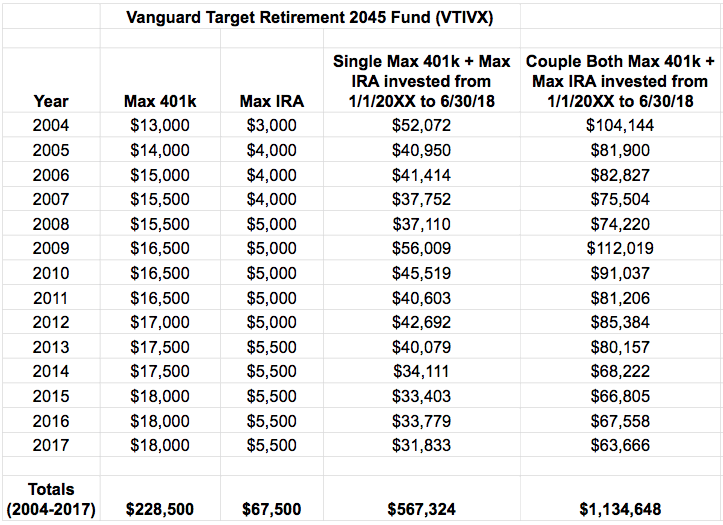
This is how a real couple could have gone from zero to $1 million from 2004 to 2017. My spouse and I both had our first full year of full-time jobs in 2004. From 2004 to 2017, we contributed the maximum allowable limit to both of our 401k and IRAs each year. The contribution limits rose gradually over the years. (Company match is not included here.) We invested our money in low-cost index Vanguard funds – mostly stocks with a little bonds – which can be closely approximated by the Vanguard Target Retirement 2045 fund (ticker VTIVX). This fund had its share of ups and downs with the market. It crashed a lot in 2008 and 2009. It went back up a lot afterward. We just kept contributing and buying each year.

Using Morningstar tools, I found the final amount today if the limit was invested on January 1st of each year. For example, if both of us invested $16,000 in Vanguard Target Retirement 2045 at the beginning of 2004 ($13k + $3k), that investment would now be worth $104,144 as of June 30, 2018. And so on for each subsequent year. As you can see, if you add all the years up, you would reach over $500,000 for an individual and over $1,000,000 for a couple:

These numbers won’t be the same across other time periods, but they do represent a real-world experience. I’ve done a variation of this before in What If You Invested $10,000 Every Year For the Last 10 Years? 2008-2017 Edition.

According to Vanguard, 13% of their plan participants maxed out their 401k plans in 2017. 58% of participants had their entire account balance invested in a single target-date fund or similar managed allocation.

Bottom line. A real couple that started saving as 26-year-olds in 2004 and maxing out both their 401k and IRA plans each year could have reached $1 million by age 40 in 2018. All with a simple Vanguard Target Retirement index fund. This requires a lot of steady saving, but the important part is that it required no special investment skill. You didn’t need to recognize bubbles. You didn’t need to time bottoms. You didn’t need a fancy asset allocation, estimate future cashflows, understand price/book ratios, or even rebalance. Always be contributing.

My Money Blog Portfolio Asset Allocation, July 2018

portpie_blank200

Here’s my quarterly portfolio update for Q2 2018. These are my real-world holdings and includes 401k/403b/IRAs and taxable brokerage accounts but excludes our house, cash reserves, and a few side investments. The goal of this portfolio is to create enough income to cover our regular household expenses. As of 2018, we are “semi-retired” and spending some of the dividends and interest from this portfolio.

Actual Asset Allocation and Holdings

I use both Personal Capital and a custom Google Spreadsheet to track my investment holdings. The Personal Capital financial tracking app (free, my review) automatically logs into my accounts, tracks my balances, calculates my performance, and gives me a rough asset allocation. I still use my custom Rebalancing Spreadsheet (free, instructions) because it tells me where and how much I need to direct new money to rebalance back towards my target asset allocation.

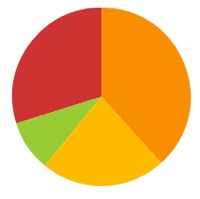
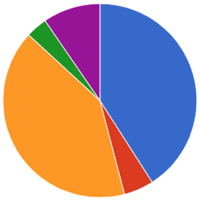
Here is my portfolio performance for the year and rough asset allocation (real estate is under alternatives), according to Personal Capital:

Here is my more specific asset allocation, according to my custom spreadsheet:

Stock Holdings
Vanguard Total Stock Market Fund (VTI, VTSMX, VTSAX)
Vanguard Total International Stock Market Fund (VXUS, VGTSX, VTIAX)
WisdomTree SmallCap Dividend ETF (DES)
Vanguard Small Value ETF (VBR)
Vanguard Emerging Markets ETF (VWO)
Vanguard REIT Index Fund (VNQ, VGSIX, VGSLX)

Bond Holdings
Vanguard Limited-Term Tax-Exempt Fund (VMLTX, VMLUX)
Vanguard Intermediate-Term Tax-Exempt Fund (VWITX, VWIUX)
Vanguard High-Yield Tax-Exempt Fund (VWAHX, VWALX)
Vanguard Inflation-Protected Securities Fund (VIPSX, VAIPX)
iShares Barclays TIPS Bond ETF (TIP)
Individual TIPS securities
U.S. Savings Bonds (Series I)

Target Asset Allocation. Our overall goal is to include asset classes that will provide long-term returns above inflation, distribute income via dividends and interest, and finally offer some historical tendencies to balance each other out. I personally believe that US Small Value and Emerging Markets will have higher future long-term returns (along with some higher volatility) than US Large/Total and International Large/Total, although I could be wrong. I don’t hold commodities, gold, or bitcoin as they don’t provide any income and I don’t believe they’ll outpace inflation significantly.

I think it’s important to imagine an asset class doing poorly for a long time, with bad news constantly surround it, and only hold the ones where you still think you can maintain faith.

Stocks Breakdown

  • 38% US Total Market
  • 7% US Small-Cap Value
  • 38% International Total Market
  • 7% Emerging Markets
  • 10% US Real Estate (REIT)

Bonds Breakdown

  • 50% High-quality, Intermediate-Term Bonds
  • 50% US Treasury Inflation-Protected Bonds

I have settled into a long-term target ratio of 67% stocks and 33% bonds (2:1 ratio) within our investment strategy of buy, hold, and occasionally rebalance. With a self-managed, simple portfolio of low-cost funds, we minimize management fees, commissions, and taxes.

Real-world asset allocation details. No major changes from the last quarterly update. For both simplicity and cost reasons, I am no longer buying DES/DGS and will be phasing them out whenever there are tax-loss harvesting opportunities. New money is going into the more “vanilla” Vanguard versions: Vanguard Small Value ETF (VBR) and Vanguard Emerging Markets ETF (VWO).

My taxable muni bonds are split roughly evenly between the three Vanguard muni funds with an average duration of 4.5 years. I am still pondering going back to US Treasuries due to changes in relative interest rates and our marginal income tax rate. Issues with high-quality muni bonds are unlikely, but still a bit more likely than US Treasuries.

The stock/bond split is currently at 70% stocks/30% bonds. Once a quarter, I reinvest any accumulated dividends and interest that were not spent. I don’t use automatic dividend reinvestment. Looks like we need to buy more bonds and emerging markets stocks.

Performance and commentary. According to Personal Capital, my portfolio has basically broken even so far in 2018 (+1.5% YTD). I see that during the same period the S&P 500 has gained 6.5% (excludes dividends) and the US Aggregate bond index lost 1.7%. My portfolio is relatively heavy in international stocks which have done worse than US stocks so far this year.

An alternative benchmark for my portfolio is 50% Vanguard LifeStrategy Growth Fund (VASGX) and 50% Vanguard LifeStrategy Moderate Growth Fund (VSMGX), one is 60/40 and one is 80/20 so it also works out to 70% stocks and 30% bonds. That benchmark would have a total return of +2.8% YTD (as of 7/25/18).

As usual, I’ll share about more about the income aspect in a separate post.

Vanguard How America Saves 2018: How Does Your 401k Compare?

Vanguard recently released How America Saves 2018 report [PDF], which looks at the nearly 5 million 401k, 403b, and other defined-contribution retirement plans that they service. If you are curious about how your 401k stats compare with others, there is a great deal of information in this report. Here are a few quick stats based on 2017 data:

  • Average aggregate contribution rate amongst participants was 10.3% (employer and employee total).
  • Average maximum “employer match” contribution was 7% of income. Nearly 2/3rds of participants received the maximum employer match.
  • Average employee contribution was 6.8% of income.
  • Maxing out. 13% of participants saved the maximum annual amount of $18,000 ($24,000 age 50+) for 2017.
  • Average account balance was $103,866; the median balance was $26,331. A small number of plans with very high balances skews this often-quoted average upward.
  • Target-date funds. 58% of participants had their entire account balance invested in a single target-date fund or similar managed allocation. In other words, 58% let someone else pick their portfolio.
  • Automatic enrollment. Plans with automatic enrollment have a 92% participation rate.
  • Withdrawals and rollovers. About 1/3rd of participants could have cashed out their balance (with taxes and penalties) because they switched jobs. 84% of those folks kept their money in retirement plans. In terms of assets, 98% of all plan assets available for distribution were preserved and only 2% were taken in cash.
  • Loans. 15% of participants had a loan outstanding at year-end 2017.

These numbers don’t tell the entire story, as the average includes workers across different age groups, income levels, job tenures, and so on.

Longleaf Partners Funds: Reasons To Buy Higher-Cost, Concentrated, Actively-Managed Mutual Funds

I can’t recall the exact source or quote, but I read something along the lines of this in a forum recently:

We don’t really want to hear other people’s opinions. We want to hear our own opinions out of other people’s mouths.

In other words, confirmation bias:


(source: Chainsawsuit.com)

The majority of my portfolio is in low-cost, diversified, passive-managed mutual funds. In order to hear a different take, I read the shareholder letters of Longleaf Partners Funds (Southeastern Asset Management), which are respectable examples of higher-cost, concentrated, actively-managed mutual funds. The managers “eat their own cooking”, meaning they put a substantial portion of their personal net worth into the funds. They have a limited number of holdings, try to avoid asset bloat, and try to outline their positions in shareholder letters.

In their most recent 2nd Quarter 2018 letter [pdf], they share a presentation that explains their position:

Why We Believe Active Long-Term Value Investing in Common Stocks Will Actually Work
Active investing is out of favor; long-term investing (or really, long-term anything) is out of favor; value investing as we practice it is out of favor; and, investing in common stocks is out of favor compared to private equity. Doing all four of these things really makes us the skunk at the party.

Many have given up on active, long-term, engaged value investing in public equities just at the point when we believe it offers the best risk/reward proposition. Indexing’s multi-year momentum has pushed more assets into fewer stocks because they have gone up and left behind an expanding universe of highly competitive, well-governed and managed businesses with unique advantages that are materially underpriced in their publicly traded securities.

They make several interesting points, including the high amount of “closet indexers” out there. (Haven’t there always been a lot of closet indexers though?) I tried to see things from their perspective, but in the end I think their 1% expense ratio is just too high to overcome. It will definitely take a bear market for their performance gap to narrow.

In the meantime, their real problem is that poor relative performance. For every $10,000 invested in their flagship Partners fund 10 years ago, you would have about $18,000 today. If you had put it in a low-cost S&P 500 index fund, you would have about $27,000 today. That’s the difference between 6% and 10% annualized returns over the last 10 years. The extra drag from their ~1% expense ratio accounts for about a quarter of the performance gap.

Longleaf Partners Fund very well might turn things back around. I have no position in any of their funds, but I’ll keep reading their free shareholder letters and watch them try their best to play a very difficult game.

Retirement: Start Saving Regularly, Even If You Start Small

T. Rowe Price has a brochure The Benefit of Saving Regularly For Retirement [pdf] which has the common advice that you target saving at least 15% of your gross income each year to prepare for retirement. Of course, the earlier you start, the better. The added wrinkle here is that they offer an alternative route if you find 15% a stretch when you are young.

In their simulation, if you start saving at age 25 at a 6% rate and increase it 1% each year until you reach 15% (and then stay at 15%), you’ll actually come out ahead of someone who starts saving at age 30 at a 15% rate. You’ll even do okay if you start at age 30 at a 6% savings rate and increase it 2% a year until your reach 15% (and then stay at 15%). The two big takeaways are (1} start, even if small and (2) bump up your savings even if just a little by banking some of your raises each year.

The assumptions made seemed largely reasonable:

Examples beginning at age 25 assume a beginning salary of $40,000 escalated 5% a year to age 45 then 3% a year to age 65. Examples beginning at age 30 assume a beginning salary of $50,000 escalated 5% a year to age 45 then 3% a year to age 65. Example beginning at age 40 assumes a beginning salary of $80,000 escalated 5% a year to age 45 then 3% a year to age 65. Annual rate of return is 7%. All savings are assumed tax-deferred. Multiple of ending salary saved divides final ending portfolio balance by ending salary at age 65.

Bottom line. Start saving regularly, no matter the amount. Even if you feel like you can’t save 10% or 20% or whatever you read somewhere, just should start as soon as possible with a smaller number. After a year, try to increase your savings rate by 1% or 2%. Repeat each year. This can help minimize how much you “feel” the savings, while still ending up with a healthy nest egg. Build the habit.