 One of the major building blocks of your portfolio is probably a bond mutual fund or ETF. The most popular bond benchmark is the Bloomberg Barclays Aggregate Bond Index (AGG), which basically tracks all U.S. taxable investment-grade bonds. These popular index funds all track some variation of this index:
- Vanguard Total Bond Market Fund (VBTLX/VBMFX) and ETF (BND). The biggest bond mutual fund. This fund is also inside all Vanguard Target Retirement 20XX or LifeStrategy All-In-One funds.
- iShares Core U.S. Aggregate Bond ETF (AGG). The biggest bond ETF.
- Schwab U.S. Aggregate Bond ETF (SCHZ).
What’s inside a Total Bond fund? A recent Vanguard Blog post provides some insight into the components that make up the Barclays U.S. Aggregate Index from 1977 to 2017:
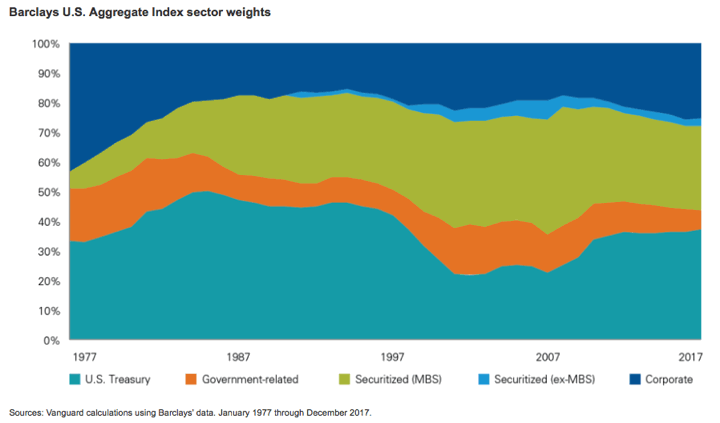
- US Treasury. Bonds issued and backed by the US government, including Treasury notes and bonds. (Nominal only, TIPS are not included.)
- US Government-related. Securities issued by a Federal Agency or a government-sponsored enterprise like Fannie Mae or Freddie Mac. These are either explicitly or implicitly backed by the US government.
- Securitized (MBS). Mortgage-backed securities, backed by residential mortgages and packaged by Ginnie Mae, Fannie Mae, Freddie Mac, and others including private issuers.
- Securitized (ex-MBS). Asset-backed Securities, backed by things such as consumer auto loans, credit card debt, and home equity loans.
- US Corporate. Securities issued by corporations with investment-grade ratings from the major ratings agencies.
The first thing to note is that the bottom three layers are essentially all backed by the US government. When considered in this chart format, you can see that these bottom three layers consistently make up about 60% to 80% of the AGG. Thus, historically you can estimate that roughly 2/3rds of the index is backed by the US government and 1/3rd is privately-backed by securitized assets or corporations.
How much more does a Total Bond fund yield than a Treasury Index fund? Here’s how much the AGG Total Bond index yields above a Treasury index historically:

So the ingredients are little riskier overall than 100% US Treasury bonds, but you also earn a little higher yield.
Which is better? For the most part, I agree with this William Bernstein list of what kinds of bonds should be in an individual portfolio. I slightly prefer either 100% Treasuries, municipal bonds, or bank CDs – all depending on the after-tax yield. The idea is to pick the safest bonds that are hopefully the least correlated with your stocks. For example, the expectation is that Treasuries are more likely to go up when stocks are dropping.
But for the most part, I think a total bond fund is just fine as well. You can see it’s still pretty safe and you get extra interest in exchange for the extra risk that the market has decided is the proper compensation.
First things first – Buying a low-cost total bond index fund is very likely to return more over the long run than an expensive actively-managed bond fund. Choosing between Treasuries and a Total Bond fund is a secondary decision.
Bottom line. Lots of people own bond funds and ETFs that track the US Aggregate Index (AGG). These charts help show you what’s held inside such Total US Bond funds and how much more they yield than 100% Treasury bonds.
 When you’re deciding where to invest your money, a good starting point is to consider every single business that you can invest in around the world. I still find it amazing that with a few clicks, you can own a share of Alibaba in China, Nestle from Switzerland, and Apple in the US.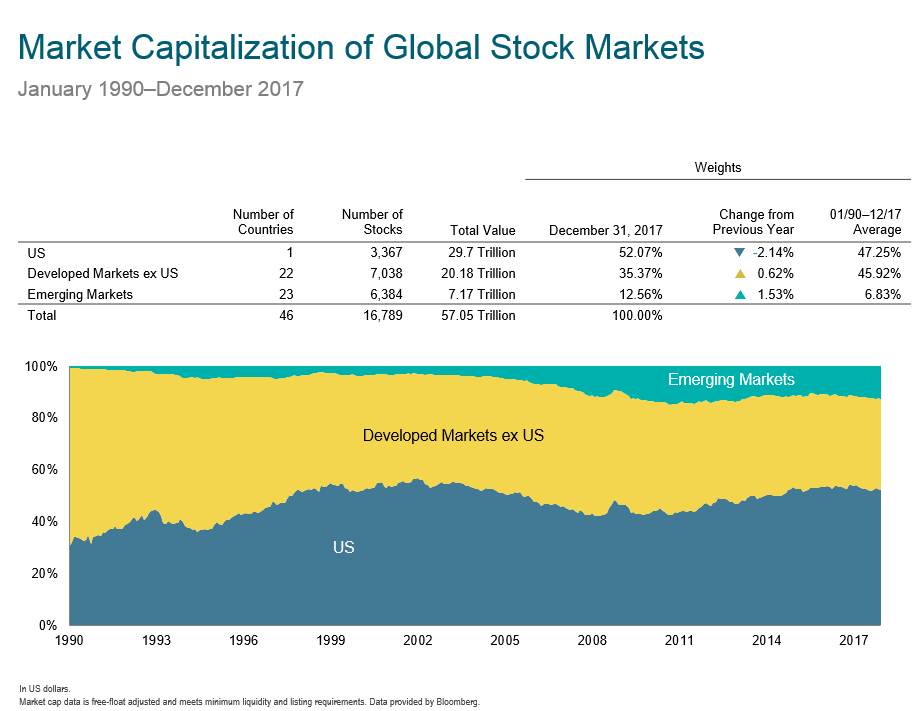


 Here are some charts from a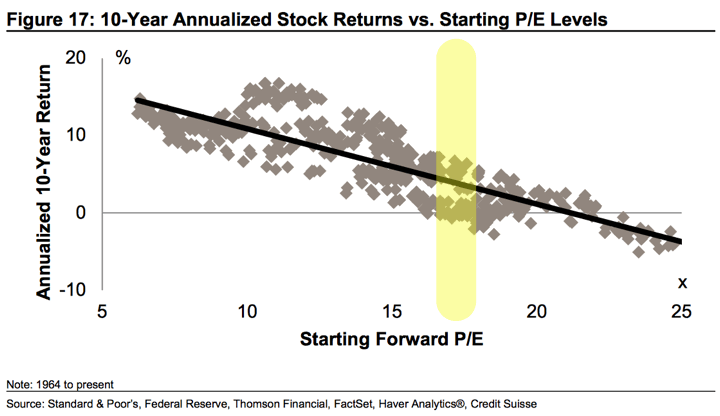
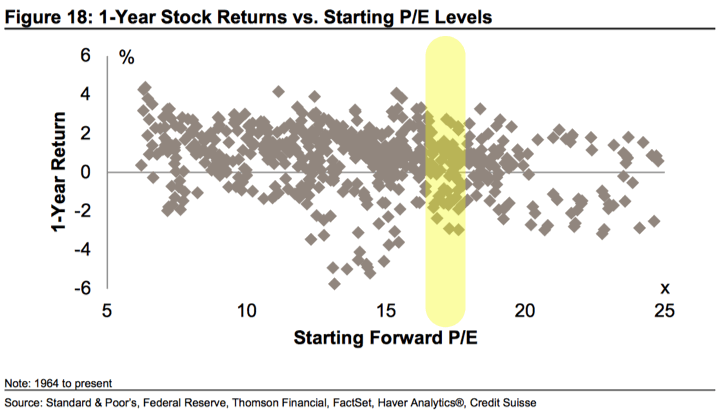
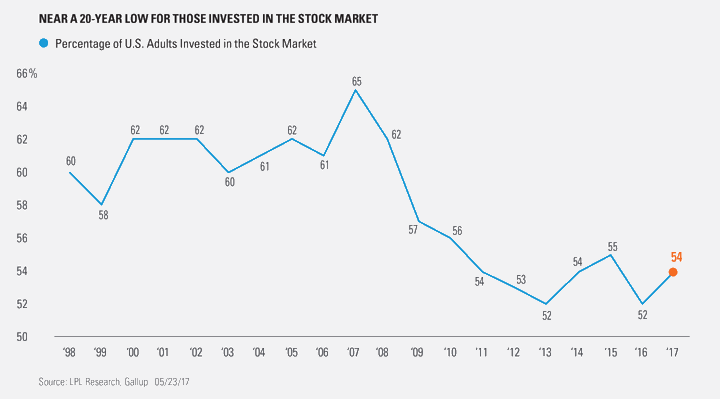
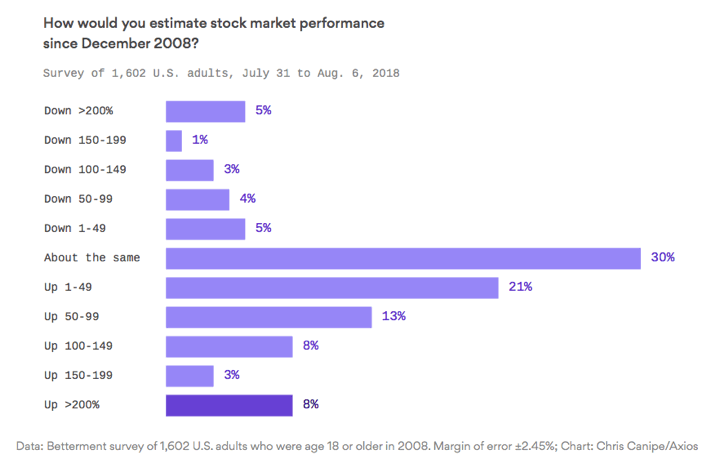
 While updating my


 Warren Buffett had his annual charity lunch today and was on CNBC for a short interview. As usual, he was asked about the current stock market situations and, as usual, he managed to sum everything up in a few folksy sentences. Here’s a direct quote from the
  Series I Savings Bonds (aka “I Bonds”) are a unique investment sold directly to individuals by the US Treasury that pay out a variable interest rate linked to inflation. This post collects general reasons to own these savings bonds without going into the internal details of how they work. Please also see my related post


 After my last
 Chase just announced a new free stock trade program as part of a new online brokerage arm called You Invest. This means another megabank is moving more heavily into “relationship banking” where they hope you will keep your bank accounts, credit cards, brokerage accounts, and mortgage all at the same place. This is pretty significant as JP Morgan Chase is the largest US bank in terms of both market value and total customers (over 60 million).
 The Best Credit Card Bonus Offers – 2026
 Big List of Free Stocks from Brokerage Apps
 Best Interest Rates on Cash - 2026
 Free Credit Scores x 3 + Free Credit Monitoring
 Best No Fee 0% APR Balance Transfer Offers
 Little-Known Cellular Data Plans That Can Save Big Money
 How To Haggle Your Cable or Direct TV Bill
 Big List of Free Consumer Data Reports (Credit, Rent, Work)