
I’m a fan of the Vanguard Target Retirement 20XX Funds. These Target Date Funds (TDFs) may not be perfect, but they are a low-cost, broadly-diversified, “set-it-and-forget-it” fund that I feel are consistently under-appreciated and easily maligned due to their inherent “one-size-fits-most” nature.
In a recent Vanguard blog post titled “TDF investors are not rotisserie ovens”, senior product manager John Croke felt the “set it and forget it” description “fuels the misperception that many investors in TDF strategies are disengaged, disinterested, and generally unaware of what they’re invested in.”
The subsequent points he makes are certainly valid, but I happen to think the rotisserie oven analogy should be worn as a badge of honor! As Jason Zweig writes in the WSJ article “Radical Investing Advice: Do Nothing, Nada, Zilch, Zippo”:
Target-date investors, says Jeff Holt, an analyst at Morningstar, “are less prone to take matters into their own hands and move their assets around when markets are gyrating.”
[…] research by Financial Engines found that participants with little or no money in target-date funds underperform them by an average of 2.1 percentage points annually.
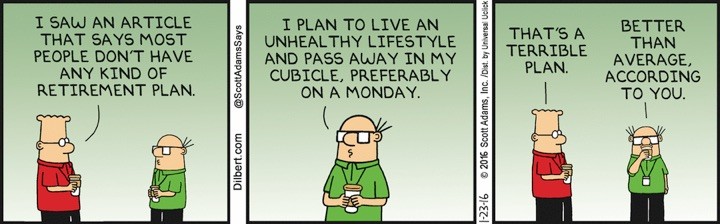
You won’t see Vanguard Target Retirement funds being touted very much in the financial media. Their returns are rarely at the top since they are index-based, so magazines and newsletters won’t write about them. Most advisors are supposedly charging you for their “expert” advice, so they will of course recommend something more complicated. Even index fund enthusiasts like myself often don’t invest in them because we like to fine-tune and tinker (sometimes to our detriment). They never seem to be the “best” move, just something you settle for when you can’t think of anything better. I think this cartoon describes the situation well (found via @michaelbatnick):

It is an unpleasant truth that most people would be better off just focusing their energy on savings rate and leaving the investing to a Vanguard Target Retirement Fund. Another example of the power of inaction: A person who bought the 30 largest US companies back in 1935 and did absolutely nothing after that would have outperformed the S&P 500 over the last 40 years.
Now, I should throw in a few quick points from the Vanguard blog post about what investors shouldn’t forget about:
- TDFs will continue to hold a certain amount of stock risk after you reach your target retirement age.
- Along the same lines, TDFs do not provide guaranteed income in retirement.
To summarize, don’t be insulted when being compared to a Ronco rotisserie oven. Be proud to “Set it and forget it”. Vanguard Target Retirement Funds even perform the chore of rebalancing between stocks and bonds for you automatically. Perhaps Vanguard could even use some tips from Ron Popeil about marketing their low, low pricing 😉
 Reading


 Here’s an update on one of my


 Vanguard is the one of the biggest providers of defined contribution (DC) plans like 401(k) and 403(b) plans, with more than 3.9 million participants. An optional service they provide for these DC plans is managed account advice, where you pay them an asset-based fee and you cede all portfolio control to them. Vanguard Managed Account Program (VMAP) serves as a fiduciary that sets asset allocations, chooses investments, and monitors/rebalances portfolios on a continuing basis. Fees typically begin at 0.40% on the first $100,000 in assets under management.


 This post is for the fortunate folks who may possibly exceed the often-quoted $500,000 limits for SIPC insurance ($250,000 for cash). The way this insurance works wasn’t necessarily obvious to me, and although it is often compared to the FDIC insurance of banks, there are many important differences.
  I lent out my first $25 to a stranger on


 The Best Credit Card Bonus Offers – 2026
 Big List of Free Stocks from Brokerage Apps
 Best Interest Rates on Cash - 2026
 Free Credit Scores x 3 + Free Credit Monitoring
 Best No Fee 0% APR Balance Transfer Offers
 Little-Known Cellular Data Plans That Can Save Big Money
 How To Haggle Your Cable or Direct TV Bill
 Big List of Free Consumer Data Reports (Credit, Rent, Work)