
The problem with a lot of good advice is that you really don’t understand it without experience. For example, Jack Bogle always says “Stay the course”. I was lucky enough to trust in that advice, but it took me a while to really appreciate the power of investing in productive assets and then treating them with what I call beneficial neglect. That is, I make the most money when I fight off the urge to take action.
I managed again to do as very little during the hiccups, tantrums, seizures, or other bodily functions the markets had in 2015. As the year ends, we all like to take look back and assess the situation. Here are the trailing 1-year returns for select asset classes as benchmarked by passive mutual funds and ETFs. Return data was taken from Morningstar after market close 12/31/15.


Stocks. The Total US Stock Market (VTI) ended up mostly flat, while the rest of the world’s markets (VXUS) dropped a little bit (~4%). Emerging Markets (VWO) did the worst, with a -15% total return. US REITs (VNQ) were up a little bit (~2%). If you were like most people and owned mostly US stocks with perhaps a little international exposure, you were probably close to breaking even.
Bonds. The Total US Bond Market (BND) and short-Term Treasuries (SHY) went up a little bit. Long-Term Treasuries (TLT) and Inflation-linked Treasuries (TIP) went the other way, going down a little bit instead. There were no huge moves, despite all the talk about interest rates.
Gold dropped around 10%, joining the other industrially-useful commodities in having a down year.
Another year, another batch of predictions into the shredder. How many people were saying that oil prices, already said to be “too low” at $50, would drop another 30% in value? Did anyone listen to me when I said not to speculate with the USO ETF? A funny book that came out this year was The Devil’s Financial Dictionary by Jason Zweig. Here’s how he defines forecasting:
Forecasting (n.) The attempt to predict the unknowable by measuring the irrelevant; a task that, in one way or another, employs most people on Wall Street.
Most people who owned a diversified portfolio in 2015 had their money go nowhere or perhaps lost a little bit of money. The 2015 total return of my personal investment portfolio was roughly -1.5%, right in that “meh” range. I imagine the people who like to focus on dividends, interest, and rental income collected them happily and went about their lives. That sort of mental framework is becoming increasingly appealing to me.
 The government just passed the Protecting Americans from Tax Hikes (PATH) Act of 2015, which had a few notable provisions for 529 college savings plan participants. Some of them need to be taken advantage of quickly.
 After probably too much thought, I have settled on an investment plan for our two 529 college savings plans (one per kid). My circumstances and preferences are unique and likely different than yours, but as usual I will share my process and final decision. Based on my conclusions from


 I’m finally getting around to setting up 529 college savings plans for my kids. It remains my opinion that you should make sure your retirement savings are on track before worrying about college savings. The government let me borrow over $50,000 in student loans for college, but they won’t let me do that again for retirement.
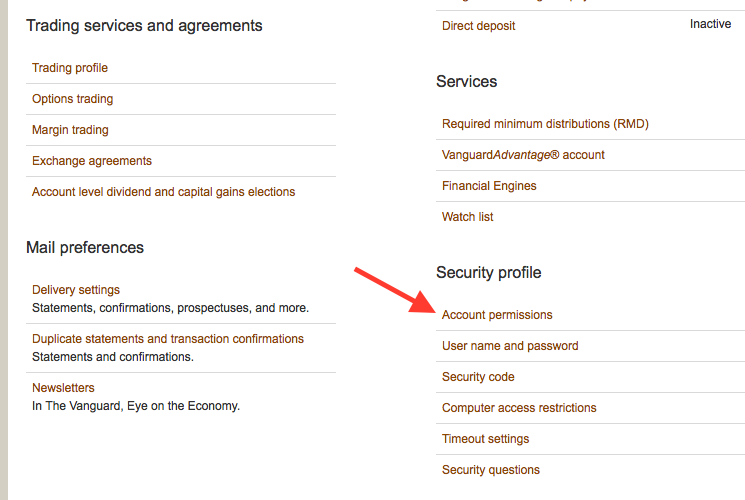
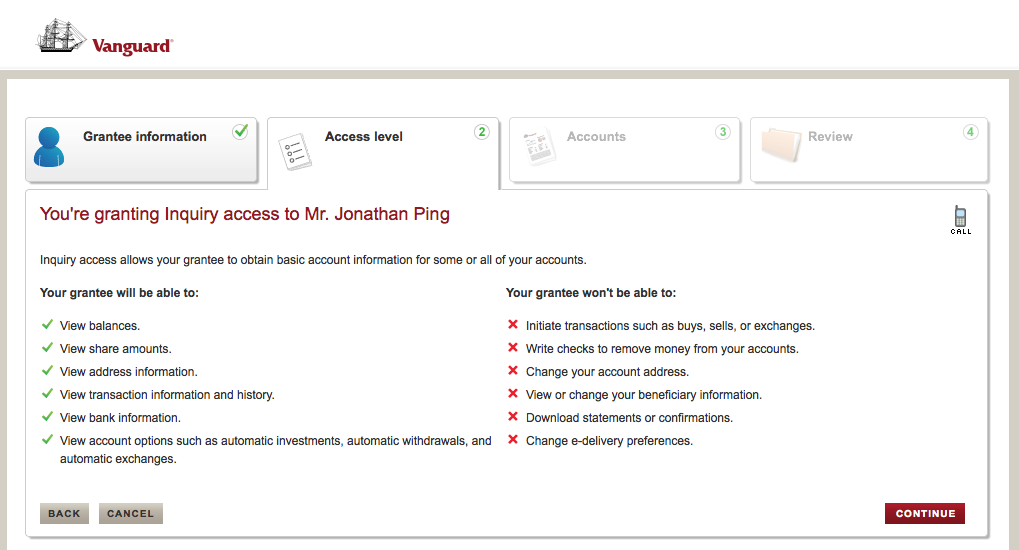
 My wife and I both hold IRAs at Vanguard.com, and we each have our own usernames and passwords. This used to work out fine – I would login to either one when I needed to update our portfolio-tracking spreadsheet. But after enabling two-factor authentication, it became a nuisance as the security code would be sent only to her cell phone and she’d then have to forward it back to me within 10 minutes.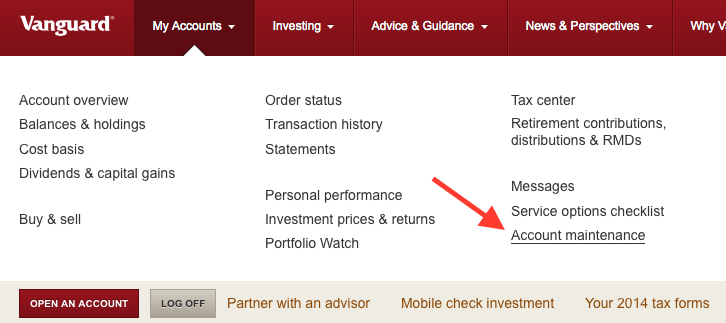


 The Best Credit Card Bonus Offers – 2026
 Big List of Free Stocks from Brokerage Apps
 Best Interest Rates on Cash - 2026
 Free Credit Scores x 3 + Free Credit Monitoring
 Best No Fee 0% APR Balance Transfer Offers
 Little-Known Cellular Data Plans That Can Save Big Money
 How To Haggle Your Cable or Direct TV Bill
 Big List of Free Consumer Data Reports (Credit, Rent, Work)