Here’s the August 2013 update for my Beat the Market Experiment, a series of three portfolios started on November 1st, 2012:
- $10,000 Passive Benchmark Portfolio that would serve as both a performance benchmark and an real-world, low-cost portfolio that would be easy to replicate and maintain for DIY investors.
- $10,000 Beat-the-Benchmark Speculative Portfolio that would simply represent the attempts of an “average guy” who is not a financial professional and gets his news from mainstream sources to get the best overall returns possible.
- $10,000 P2P Consumer Lending Speculative Portfolio – Split evenly between LendingClub and Prosper, this portfolio is designed to test out the alternative investment class of person-to-person loans. The goal is again to beat the benchmark by setting a target return of 8-10% net of defaults.
As requested, I updated the scale to zoom in on the comparison chart. You can view it the old way here.
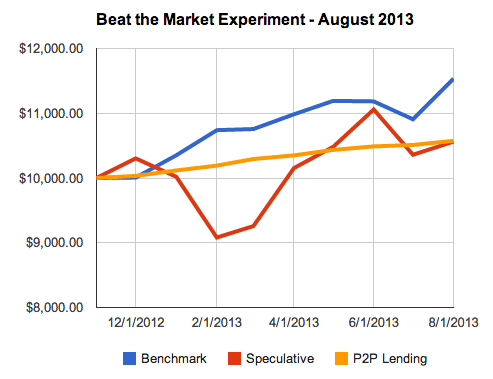
Summary. Values are as of August 1, 2013. 9 months into this experiment, the passive benchmark portfolio remains the leader and if anything is widening the gap. My neglected speculative portfolio has been more volatile and also consistently behind the benchmark in this bull market. As for the P2P portfolio, it is starting to look like LendingClub may perform better than Prosper. Although my Prosper portfolio is earning slightly higher average interest, it also has significantly more late loans which has more than offset the higher interest. I’m slightly above 8% annualized return for LendingClub currently using my metrics, slightly below 7% for Prosper.
$10,000 Benchmark Portfolio. I put $10,000 into index funds at TD Ameritrade due to their 100 commission-free ETF program that includes free trades on the most popular low-cost, index ETFs from Vanguard and iShares. Also no minimum balance requirement, no maintenance fees, no annual fees. The portfolio was based loosely on a David Swensen model portfolio. Screenshot, click to enlarge:
 I’ve read a few books about dividend investing and remain interested in the idea, although I’m not confident enough (yet?) to allocate my portfolio that way. Portfolio manager and writer Mebane Faber has a short book called
  Along with other factors, new fee disclosure requirements for 401(k) plans have brought a lot of attention recently on “bad” 401(k) plans. These are plans with little or no employer match, higher-than-average fees, and/or limited investment choices.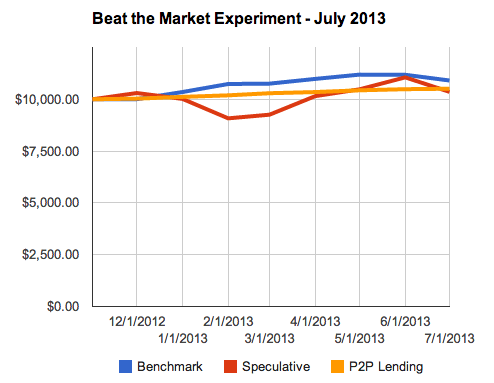


 (See also:
 The Best Credit Card Bonus Offers – 2026
 Big List of Free Stocks from Brokerage Apps
 Best Interest Rates on Cash - 2026
 Free Credit Scores x 3 + Free Credit Monitoring
 Best No Fee 0% APR Balance Transfer Offers
 Little-Known Cellular Data Plans That Can Save Big Money
 How To Haggle Your Cable or Direct TV Bill
 Big List of Free Consumer Data Reports (Credit, Rent, Work)