
Frugal Brown Bag Lunch Ideas + Cost Breakdown: Sandwiches Edition

altext

I am trying to gain more control over my diet, while also compiling more easy (preferably really easy) yet tasty recipes. First up is making my own lunch. I think it’s important when brown-bagging to make it tasty and attractive, so you don’t actually feel like your depriving yourself. Don’t just slap a sliver of cheap meat on some Wonderbread. Instead, you should take advantage that you are making the meal yourself. Put anchovies on the thing if you want.

In order to minimize the overall prep time, I bought all the ingredients at our usual grocery store (Safeway) during our usual shopping trip. Prices are actual prices, I bought regardless of if it was on sale or not. I also took into account the inevitable bit of extra waste from perishable ingredients like wilted lettuce or moldy bread, by including total package costs.

Shopping List

Sandwich
$2.50 for 1 loaf of 12-grain Oroweat bread (18 slices)
$5.25 for 3/4 lb of Black Forest Ham, thinly shaved from deli*
$1.75 for 1/4 pound of pepper jack cheese, thinly sliced
$1.75 for 1 large tomato, cut into 10 thin slices
$1.49 for 1 head of iceberg lettuce
$0.25 (est.) for pantry item Honey Mustard (1 bottle is $2.25)
—————-
$12.99 total, $2.60 per day

* You could buy smaller amounts of different meats like turkey breast, if you wanted to mix it up. When I feel like eating vegetarian, I buy a tub of hummus instead of meat.

** If you bought things on sale, or actually shopped around, you can probably reduce these prices by 20-40%.

Snack
This is estimated at $.30 cents per day. You could make it less by buying in bulk and packaging yourself, but the savings started getting small so I just went for simplicity. Examples:

$0.27 for single-serving assorted potato/tortilla chips ($6.49/24 bags)
$0.30 for baby carrots (split a 1 pound bag 5 ways, $1.50/lb)
$0.42 for a 100-calorie-pack of crackers. ($2.50/6 bag box)

Drink
Tap water is free, but I like drinking a Diet Coke for both leaving a sweet aftertaste and the extra bit of caffeine. If I didn’t already buy it previously on sale, this would have cost $.50 per can.

Preparation and Time Spent
Not much prep for the sandwiches. I just had to cut the tomato, peel off the lettuce, and then portion everything out into 10 reusable plastic containers (2 per weekday). I have one container for the bread, and one container for all the wet ingredients. I put a dab of mustard in between the ham and cheese. The separation keeps the bread from being soggy before eating. If I’m not lazy I toast the bread.

altext

Packing all the materials for the entire week took less than half an hour. Actual photo of final product at the top of this post. Doesn’t it look like something worth eating for lunch?

Total Cost
The sandwich and snack combo costs a little under $3. This is actually more than I thought it would cost, although I think it’s relatively healthy when I eat it with carrot sticks (which I usually do with a dab of fat-free salad dressing). If eating out for lunch would have cost $6 per day, then that half hour on Sunday saved me $3 x 5 days = $15. $30 an hour post-tax is like earning $60 an hour pre-tax, so that’s pretty good. On top of that, I have the power to eat healthier and control what I consume.

Sure, if I consciously chose to work an extra 2 hours a month to “pay” for eating out, I could use my time that way instead. But if I’m honest with myself, lunch-making just takes a half hour that would have been spent goofing around on the internet before bed.

Clever Dudette has more frugal lunch ideas. Do you have your own tasty buy convenient lunch routines? For next week, I am thinking of making it the Fried Rice edition.

The Coming Collapse of the Middle Class?

Sound a bit bleak, but this lecture by Professor Elizabeth Warren explores how a middle class family in 1970 differs financially from one in 2005. The full title is The Coming Collapse of the Middle Class: Higher Risks, Lower Rewards, and a Shrinking Safety Net. The actual talk starts at 4:45 in, and lasts about 45 minutes. Via Economist’s View and gbs at Diehards. My notes below.

Earning More
Starting around 1970, more and more mothers started working full-time. How did this affect finances? Household income indeed went up from 1970-2000 from ~$40,000 to ~$65,000. However, the inflation-adjusted income for employed males actually went down slightly. So the increase was entirely due to the additional women working.

But hey, households are still earning more. Good, right? Next, she crunched some data on what a dual-income, 2-kid family spent their money on in 1970 vs. 2000.

Spending Less
We actually spend less on an inflation-adjusted basis on many things nowadays:

  • 32% less on clothing
  • 18% less on food – including groceries, eating out, and yes, even Starbucks
  • 52% less on appliances
  • 24% less on car expenses, per car

Spending More
Not so fast, we also spend more in many areas:

  • 76% increase in home mortgage payments . Surprising, the actual house size didn’t grow that much based on number of rooms (5.8 vs. 6.1). I wonder if this would hold true if it was based on square footage, however, as my research on that indicates a big increase in size.
  • 74% more for health insurance, even adjusted for healthy family with employer-sponsored health plans.
  • 52% more for cars, since now we have more cars per household. We gotta get to work, right?
  • Infinite% more for childcare
  • 25% more in effective tax rates, due to higher income

In 1970, credit card debt was 1.4% of annual income for the median household. In 2005, it is 15%.

Education
Finally, we spend a lot more on education. In 1970, you needed a high school diploma to get a good job, which took 12 years of government-provided schooling. Nowadays, the average family pays for 2 more years of pre-school, plus 4 more years of college, all out of pocket.

Net Result: Not Good
Note that the cheaper things are the smaller, more flexible expenses… while the more expensive things are the larger, more fixed expenses. So a family now earns a bit more, but also spends a much, much larger percentage of their income. So much, in fact, that now we need both of those incomes to afford everything we buy. If either spouse loses a job, the family falls behind. Studies show that a family with children has between double and triple the bankruptcy rate of childless households.

I was kind of hoping for some solutions at the end… but none came!

Considerations in Do-It-Yourself Hardwood Flooring

I am now the proud owner of over $7,000 in hardwood flooring. It cost as much as my car! We charged it to our Citi Cash Returns card in order to grab the extra cashback at the time, which saved us another $350 on top of the $400 we got back last month for paying our taxes owed with it.

Types of Flooring Available
If you’ve ever thought about installing your own flooring, here is a quick review of our thought process. There are three major choices these days:

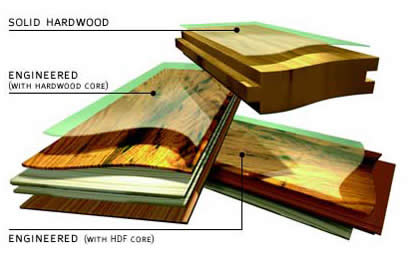
  1. Laminate Flooring. Also called “Pergo”, after a popular manufacturer. This is essentially a picture of what hardwood looks like, glued on top of wood chip composite. Think Ikea furniture. It the cheapest type, you can easily install it yourself, but it can’t be refinished.
  2. Traditional Hardwood Flooring. This is a entire piece of solid hardwood. More expensive, hard to install yourself, can be refinished multiple times, will probably outlive you.
  3. Engineering Hardwood Flooring. This is 1/16″ to 3/16″ of real hardwood glued on top of a plywood base (see picture). It costs about as much as traditional hardwood (or even more if comparing to unfinished hardwood), but you can install it yourself which can result in a net savings. With a quality floor, you can still refinish 1-2 times if desired.

Our Decision
Unless you’re really experienced and have lots of time, most DIY people either choose laminate flooring or engineered hardwoods. We first looked at laminate, aka “Pergo”. Laminate flooring is really affordable, starting at about $1.50 per square foot (sf). It can also be more scratch-resistant. However, if a scratch or a moisture bubble does occur, you can’t really do much about it. I think laminate is a perfectly fine flooring choice, but we personally did not like the look of it. I’ve been to nearly 100 open houses, and I can spot laminate flooring instantly; it simply does not look like real hardwood.

I’m probably biased though, because our last two houses both had some beat-up hardwood floors that were over 50 years old, and we loved the the look. Scratches, dents, and age simply added character to us. With a good engineered hardwood, you can get a wear layer that is nearly as thick as solid hardwood, and can also last indefinitely. In the long run, we felt that paying more for the look and durability of real hardwood was worth it to us. After installation, you can’t tell the difference between solid hardwood floors. A high quality engineering hardwood can cost $5/sf or more, but they start at around $3/sf.

altext

Resale value wasn’t really a huge concern for us, but is something to consider. I’m sure real hardwood flooring adds more value to a house, but I don’t know if all of the cost differential between hardwood vs. laminate is recovered.

Installation
The easiest type of installation for a weekend warrior is the floating floor setup. First, you need a flat subfloor. This could be an old floor like vinyl, ceramic, or even an old hardwood floor. Second, you place a thin foam underlayment on that subfloor, which smooths out minor imperfections and also serves as a noise and moisture barrier. Third, you either click or glue together the hardwood pieces so that you have one huge piece of flooring that “floats” on top. Nothing is nailed or glued directly to the house.

Easier said than done, of course, but that’s the basic idea. Here are some tips by a professional installer, as well as some pictures from a DIY amateur. Wish me luck!

Save For Specific Goals With Your Own Online Piggy Bank

piggy bankYou may be expecting a review of the new online service SmartyPig. Well, that review is in-progress, but while doing my research I was reminded of an alternate way to create your own online “piggy bank”. Remember how you’d actually have to save your quarters to buy what you wanted? Oh, the good old days… 😉

Let’s say you want to set up multiple “baskets” or “piggy banks” of money for specific goals. Maybe you have

  • an ongoing pet medical fund to which you add to regularly instead of paying for insurance ($50 per month?)
  • an ongoing car maintenance/repair fund (I need one of these)
  • a summer vacation fund (goal: $1,000?)
  • a Christmas fund
  • …or that all-purpose emergency fund!

You want separate balances and accounting for each account to keep things neat, but you don’t want to open up 3 new accounts at 3 different banks. The good news is that this can all be done with Capital One 360 – they let you easily and instantly create multiple savings accounts that have their own balance and nickname. No credit checks, no applications, and it earns interest. Here’s how:

1) First, you’ll need a Capital One Consumer Bank account. If you have one already, you’re all set. If you opened one before and it got closed to due low balance or inactivity, you can have them re-open it by calling 1-888-ING-0727 (or you can login and do it). If you are a new customer, you can earn a $25 sign-up bonus here by opening with at least $250.

2) Open up an additional savings account (or several!). It’s not all that complicated, but it still confused me initially so I broke down the steps below with screen-by-screen walkthrough. Click on the thumbnail images for a full size screenshots.

3) Set up an automatic savings plan
Although you can schedule manual transfers, why not make it easy on yourself and set up an automated transfer schedule? You can set a fixed amount of automatic withdrawals if you have a specific goal ($100/month x 1 year = $1,200 = HDTV), or you can make it repeat indefinitely (great for our often-used pet fund).

And you’re done! You can make as many of these sub-account as you like. The cool thing is you can make withdrawals at any time (max 6 per month), and there are no minimum balances or fees. The interest rate at 0.75% APY isn’t the absolute highest, but comparatively it’s no longer that far behind other similar banks.

(FYI – I was talking with my sister about this and she told me she didn’t use her Capital One 360 account anymore. When I asked why, she said it was not because the interest rate wasn’t high enough, it was simply because they made you log in with your customer number, and she would never remember it! I just wanted to point out that now you can pick your own username (like “janedoe444”). Use it carefully though, as your password is still just a 4-digit PIN.)

Daydreaming: How Can I Retire In 10 Years?

After months of being stuck in the day-to-day issues of buying a house, moving, and work, I spent a lot of time today… daydreaming! Mainly because I am getting tired of only having 2-3 weeks of vacation per year, I went back to thinking about how early I can achieve financial freedom. Let’s say I really want to retire in 10 years by age 40. What do I need to do?

Part #1: Pay off the house
I’m not saying everyone should buy a house, but I have one and would psychologically love to have it paid off before I retire. For me, housing is by far my largest expense. Using this mortgage payoff calculator, I would need to increase my monthly payments by $2,500 per month to pay off my mortgage in 10 years. For a 20-year payoff, I would need only $600 per month in additional payments.

Part #2: Estimate remaining expenses
Things now simplify greatly. What else do I need to pay for in retirement? This is for two people, kids will increase some items. I will ignore scary things like college tuition. All costs are monthly with some padding.

  1. Food, both groceries and dining out: $600
  2. Communications + Utilities: $350
  3. Gas, not much need if retired: $100
  4. Transportation, amortized cost of one car: $150
  5. Housing maintenance plus property taxes: $350
  6. Clothing, Entertainment, Travel: $250
  7. Healthcare: ???

Total without healthcare: $22,000 per year. Note that this isn’t my barebones spending, this is about what we spend now, and what I’d be happy with indefinitely. Of course, we could do better.

So how much will health insurance cost? This is a huge unknown. We are relatively healthy now, but who knows. Let’s say you get an individual high-deductible health plan for $100/month per person and get cancer (knock on wood). Can the insurer drop you or raise rates? I don’t know the answer, but I’m guessing they can at least raise rates at some point.

It’s possible that within the next decade we will have some form of universal healthcare system. If not, we may need to investigate ways to get on a group plan somehow. I will put in a wild guess of $8,000 per year.

Total with healthcare: $30,000 per year (after-taxes)

Part #3: Set up portfolio to produce this income
Using current tax brackets, we will have to pay very little income tax to achieve an after-tax income of $30,000 per year. For federal taxes, the first ~$18,000 is not taxed at all, and the rest would be taxed at 10% (married filing jointly). That’s an overall tax rate of less than 5%. We have no pensions or other annuities, just maybe Social Security down the road.

(Side note: If I have no other income from sources like pensions or annuities, this means I should lean towards contributing to Traditional IRAs and 401(k)s exclusively right now instead of Roth’s since my tax rate in retirement should be very low – much lower than I might have guessed before.)

Anyhow, if I use a 4% withdrawal rate, I would need $750,000 in today’s dollars. I will start with the $120,000 I have now and estimating returns at 8% annually, with inflation at 3%. Using this savings calculator with a goal of $750,000 in 10 years, I would have to save $3,600 per month for 10 years, or $1100 per month for 20 years.

Bottom Line
I know this is all guesses upon guesses, but here’s what my back-of-the-envelope daydreams give me:

  • To retire in 10 years, I would need $6,100 in excess income every month.
  • To retire in 20 years, I would need $1,700 in excess income every month.

Retiring so early just doesn’t give compound interest enough time to work its magic. It will be tough to integrate all this with our actual goals. But this is still encouraging for me, as I love having even rough numbers in mind to provide something to reach for.

Outsourcing Tasks That Cost Less Than Your Hourly Wage

A popular theory states that something is not worth doing if it makes you less that your hourly wage. For example, if you make $30 an hour and you can hire someone to mow your lawn for $20 an hour, you should go ahead and pay for the service. As someone who is earning more and yet trying to combat lifestyle inflation, I’ve been struggling with this idea. According to this rule, all of a sudden I can start paying people to do all kinds of stuff for me. Laundry. Cooking. Cleaning. Or can I?

Thought #1: What Is Your Real Hourly Wage?

  1. First, roughly estimate your hourly wage. If you work 40 hours per week, a quick way to estimate your hourly wage is to take your annual income, remove the trailing three zeros, and divide by two. For example, if you make $100,000 per year, then you make $50 per hour. A person earning $20,000 per year = $10 per hour. If you are using gross income then you’ll end up with gross hourly age.
  2. Take taxes into account. If you earn $50 per hour gross, that might be only $35 per hour net. Someone earning less at around $10 per hour gross will probably be earning more like $8 per hour net. Try this net paycheck estimator or look at your paystub.
  3. Be realistic with hours. Do you really only work 40 hours per week? If not, adjust accordingly. Now add in your commute time, the time it takes to get ready each morning, the time it takes to decompress after each day. Your job takes up a lot more hours than you might think.

Now, what is your final per-hour wage? If I made $50k per year, but worked 50 hours per week plus 1 hour total each day for commuting + getting ready, with filing single and taking standard deductions, I’d be down to around $13.50 an hour. Paying someone to do the lawn for $20 an hour is not longer a mathematically prudent idea.

Thought #2: Are you salaried?
The premise of the argument implies that you can simply work instead to cover certain expenses. Hire the maid for $20 a hour, the landscaper for $30 an hour, restaurant food at $20 per hour – hey you make $40 an hour so who cares? Work in your office, and make up the difference and then some. But many of us are salaried workers. If we work 40, 50, 80 hours a week, we won’t earn any more money.

In other words, this only works if you can at the same time make more money elsewhere. Someone who works in their own business or does consulting has much more freedom in this regard. I don’t know if I’m that good at time management to pull this off, though.

Thought #3: Will you always be making as much?
I’ve come to see regard frugality as a habit, which can take years to form. Getting used to paying for everything to be done for you is going to hurt if you want to retire early. If you get used to a higher cost of living, you’ll need a much larger nest egg to generate more income. Living a simple and frugal life now will help make the same life an enjoyable one down the road.

In addition, by doing things yourself you may be learning a skill that can also pay off when you can’t justify paying for it anymore. Gardening and growing your own food is a skill. Cooking is a skill. Performing your own car maintenance. Doing your own home repairs. And so on.

Not Just Math
Obviously, if there are activities which you prefer not doing, or can simply be done by someone else for a fraction of the cost, it can definitely be worth it to outsource. Childcare is a common example, although some do it for the socialization. Besides cost and skill development, I would also adjust for personal taste.

For one, we are considering putting in our own hardwood floors in our new place instead of paying for installation. It will probably take us a lot longer than professionals to put it in. Although we’d be saving at least $10,000 in labor costs, and we’d probably earn more in our regular jobs if calculated on an hourly basis. But I will be learning a lot about home remodeling during this project, it will be a nice respite from staring at a computer screen all day, and it will be personally satisfying.

On the other hand, I hate driving in traffic. I learn nothing from doing it more. If I had access to good public transportation, I would totally pay for it. Similarly, driving around for an hour to save $10 on an item is not going to be worth it to me. However, I love bargain shopping online, and I might research for hours on the best model and price on a $99 item. But I can do that while in my pajamas at odd hours.

Are there some frugal activities that you no longer do after your income increased?

Haggling Down Prices At Home Depot?

Now that we have our own home and backyard patio, we decided to buy our first propane grill and invite some people over. We had to schedule a convenient time to have my father-in-law come drive down with us since he has a truck, so we had pretty much decided to just buy whatever was cheap and in stock. No hours of research this time! Although some of our serious grilling friends told us to buy a high quality $400+ model, which is probably good advice, we really just wanted something simple to start out with. If we grilled often enough, then later we could upgrade to something that would last a long time.
We had our eye on a $199 Brinkmann grill with some decent BTU, grill space, and also shelf space. But when we got there, they were cleaned out except for one last box that was definitely a previous return. The box was opened, slightly ripped, and had the words “Returned – Missing Parts, Send to Dept #18577” scrawled on the side with permanent marker. It had no special price tag.

All the other sub-$300 cheap grills were also sold out, even after spending 20 minutes searching through all the racks and the help of a Home Depot employee. Even neighboring stores were sold out. The next-cheapest one was $319 for a basic Weber grill, but we decided against it due to price and lack of shelf space.

We finally decided to rummage through the open box and see what was in there, and couldn’t find any obvious missing parts. So we asked the employee if we could buy the “open box”. Sure, he said. Can we get a discount? It says it’s missing parts. He replied that he could give us 10% off. I actually thought about taking it, but my father-in-law said that wasn’t worth the hassle. So we asked for more. How about 35% off? He said he couldn’t do that, and that he’d have to find his manager for such a reduction. Yes, please ask! He kindly tried, explained about the missing parts, and the manager approved.

Out the door with a $199 grill for $130 and the full standard return policy, not bad. We went home and assembled it with no problems at all. Either the parts were actually found or the last person simply lied when returning the grill. I’m not expert, but I think it’s a great starter grill for $130. All I know is that steaks taste better outdoors. 🙂

So that’s how we walked in ready to pay full retail price, and yet ended up haggling at a big-box corporate store. While I still wouldn’t try and negotiate for new items at Home Depot, it’s definitely worth a try for “scratch and dent” items you may run across!

Update: Looks like the New York Times has more examples: Even at Megastores, Hagglers Find No Price Is Set in Stone.

Test Driving The Financial Life You Want

Now that we have a fixed monthly mortgage payment for the foreseeable future, we are looking ahead to our true mid-term goal of living on one income. Specifically, we’d like to live on two half-incomes when we have children. We live in one of the most expensive areas in the country. Can we do it?

Both of our incomes are somewhat comparable, so our plan is to actually pretend that only one of us is working, deposit that person’s paycheck into a checking account, and work only from that checking account. The mortgage note, utilities, food, gas, all expenses will be deducted from that account. A reasonable percentage (15%? 20%?) for retirement will still be taken out. I have no idea what a child will cost, but maybe we’ll take out an extra $500 a month for food and diapers as well? The second person’s income will still be dealt with, but just separately.

This way, we will get as close as we can to simulating living on one income. If the checking account starts to shrink too fast, we’ll have to think of ways to cut expenses further. I think this is an interesting idea that could be applied to anyone who wants to stretch into a new financial goal. You may think you can do it, but failure might be costly.

  1. Buying a new home. Can you afford a mortgage payment that is significantly higher than your rent? You should be sure, otherwise you might be joining the million other people in foreclosure.
  2. Kickstarting your retirement contributions. Maybe you’re afraid of putting too much in a 401(k) or IRA and not being able to take it out. Why not just use savings account and stick your imagined contributions in there for a while? That way you won’t have to deal with penalties.
  3. Increasing your debt payments. Some people are afraid to pay off too much debt in case they need the money for later. An emergency fund would help solve this, but also the “pretend” debt account might be a good temporary solution.
  4. Going back to school, switching careers, etc. Again basically the same idea – how will you react to living on less income?

Trying To Eat Out Less: Ideas On Reducing My Grocery Bill

thumbnail credit: http://www.jonco48.com/blog/grocery_bag.jpgLast month one of our credit card statements spanned two pages because we had eaten out so often. Not only is it more expensive, I’m pretty sure it’s less healthy. So now we’re trying to limit ourselves to 2-3 times a week (minus the cafeteria at work), and making one of our outings to a new restaurant that we haven’t tried before.

This means more grocery shopping. But did you know that grocery food prices jumped 5.3% in 2007? Milk, eggs, and bread all cost from 10-30% more than last year. This year looks to be even worse, especially with rising oil prices making transportation more expensive. In last weekend’s WSJ Sunday edition, there was an article titled Savvy Grocery Shopping that had some good money-saving tips. Here are a few of them along with some others I’ve also picked up elsewhere.

Stockpile and Hoard
Grocery stores constantly rotate the stuff that they have on sale, so that at any one time there is something new to attract you into their store. Then, while you’re already there, they expect you to buy other things at full price. The key is to know when something is at a great price, and then stockpile staples at that price. That way all your pasta, canned veggies, soups, broths, sugar, and all non-perishables are all bought 20-50% off retail.

Keep Track of Prices
The problem: How do you know what is a good price? I forget all the time. Some people keep what is called a “price book”, where you track the price of your commonly bought items so you can start to see the cycles and pricing patterns. There is even a website called TheGroceryGame that will track prices for you and let you know when to buy – for $10 every 8 weeks.

I’ve also noticed that you can also start to learn when they mark down meat, usually a day or so before the legal sell-by date. The meat is still good, I just stick it in the freezer right away until I need it.

Be a Coupon Ninja
There is an entire subculture of “couponers” out there that I call “coupon ninjas”. They find good coupons, then get 20 duplicates of them, go to a store that doubles them (instead of 25 cents off you’d get 50 cents off) and then stockpile like crazy. I’ve seen scans of grocery receipts that show $150 of food bought for $23.47. Sometimes they actually get negative! While I admire their drive, I just stink at using coupons. I’ll clip them, but I always forget to bring them along, or I wait until they are expired. My new store doesn’t double coupons anymore, so the incentive is also less. TheGroceryGame also helps point out good deals.

Buy Frozen and/or Generic
Many times frozen fruits and vegetables are even more nutritious or tasty when you buy them frozen, because they can wait longer before picking them. Also, there’s always store-brand or generics. The article shares that the manufacturer of Birds’ Eye veggies also makes store-label veggies. I love my Safeway frozen mixed vegetables! 🙂 Did you know that produce even has brands now? I didn’t even notice. I like to buy generic on many things, but not all of them.

America’s Test Kitchen: Frugal Ideas On Cookware And More

I’m sure the foodies already know about this site, but I just learned about it recently so I figured I’d throw it out there for discussion… America’s Test Kitchen is a very popular PBS show that shares carefully tested recipes, review cooking gear, and even taste-test supermarket products. I figured this would fit in with the frugal theme since they can help you get the best value when buying knives, pots, pans, and even olive oil. I would describe it as a food-focused Consumer Reports.
You can access their recent reviews and articles online for free, but you must provide an e-mail and mailing address. They say they won’t sell your e-mail, but they will force you subscribe to their newsletter and try to get you to sign up for a subscription of Cook’s Illustrated. Let’s just say both can be fake, and you can still gain access… Note that many of the older articles are archived into a paid-only area that costs $24.95 annually.

Now, the most expensive models do often end up being rated the best. However, sometimes there is a surprise and the $30 pan matches or beats out the $100 pan. If not, there is usually a model that ranks nearly as well but is also significantly cheaper. Here’s a sampling of articles I found interesting. Note that these direct links will only work after you have logged in.

  • Inexpensive Knife Sets. Scroll to the bottom to find their recommendation for how to build your own cheap but high-quality knife set for under $100. They really like the R .H. Forschner by Victorinox brank of knives (the Swiss Army knives people).
  • The Little Nonstick Saucepan That Could: “You can spend $100 on a 2-quart nonstick saucepan–but should you?” I’m glad to see my Calphalon pans rated pretty well.
  • Inexpensive Dutch Ovens. “Our favorite Dutch ovens cost more than $200. Ouch! Is there a cheaper version that performs almost as well? Yes. It costs $40.” I don’t own one of these, but I like how the Target brand kept up with fancy-pants Le Creuset. 🙂
  • Drip Coffee Makers. “Does an Inexpensive Model Have to Feel Cheap?”
  • Commuter Coffee Mugs. “We didn’t find perfection, but we came close.”

I can’t wait until Spring and we can grill in our own new backyard. Bobby Flay, watch out!

Random Travel Tip: Nabbing Free Luggage Carts

I’ve already shared my habit of trying to get bumped off of airline flights on purpose for the free tickets. I haven’t been bumped recently, but here’s another frugal travel quirk that most people don’t seem to do…

Sometimes even those us who like to pack light end up bringing a lot of bags or heavy boxes. At the baggage claim, you’re then faced with the prospect of paying $3 for a cart to hold your stuff for 8 minutes. The horror!

Your bags usually take several minutes to be loaded onto the carousel anyways. So instead of going straight to baggage claim, after I get off the plane I go directly to the check-in ticketing level. Usually, especially if there are baggage scanning stations, there are plenty of discarded carts. I grab one, take the elevator down one or two levels to baggage claim, and proceed to load my bags on my free luggage cart. 🙂 I’ve wasted no extra time, and my success rate is around 90%.

Weekend Project: Join A Free Online Photography Class

With the explosion of sites like Flickr, it seems like everyone is an amateur photography nut. I know I’ve talked about getting a SLR and taking a photography classes for oh… a decade?! Well, why not partake in a free online photography class this weekend. Photography 101: 12 Weeks To Better Photos includes everything from a course outline, weekly handouts, “homework” challenges, and a discussion group. I think they are currently in Week 6, although you can still jump in:

Course Outline
Week 1: Aperture Basic Training
Week 2: Advanced Aperture
Week 3: Light
Week 4: Flash
Week 5: Composition & Framing
Week 6: Shooting Indoors
Week 7: Shooting Outdoors
Week 8: On the Go
Week 9: Portraits
Week 10: Landscapes
Week 11: Your Daily Environment
Week 12: Lenses, Filters & Accessories

My current camera is the Canon Powershot S2. It’s not quite a digital SLR and is already a few generations behind with the S5 out now, but it has 12x zoom and plenty of buttons that just plain scare me. Now to find out what happens when I take it off the Auto mode…

Class info found via The Scottish Lamb.