Don’t Be Fooled By Sunken Costs

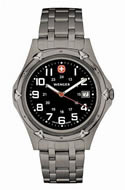
A few years ago I managed to nab a used Wenger Swiss Army watch off of eBay for $35. I really liked the watch since it was classic but not flashy (shown to the right) – and it didn’t hurt that it retailed for over $200! Recently it abruptly stopped working, and so I brought it in for a battery replacement. Unfortunately, it turned out the entire mechanism was burnt out and it would cost $50 to replace. Pay $50 to fix a $35 watch? Nah, I’d see what else was out there. I was actually considering buying a similar watch from Costco for $150 before I caught myself. I was being fooled by the sunken-cost fallacy!

What Are Sunken Costs?
A sunk or sunken cost is something that has been spent and cannot be recovered. Since this is the case, economists argue that such sunk costs should not be a factor in one’s decision making. The classic example is the movie ticket decision (adapted from this Wikipedia entry).

Let’s say you bought a non-refundable movie ticket, but you later decide that you no longer want to watch the movie. Do you watch the movie anyway since you already paid for it, even though you won’t enjoy it? Or do you simply walk away and do something better with your time? Since the ticket was a sunken cost, a rational decision maker would ignore the fact that you paid for it already. In fact, you should act as if the movie was free.

A few more examples:

  1. Clothes. You bought a pair of $100 shoes, but after wearing them around you find that they hurt your feet horribly. Do you continue to wear them anyway?
  2. Consumer Products. Sometimes companies will continue to plow money into a project even though they know it will be a failure, simply because millions have already been spent on it. It’s important to know when to cut your losses. A historical example is the Concorde jet.
  3. Investing. Many people hate selling their shares for less than they paid for it. However, once you’ve executed the trade, that shouldn’t matter anymore. All that should matter are the current prospects for the stock.
  4. Human lives. This idea has even been extended to the Vietnam War and more recently the Iraq War, when the loss of previous lives has been used as justification for continued fighting.

But back to my watch story. I realized that it shouldn’t matter what I paid for the watch. The fact was that I could still get a working watch for $50, while replacing it would cost me significantly more. Nothing similar was selling for less than $100 on eBay, and a new one would cost at least $200. I went ahead and told the jeweler to fix my watch for $50.

Have you caught yourself worrying about sunken costs as well? You can also read about other ways that our mind plays tricks on us in Mental Accounting: Is A Dollar Always A Dollar?

Spending, Recession, and the Great Depression

With all of this talk about recession and after watching too much History Channel, I’ve been reading up about the Great Depression of the 1930s. Check out this excerpt from a paper entitled Main Causes of the Great Depression:

One obvious solution to the problem of the vast majority of the population not having enough money to satisfy all their needs was to let those who wanted goods buy products on credit. The concept of buying now and paying later caught on quickly. By the end of the 1920’s 60% of cars and 80% of radios were bought on installment credit. Between 1925 and 1929 the total amount of outstanding installment credit more than doubled from $1.38 billion to around $3 billion. Installment credit allowed one to “telescope the future into the present”, as the President’s Committee on Social Trends noted.

This strategy created artificial demand for products which people could not ordinarily afford. It put off the day of reckoning, but it made the downfall worse when it came. By telescoping the future into the present, when “the future” arrived, there was little to buy that hadn’t already been bought. In addition, people could not longer use their regular wages to purchase whatever items they didn’t have yet, because so much of the wages went to paying back past purchases.

Sound familiar? Now add in a stock market slump:

This speculation and the resulting stock market crashes acted as a trigger to the already unstable U.S. economy. Due to the maldistribution of wealth, the economy of the 1920’s was one very much dependent upon confidence. The market crashes undermined this confidence. The rich stopped spending on luxury items, and slowed investments. The middle-class and poor stopped buying things with installment credit for fear of losing their jobs, and not being able to pay the interest. As a result industrial production fell by more than 9% between the market crashes in October and December 1929. As a result jobs were lost, and soon people starting defaulting on their interest payment.

So let’s see. First, people were spending too much. Then, people suddenly became afraid of losing their jobs, so they stopped spending. This meant businesses stopped making money, so… people lost their jobs.

Eighty years later, here we are getting mailed “economic stimulus” checks. But if people are truly scared, why wouldn’t they just hoard it as well? I still don’t understand macroeconomics for the life of me.

Deep Thoughts While Driving A $150,000 Maserati

For some reason, my friend received a postcard from Maserati offering him some Omaha Steaks if he came in for a test drive. You’d think buyers of $150,000 luxury vehicles couldn’t be convinced to do a test drive for $50 worth of meat, but I guess not. Anyways, I convinced him to go – and of course to let me tag along. 😀

I wasn’t really familiar with the car, but the Maserati Quattroporte does look sexy. You may have seen it on the HBO show Entourage. Designed by Pininfarina and engineered by Ferrari, with a base price of $110,000 it could almost be seen as a bargain… compared to the $250,000 F430 it was sitting next to in the showroom. Here’s a video review from the UK:

Deep Thoughts…
One realization I had while cruising down the road – caressed by supple leather and listening to the Ferrari engine – was that I was getting more comfortable in my own “financial skin”. Before, I might have felt self-conscious on going to this test drive. Now I don’t care what people think of me. If I really wanted to, I could probably buy such a car some day. But I already have my priorities and they are nothing to be ashamed of.

At the same time, I also started to understand that there is nothing wrong with someone who does buy such things. Sure, they might be mortgaging their future in order to look cool now. But they also might be successful people with a solid financial plan and also appreciate fine Italian cars. I asked the saleperson who the typical buyer of a Maserati was. While many people were business owners or corporate executives, he also said his last sale was to an 82-year-old government retiree who finally decided “what the hell” and bought something nice for himself. In other words, perhaps us frugal folks shouldn’t judge others either.

I know I’ve been guilty of this. To this day, whenever I see someone under 25 and driving a shiny new BMW, the words “paid for by the Bank of Mom and Dad” pop into my head!

AAA Basic Only Tows 5 Miles?

It seems that my car troubles aren’t over yet. So the only financial thing I learned today was that AAA Basic only pays for the first 5 miles of towing. After that, it’s $6 a mile. What’s up with that? I won’t complain though, as a family member had AAA and not me and I think I still saved some money using the service.

I don’t buy AAA because my general philosophy on insurance is that you should only buy insurance for financial hits you can’t weather. I can handle paying for an occasional tow – or I can ask if others have AAA 😉

Travel Gear: Save Time And Money By Packing Light

Most hardcore independent travelers will agree that you can pack for a year ’round the world in just one carry-on. Being able to fit your life into one backpack is almost a meditation exercise for me. It makes me feel free. But since this is a money blog, here are some financial benefits of packing light:

  • More fun time. You don’t have to arrive to the airport as early, and you don’t waste time waiting around at the baggage claim after arriving. Now you have more time to soak in the culture!
  • No lost luggage. You don’t have to worry about lost or damaged checked luggage, and spending money replacing items in a foreign country.
  • Increased airport flexibility. Being one unit allows you to easily be “bumped” onto another airline, or you might go standby on an earlier flight. Similarly, if you miss a connection, you don’t have to pray that your luggage will still show up.
  • Cheaper transportation. You can take public transportation everywhere with ease – subways, crowded trains, even hanging off of a farmer’s truck. You can also walk longer distances without suffering.

So I thought I’d share some of the somewhat specialized gear that I actually don’t mind spending money on. I would have to say 75% of my stuff was bought at either the REI Outlet or Columbia Outlet stores.

Luggage – REI Tour Pack
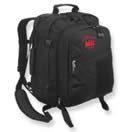
I don’t think REI makes this anymore, but it’s a pretty simple bag and cost about $125. It’s basically a big squarish backpack exactly the size limit of a carry-on, with nice padded shoulder straps and compression straps too. Good quality, YKK zippers. There is also a small detachable daypack – perfect for carrying your rain jacket, maps, guidebooks, and bottle of water when out and about. A similar bag would be Rick Steves’ Classic Back Door Bag

Clothing
The general idea here to have it be lightweight, look casual, and be fast-drying. That way you can just hand wash them at night in the hotel room and have them ready to go in the morning. I love my REI Sahara Convertible Pants. They convert to shorts easily, so it’s one less thing to pack. You can also buy hiking or “travel” shirts, socks, and even underwear that can be hand-washed and will dry overnight. My next purchase will be some nice travel boxers of Ex Officio. Technically, you could simply buy one of each of these, and just wash as needed! I think I’ll spring for at least 3 of each.

I always bring a good fleece jacket, but since I own one already that isn’t an extra expense.

Silk Money Belt
This “personal lockbox” allows me to sleep in hostels and walk around busy areas while keeping my passports and credit cards safe. It’s highly unlikely someone will poke around there without me noticing. Besides, it’s actually pretty comfortable. Here’s an example for $13.

Extra Toiletries Kit
I basically bought some cheap travel-sized (and TSA approved) plastic bottles, and made a duplicate of all the personal products I use everyday. I don’t move things in and out of my toiletry bag, it’s always 100% packed. Contact lenses, toothbrush, toothpaste, deodorant, comb, whatever. So when I need to pack, I just grab it and go.

Electrical
I would like to say I have a sleek 3 lb. laptop and some nice GSM cell phone/internet hookup, but I actually don’t pack anything electrical with me besides my camera. Just about everything I need can be accessed by finding an internet cafe. I can post to blogs from anywhere, or even log into my computer remotely if desired.

More Links
Packing Light & Right – Rick Steves
Carrying off the art of one carry-on – SF Chronicle
The Travelite FAQ

Please share your own tips as well in the comments! Right now I’m trying to figure out how to fit in a week in Thailand in March or April. Gotta work on my mid-term goal 🙂

List of File Backup Options: Free, Automated, and Online

Two, count ’em two, of my old hard drives died last week. And this web site went haywire (multiple times). I had the major files backed up, but my need for a better backup system became apparent. Ideally, it would be free, automated, and online. So what’s out there? Here are the best options I found:

  • Online Backup. The leader in automated, online backups seems to Mozy Online Backup. They have paid plans, but still give you 2 GB free with MozyHome Free. Another site, iDrive, also offers 2 GB free.. Transmission is encrypted, but security during storage may be a concern for very sensitive files. This isn’t really a concern for me, as I don’t have much sensitive stuff. Another downside is if this start-up dies, then so do your files. Recently, a similar site called Omnidrive shut down abruptly with little warning.
  • Gmail via Gspace or Gmail Drive. – Use your 2GB+ of free storage with a Gmail account. Gmail Drive lets you use it as as drive within for Windows, and Gspace lets you transfer files using the Firefox browser. To automate transfers to Gmail is a bit trickier, but here is a guide at LifeHacker.
  • FTP to existing server. If you have a web-hosting service, try combining that with Syncback Freeware to make an automatic backup system. You’re already paying for the hosting anyway, and most give you a ton more storage than you really need. (Another LifeHacker guide for Syncback)

Having good backups both directly and indirectly saves me money in the long run. I just need to invest the time to set things up now.

Secrets of Self-Made Millionaires. Shhh…

Reader’s Digest has an article titled Secrets of Self-Made Millionaires. The “secrets” aren’t exactly groundbreaking:

  1. Set your sights on where you’re going
  2. Educate yourself
  3. Passion pays off
  4. Grow your money
  5. No guts, no glory
  6. Stop spending

… but I always enjoy reading such stories anyway. In addition, sprinkled throughout the article are several interesting quotes which hit home for me.

They are motivated by freedom

What motivates them isn’t material possessions but the choices that money can bring: “For the rich, it’s not about getting more stuff. It’s about having the freedom to make almost any decision you want,” says T. Harv Eker, author of Secrets of the Millionaire Mind. Wealth means you can send your child to any school or quit a job you don’t like.

Most did not start out rich

The reality is that 80 percent of Americans worth at least $5 million grew up in middle-class or lesser households.

They have a passion for what they do

According to research by Thomas J. Stanley, author of The Millionaire Mind, over 80 percent of millionaires say they never would have been successful if their vocation wasn’t something they cared about.

They don’t flaunt their wealth

But many modern millionaires live in middle-class neighborhoods, work full-time and shop in discount stores like the rest of us. […] According to the 2007 Annual Survey of Affluence & Wealth in America, some of the richest people “spend their money with a middle-class mind-set.” They clip coupons, wait for sales and buy luxury items at a discount.

All of these characteristics are ones that I aspire to have!

The idea that “millionaires are all around you but you just don’t notice them” reminds me of the popular book The Millionaire Next Door. In fact, Stanley above was a co-author. (Sadly, the other author Danko now speaks at get-rich-quick seminars.) The book has been bashed at times as being statistically flawed and simply telling people what they want to hear. Perhaps, but I think there is more than a little truth behind it as well.

Free Sample Friday: Smell It Like Beckham

Got your junk e-mail addresses ready? Unfortunately, no free razors to be found. First stop, free samples at Wal-mart. Currently available (refresh page as necessary):

– South Beach granola snacks
– Dove and Head and Shoulders shampoo
– Friskies dry cat food
– “Intimately Beckham” cologne/perfume

Also found in the Slickdeals Freebies area:

– Free 8-week membership to Bally fitness. (Be prepared to deal with the usual gym hard-sell.)
– Free Jamba Juice smoothie if you are a 24hour Fitness member.
5 free music downloads from Rhapsody (Are these any good?)

Replace Lost Savings Bonds, Stock Certificates, Car Titles, and Tax Returns

CNN Money has a potentially useful piece on how to get a copy of important documents if you happen to lose them. Hopefully you won’t ever need this info, but here it is anyway…

Savings Bonds
Visit TreasuryDirect.gov or fill out Form 1048 (Claim for lost, stolen, or destroyed US Savings Bonds).

Old Stock and Bond Certificates

Most stock and corporate bond records are kept at one of three transfer agent firms: ComputerShare (781-575-2000), Wells Fargo Investments (866-243-0931) or American Stock Transfer & Trust (800-937-5449).

It may cost up to 3% of the stock or bond’s value to obtain a replacement.

Auto Titles
Visit your local DMV in person or online. Might cost $20-$30.

Tax Returns
You can actually order a copy of your old tax returns from any of the last 7 years from the IRS.gov for $39. Use Form 4506 (Request for a Copy of Tax Return).

If it’s within the last 3 years, you can also try requesting a “tax return transcript” or “tax account transcript” for free using Form 4506-T (Request for Transcript of Tax Return). It’s basically the same info in a different form, and there is a good chance it’ll be accepted by mortgage brokers or whoever needs it. Oh, and it arrives a lot faster than a photocopy of your actual return.

2008 Financial Jump-Start Checklist: 5 Actions That Can Take 5 Minutes Or Less!

Even if you don’t do resolutions per se, I think most of us still have areas of improvement that we want to work on for 2008. The problem is that is it so easy to keep putting off taking action to reach our goals. Given that I think little steps are the best way to solve big problems, here is a little action checklist that may be handy (complete with handy checkboxes if you want to print it out). How about at least one per day?

Reduce or Remove A Monthly Expenditure
  • Objective: Got a gym membership but haven’t gone in months? Yard man coming too often? Got some Netflix DVDs that have been sitting on your desk for weeks? Cable bill too high?
  • Action Required: Pinpoint a monthly expense that you don’t need anymore (or as often), and make the phone call to cancel. Stop putting it off.

Raise Your 401k/403b Contribution by 1%

Lower Your Interest Rate on Credit Card Debt

  • Objective: If you’re paying any sort of interest on credit card debt, it’s worth a call to see if they’ll lower it. Interest rates have been dropping again, and the banks are as competitive as ever for your money.
  • Action Required: Call up your highest rate credit issuer, and ask for a lower rate. Quote a few of the better offers you’ve been getting in the mail. If you have good credit and are serious about paying it off, it may be best to switch to a card with a 0% intro rate on balance transfers for 12 months.

Start an Automatic Transfer To Online Savings Account

  • Objective: If you’re not saving as much as you’d like manually, try using psychology to your advantage and make it automatic instead. You can always move the money back later if it doesn’t work out.
  • Action Required: If you don’t have an high-yield savings account paying at least 4% interest, pick one and open it right away. Then log in and schedule an automatic and recurring transfer into it of $100 or whatever every month. Use multiple accounts for different goals.

Set A Short-Term Goal

  • Objective: Forget “save for retirement’ or other vague goals. Setting specific, attainable short-term goals really helps keep me on track. One of my goals is to cook dinner at home one more day each week.
  • Action Required: Think about what would make you feel really good to have accomplished 1-3 months from now, write it down, and tell your significant other or close friend about it. Set a specific end date.

My short-term attainable goal for this week: By Sunday 1/6, I will have at least re-allocated my investment portfolio to the proper stock/bond ratio and US/International ratios that I explored previously. It should only take part of an evening, as I’ve already chosen them.

Cast Iron Skillet: The Ultimate Smart and Frugal Cookware?

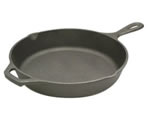
When we got married, we received some very nice cookware as wedding presents. Calphalon, non-stick, anodized, big bucks. But after years of abuse due to my poor cooking skills, my $50 frying pans are anything but non-stick anymore. So, yesterday I spent some of my holiday Amazon gift certificates on a Lodge 12-Inch Pre-Seasoned Cast Iron Skillet. (I also picked up a bond investing book and got free shipping.)

I know plenty of folks already have one of these, but I’m joining the bandwagon! This New York Times article Ever So Humble, Cast Iron Outshines the Fancy Pans outlines the many benefits well, but here’s a summary and my responses:

It’s cheap, durable, and lasts forever
Brand new, and even pre-seasoned, mine only cost $15. That’s a lot less than most fancy cookware, and you don’t have to navigate all the marketing ploys. You can probably pick up a slightly cheaper one secondhand, but I remember finding one a year ago at a garage sale and they wanted $15 for that too! Finally, besides the occasional re-seasoning, it should last forever as long as you don’t drop it on concrete or something.

You can cook at high temps without worry
I admit it, I like to fry a lot. But reports suggest that Teflon and other chemically-treated pans can give off dangerous fumes when heated to high temperatures. So you’re not supposed to pre-heat, sear, or use them in ovens. I look forward to searing my very first steak and then putting it straight into the oven to finish for a warm center. (Been watching too much Food Network…)

Just as nonstick when seasoned
From the article:

Well seasoned, it is nearly as nonstick as any manufactured nonstick surface and far more so than stainless, aluminum or even copper pans.

Sounds good to me. Seasoning isn’t even that hard – directions vary, but basically you just grease and bake. Purists will want to do it themselves, but to me having it pre-seasoned both saves time and doesn’t cost more. There a few small maintenance tips to keep the seasoning going – avoid steel wool, not too much soap, and keep it dry to prevent rust – but I think I can handle that.

All of my foodie friends and the vast majority of the Amazon reviews love their cast-iron. Do you? Anything else I should know?

Do I Need To Make Any Last Minute Year-End Tax Moves?

Yikes, I’m cutting things close this year. Time to see if there are any last-minute things I need to do with the last two business days before 2008.

Selling Losing Stocks or Mutual Funds
If you have some investments that are currently in the negative and you don’t want anymore, you might consider selling them and taking the loss. This is because you can deduct the loss against your other capital gains, or even reduce your taxable ordinary income (up to $3,000 each year). In general, people like doing this. You can’t buy the same “substantially identical” investment again for 30 days though, as that would break the IRS wash sale rule.

If you have some index funds that have high unrealized losses, you might even sell them and buy a similar fund at the same time. Again, the general idea here is to take advantage of the fact that the IRS tax capital gains and capital losses differently. Losses can “save” you money at your ordinary tax rate (up to 35%), while long-term capital gains are capped at 15%. More information and an example of this technique here.

I don’t have anything that I’m looking to sell, as most of my investments are in tax-deferred accounts. I have a $31 loss right now in BRSIX, but that’s not worth the potential commission of buying a similar fund.

Make A Tax-Deductible Donation
If you mail in a donation (including a check or credit card info), it must be postmarked by December 31, 2007. Be sure to get a receipt! Usually the easiest thing is to just charge it on your credit card in time. That way you have your credit card statement as backup, and you’ll also earn some cashback rewards while you’re at it. This is the first year we might actually get to itemize our deductions, so that’s kind of nice.

On a side note, all of my Kiva loans are still doing fine, and one was even paid back early (the somewhat-controversial one from apparently-rich Ukraine!).

Using Up Flexible Spending Account funds
Our usual routine is to spend the rest of our FSA money on contact lenses solution, eyeglasses, Benadryl, and Aleve at Costco. From last year, here is a big list of things that qualify for Flexible Spending Account reimbursements. If you don’t have any immediate needs, Mapgirl had a good suggestion that you can complete your first aid/emergency kit with things like gauze that don’t expire.