 T. Rowe Price has an article Evaluating Roth and Pretax Retirement Savings Options by Roger Young that covers the basics on the choice between a “Traditional” pretax or Roth IRA or 401k account:
The primary factor to consider is whether your marginal tax rate will be higher or lower during retirement. If your tax rate will be higher later, paying taxes now with the Roth makes sense. If your tax rate will be lower, you want to defer taxes until then by using the pretax approach.
With the Traditional pretax, you get to avoid paying income taxes on the contribution now, but you must pay taxes up on withdrawal. With the Roth, you pay income taxes now, but you don’t own any taxes upon withdrawal. However, I am linking to it because it also includes a table with some sample worker profiles. This may help clarify things for people who are still confused about which to pick.
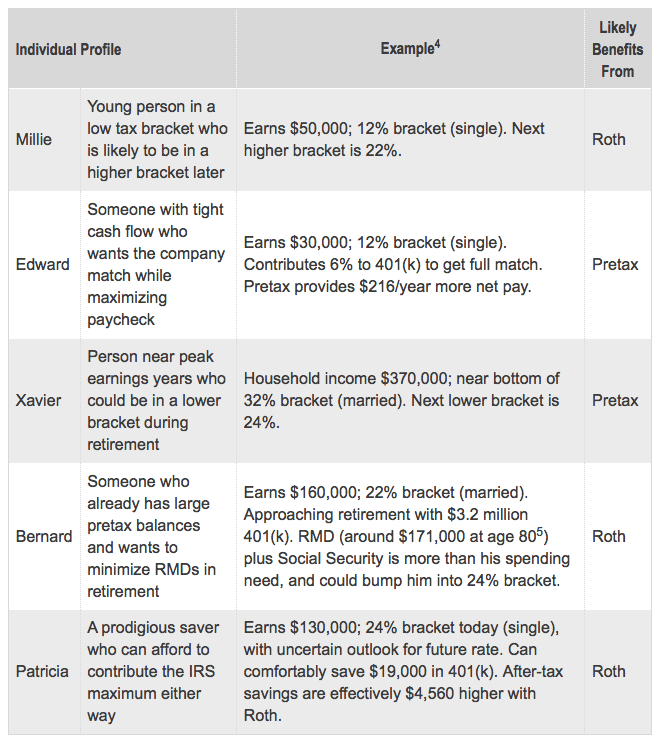
There are other considerations due to our overly-complex tax code, but I think this is still a helpful tool.
 Berkshire Hathaway (BRK) has released its
 Here’s my monthly roundup of the best interest rates on cash for February 2019, roughly sorted from shortest to longest maturities. Check out my
  Individual Retirement Arrangements (IRAs) are way to save money towards retirement that also saves on taxes. For 2019, the annual contribution limit for either Traditional or Roth IRAs increased to $6,000 (it is roughly indexed to inflation). The additional catch-up contribution allowed for those age 50+ stays at $1,000 (for a total of $7,000). You can’t contribute more than your taxable compensation for the year, although a spouse can contribute with no income if the other person has enough income.
 Employer-based retirement plans like the 401(k), 403(b), and Thrift Savings Plan are not perfect, but they are often the best available option to save money in a tax-advantaged manner. For 2019, the employee elective deferral (contribution) limit for these plans increased to $19,000 (it is indexed to inflation). The additional catch-up contribution allowed for those age 50+ stays at $6,000 (for a total of $25,000).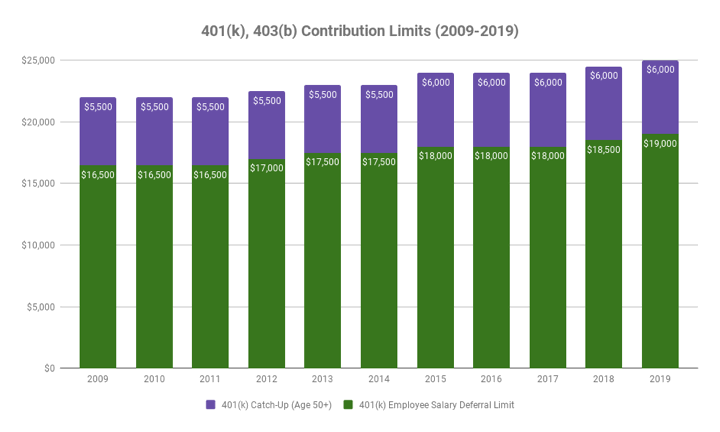
 Instead of just looking at one year of returns, I prefer taking a longer view. Most successful savers invest money each year over a long period of time, these days often into a target-date fund (TDF). Don’t get caught up in the daily news reporting the recent performance of the Dow or S&P 500.
 If you invest in stocks, you know that they go up and down. Below is an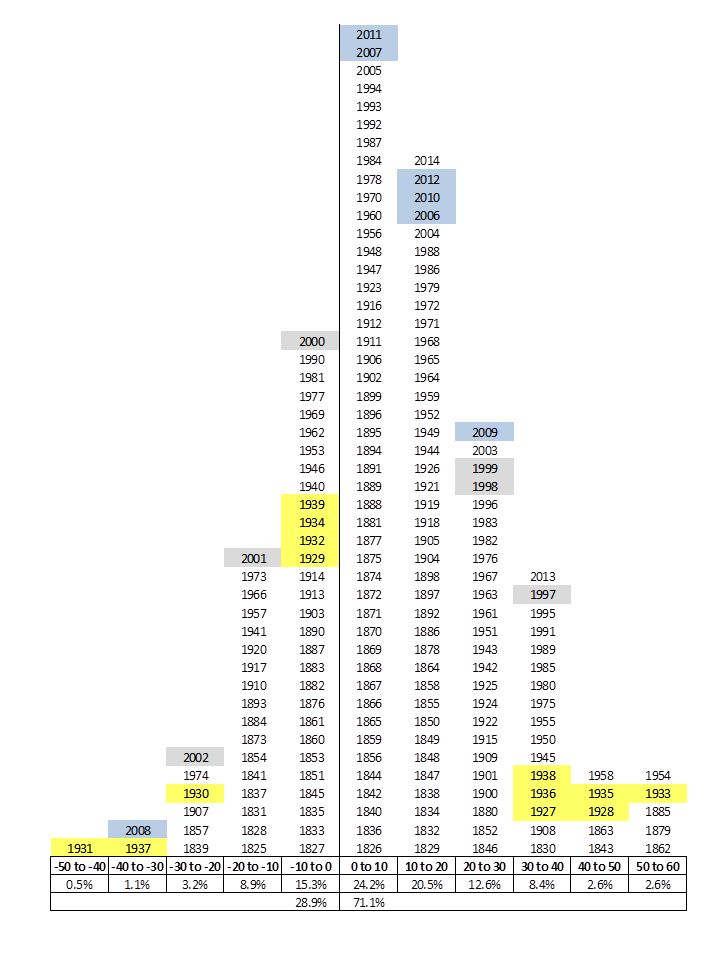

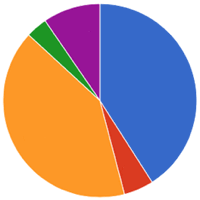

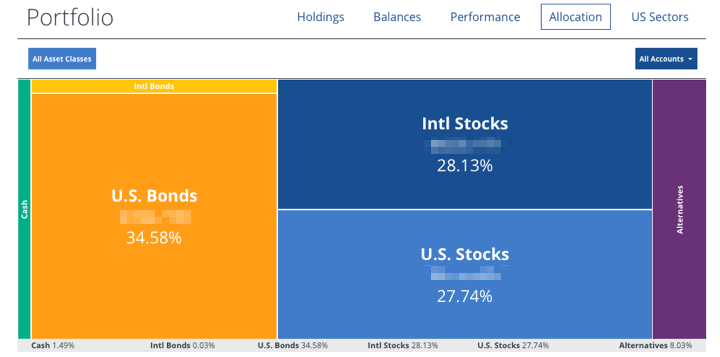
 Another one in the books! I don’t track the market daily as I think the discussion is full of noise and after-the-fact justifications. I check my portfolio quarterly to see where to reinvest dividends. At the end of the year, I like to record the annual returns for select asset classes as benchmarked by passive mutual funds and ETFs. Here is the 2018 data taken from Morningstar after market close 12/31/18.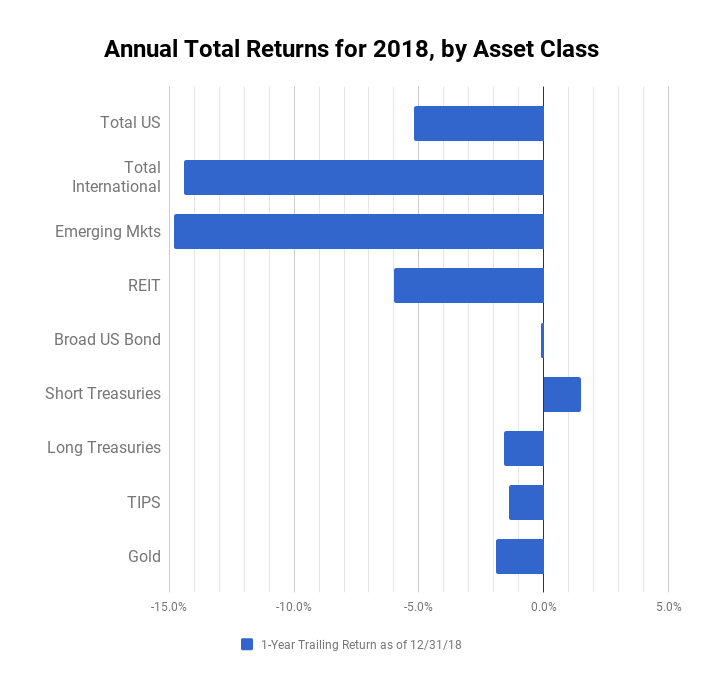

 I don’t really enjoy talking about stock market movements, but given that it has been the most common reader question recently and I wanted to start answering more reader questions, here we are. My overall take is the same:
 The Best Credit Card Bonus Offers – 2026
 Big List of Free Stocks from Brokerage Apps
 Best Interest Rates on Cash - 2026
 Free Credit Scores x 3 + Free Credit Monitoring
 Best No Fee 0% APR Balance Transfer Offers
 Little-Known Cellular Data Plans That Can Save Big Money
 How To Haggle Your Cable or Direct TV Bill
 Big List of Free Consumer Data Reports (Credit, Rent, Work)